 Whatcom County
 Why Lynden Roofs Wear Differently Than Roofs Inland
Lynden sits close enough to the Salish Sea and the Strait of Georgia that homes here deal with a mix most inland Washington towns don't: salt-tinged air moving in off the water, long stretches of driving rain pushed through by winter storm systems, and a moss season that can run eight months or more in a shaded, north-facing yard. None of these alone is unusual for Western Washington. Together, on the same roof, year after year, they add up to faster granule loss, more moss and algae staining, and more opportunities for water to find a weak seam if the roof wasn't detailed correctly the first time.
An asphalt shingle roof can handle all of this well. It's still the most practical, cost-effective roofing material for the vast majority of homes in Whatcom County. But "handle it well" depends entirely on the underlayment, flashing, ventilation, and shingle choice underneath the visible surface — not just the shingle brand on the wrapper.
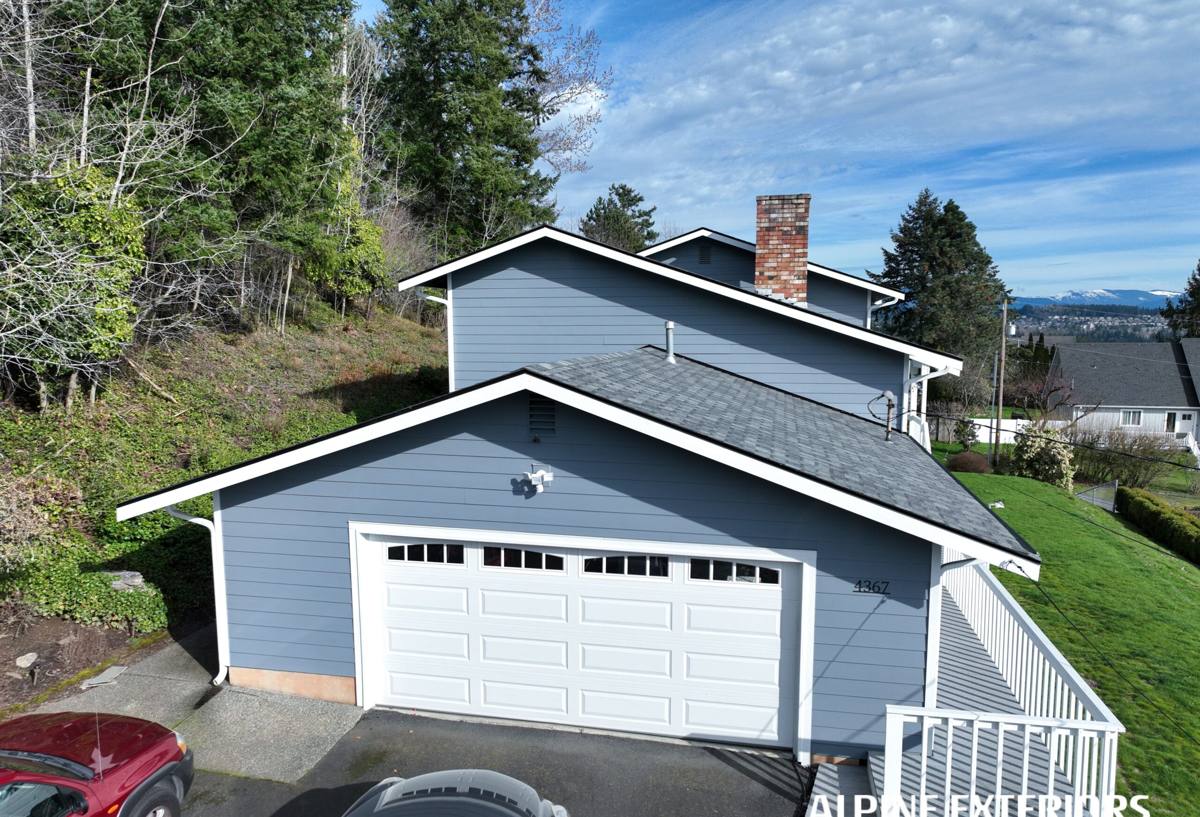
What Lynden's Climate Actually Asks of a Shingle Roof
Driving Rain and Wind-Driven Water
Winter storms in this part of the county rarely come straight down. Wind pushes rain sideways under shingle tabs, into valleys, and around chimneys and vent pipes. A roof that would be fine in a calmer climate can leak here if the underlayment and flashing weren't built to handle water moving horizontally, not just falling vertically.
Salt Air and Material Fatigue
Homes closer to the water's edge see accelerated wear on exposed metal — flashing, fasteners, gutters — from salt in the air. Standard galvanized fasteners and thin flashing corrode faster in this environment than they would twenty or thirty miles inland. It's a slow process, but it's real, and it's worth accounting for when a roof is specified.
Moss, Algae, and Shade
Whatcom County's tree cover and damp, mild winters are close to ideal growing conditions for moss and algae. Roofs with north-facing slopes, overhanging branches, or limited sun exposure are the most affected. Left alone, moss holds moisture against the shingle surface, works into the granule layer, and can lift tabs enough to let wind-driven rain underneath.
What Goes Into a Correctly Installed Shingle Roof Here
The shingle itself is maybe a third of what determines how a roof performs in this climate. The rest is in the layers and details underneath it.
Underlayment
We use synthetic underlayment as the standard base layer across the whole roof deck, with self-adhering ice-and-water membrane at the eaves, valleys, and around every penetration — chimneys, skylights, plumbing vents, and any roof-to-wall transition. Those are the spots where wind-driven rain and ice-dam backup (on the rare cold snap) cause almost all shingle-roof leaks. Skipping or shorting this layer is the single most common corner cut in cheap roofing bids.
Flashing
Step flashing at walls, counter-flashing at chimneys, and proper valley metal all need to be installed in the correct sequence with the shingle courses — not caulked on afterward. Given the salt-air exposure closer to Lynden's waterways and the coast, we favor heavier-gauge, corrosion-resistant metal over the thinnest stock available.
Ventilation
A shingle roof needs balanced intake (soffit) and exhaust (ridge or box vents) airflow to keep the attic close to outdoor temperature and humidity. Without it, moist indoor air condenses on the underside of the roof deck through our wet winters, which can rot sheathing from the inside and void a shingle warranty — even though the problem has nothing to do with the shingle itself.
Nailing and Wind Resistance
Shingles are only as wind-resistant as their installation. That means the correct nail count and placement per manufacturer spec (not stapled, not overdriven, not high-nailed), starter strip at every eave and rake edge, and hand-sealing tabs in colder weather when the factory adhesive strip is slow to bond.
Choosing a Shingle for Whatcom County Conditions
Most manufacturers sell three general tiers of asphalt shingle. The right choice depends on budget, roof complexity, and how much you value a longer warranty and better wind/algae performance.
| Shingle Type | Typical Lifespan | Wind Rating | Best Fit |
|---|---|---|---|
| 3-tab (economy) | 15–20 years | Lower (60–70 mph) | Budget-driven projects, rentals, outbuildings |
| Architectural / dimensional | 25–30 years | Higher (110–130 mph) | Most Lynden homes; best balance of cost and performance |
| Premium / designer | 30+ years | Highest available | Homes prioritizing appearance and maximum warranty coverage |
For most homes in and around Lynden, we recommend architectural shingles with algae-resistant (AR) granules. The AR treatment doesn't make moss and algae impossible, but it measurably slows the staining and growth that this climate encourages, and most manufacturers only include it standard on their mid- and upper-tier lines.
Our Process for a Lynden Re-Roof
1. On-Site Inspection and Written Estimate
We walk the roof (or use a drone where pitch or access makes that unsafe), check the deck for soft spots, evaluate existing ventilation, and look at flashing details around every penetration. The estimate breaks out material, labor, and any deck repair as separate line items — no lump-sum guessing.
2. Tear-Off and Deck Inspection
We strip the old roofing down to the deck rather than layering over it. That's the only way to actually see the sheathing condition and catch rot or soft spots before they're sealed under a new roof for the next 25 years.
3. Deck Repair
Any damaged sheathing gets replaced and priced transparently — this is common enough on older Whatcom County homes that we build the possibility into the estimate up front rather than surprising you mid-job.
4. Underlayment, Flashing, and Ventilation
Ice-and-water membrane at vulnerable areas, synthetic underlayment across the field, new flashing where needed, and ventilation corrected or upgraded if the existing setup is inadequate.
5. Shingle Installation
Installed to manufacturer spec for nailing pattern, starter course, and exposure — with attention to the details (valleys, hips, ridge caps) that separate a roof that looks fine on day one from one that still performs correctly in year fifteen.
6. Cleanup and Walkthrough
Full site cleanup including a magnetic nail sweep, followed by a walkthrough so you know what was done and what to expect going forward.
Living With a Shingle Roof in a Wet, Mossy Climate
A well-installed roof still needs basic upkeep in this climate. None of it is complicated, but skipping it shortens the roof's useful life.
- Keep overhanging branches trimmed back to reduce shade and debris buildup on north-facing slopes.
- Clean gutters at least twice a year — clogged gutters back water up under the shingle edge.
- Have visible moss gently removed (never pressure-washed, which strips granules) before it thickens.
- Consider zinc or copper strips near the ridge on shaded roofs; rainwater washing over them helps inhibit new moss growth over time.
- After major windstorms, a quick visual check for lifted or missing shingles catches small problems before they become leaks.
Signs a Lynden Roof Needs Repair or Replacement
Not every issue means a full re-roof. But these are the signs worth having looked at:
| What You See | What It Usually Means |
|---|---|
| Granules collecting in gutters | Normal in small amounts with age; heavy loss signals the shingle is nearing end of life |
| Curling or cupping shingle edges | Sun and age wear, or inadequate attic ventilation |
| Dark streaking or thick moss mats | Algae/moss growth — cosmetic at first, but can lift tabs if ignored |
| Soft spots or sagging on the deck | Possible sheathing rot from a long-term slow leak |
| Daylight visible in the attic | Gap in the roof deck or flashing — needs prompt attention |
Warranty and Materials
Asphalt shingle roofs typically carry two separate warranties: a manufacturer's material warranty covering defects in the shingle itself, and a workmanship warranty from the installing contractor covering the installation. The manufacturer warranty is only as good as the installation underneath it — most shingle warranties are voided by improper ventilation or nailing, which is why we install strictly to manufacturer specification rather than cutting corners that would technically void coverage you're paying for.
Why a Local Crew Matters for This Job
A roof crew that already works Whatcom County knows what a Lynden roof is actually up against — the direction storms typically come from, how much moss pressure a shaded lot really sees, and which flashing details tend to fail first in this specific climate. That's different knowledge than a crew that mostly works drier, calmer regions and treats every job the same way. Local presence also means faster response if a storm causes damage and a shorter drive for warranty callbacks, which matters more than it sounds like once you actually need it.
If you're weighing a repair against a full replacement, or just want a straight answer on what your current roof needs, we're glad to take a look. Reach out for a free, no-pressure estimate using the form below.