 Whatcom County
 What Happy Valley Homes Are Up Against
Homes in and around Happy Valley deal with a specific combination of stresses that a lot of siding products simply weren't built to handle over the long haul. Whatcom County sits close enough to the water that salt-laden air is a constant, low-grade presence on exterior surfaces. Add in driving rain that comes in sideways during winter storms, and a moss season that can stretch for most of the year in shaded, north-facing spots, and you have a climate that's genuinely hard on the outside of a house.
None of that is dramatic on any single day. It's cumulative. Salt air slowly breaks down finishes and accelerates corrosion on fasteners and trim. Wind-driven rain finds gaps at laps, corners, and penetrations that would never leak in a calmer climate. And moss doesn't just look bad — it holds moisture against the surface underneath it, which is where real damage starts. A siding system that looks fine in a showroom in a dry climate can behave very differently after five or six wet Whatcom winters.
Where the Damage Actually Shows Up
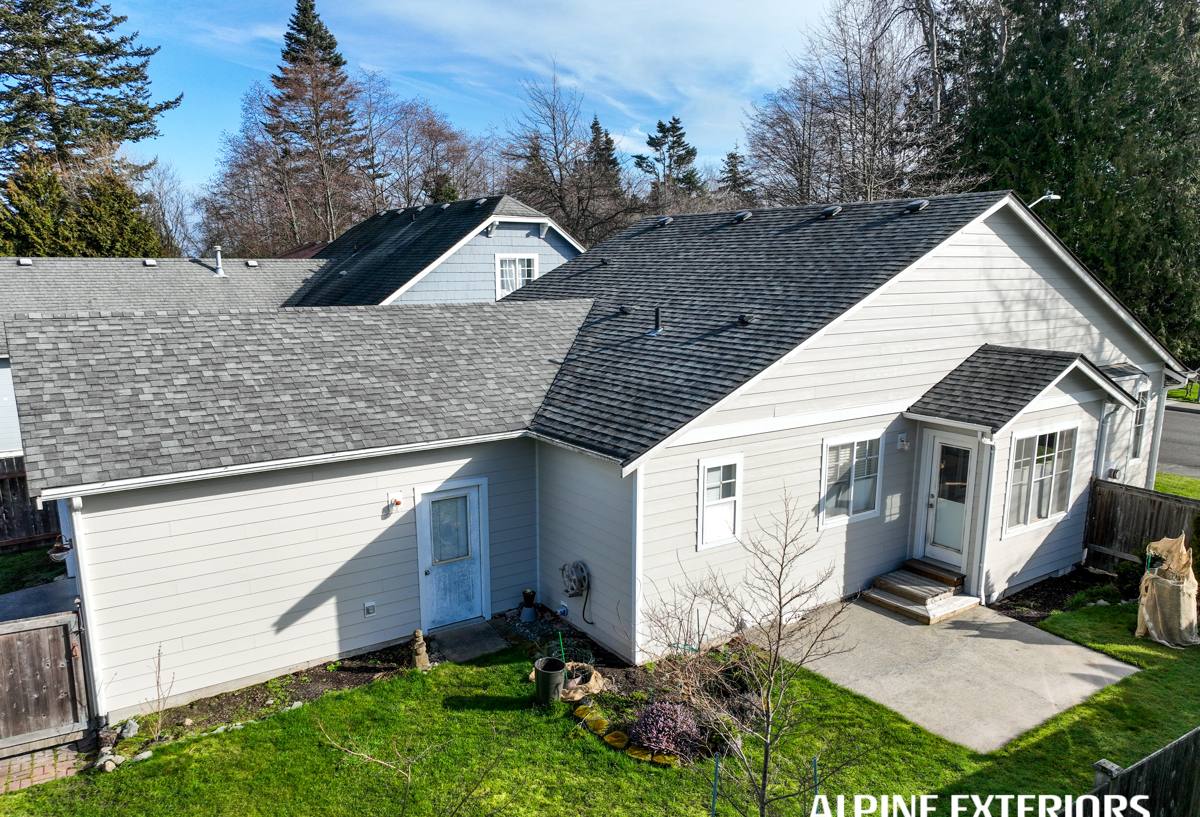
We see the same failure patterns repeat across Happy Valley and the surrounding neighborhoods. Knowing what to look for helps you catch problems before they become expensive ones.
- Dark green or black staining on north- and west-facing walls, especially under eaves and near trees
- Soft or spongy spots at the bottom edge of siding boards, particularly near grade or behind shrubs
- Paint or finish that's chalking, peeling, or has gone dull faster than it should
- Rust streaks below nail heads or metal trim pieces
- Gaps opening up at butt joints and corner boards as material swells and shrinks with the seasons
- Window and door trim that feels soft when you press on it
Any one of these on its own isn't an emergency. Several of them together, especially on a home that's ten-plus years old, usually means the siding is past the point where caulk and paint will buy much more time.
Why We Standardized on James Hardie Fiber Cement
We install James Hardie fiber cement siding exclusively. We don't offer vinyl, LP SmartSide, cedar, primed spruce, or other fiber cement brands like Cemplank or Allura — not because those products have no merit, but because after years of doing exterior work in this climate, Hardie is the one system we're comfortable standing behind for the long term.
Fiber cement is non-combustible, which matters more each year as wildfire smoke seasons stretch further north. It doesn't rot, and it isn't a food source for the moss and algae that thrive in our humidity. Hardie's ColorPlus factory finish is baked on under controlled conditions rather than applied on-site, which gives it better fade and adhesion performance than field-applied paint — a real advantage in an area where UV exposure is inconsistent but moisture exposure is constant. Hardie also engineers specific product lines (their HZ5 designation) for wetter, harsher climates like ours, and backs the product with a strong, transferable limited warranty that follows the house if you sell it.
We'd rather install one product system correctly, know its behavior inside and out, and stand behind it fully than offer a menu of options and hedge our recommendation. That's the whole reason this company exists in its current form.
How Hardie Compares to What It Replaces
| Factor | James Hardie Fiber Cement | Vinyl | Untreated Wood / Primed Spruce |
|---|---|---|---|
| Moisture behavior | Doesn't rot; engineered HZ5 line for wet climates | Won't rot itself, but traps moisture behind it if installed poorly | Absorbs water; prone to rot without diligent upkeep |
| Moss/algae resistance | Not an organic food source | Can host algae film in shaded, damp areas | Common moss and mildew host |
| Finish durability | Factory-baked ColorPlus finish | Color molded through, can fade and become brittle with UV | Field-applied paint, needs repainting on a cycle |
| Fire resistance | Non-combustible | Combustible, can melt/warp near heat sources | Combustible |
| Typical maintenance | Occasional wash, caulk checks | Low, but cracks/warps are hard to spot-repair | Regular repainting and rot inspection |
Beyond Siding: Roofing, Windows, and Decks Face the Same Climate
Siding rarely fails in isolation. The same salt air, rain, and moss that wear down exterior walls are working on your roof, windows, and any exterior deck at the same time, which is why we handle all four as one exterior system rather than treating them as separate projects.
Roofing
Moss on a roof does the same thing it does on siding — it holds moisture against the surface and works its way under shingles and flashing over time. Roofs in shaded, tree-lined lots around Happy Valley tend to need moss treatment and gutter attention more often than roofs in open, sunnier parts of the county.
Windows
Wind-driven rain exposes weak window flashing fast. Old aluminum-frame windows and worn seals are a common source of the "wet wall" problems we find when we open up siding for replacement — the siding gets blamed, but the window flashing was the real entry point.
Decks
Exterior decks take the most direct hit from standing water and moss growth, since they're horizontal surfaces rather than vertical ones. Fastener corrosion, in particular, shows up faster on decks near the water than almost anywhere else on a house.
Our Process for Happy Valley Projects
A siding job in this climate isn't just swapping old material for new. We start with an on-site inspection that looks past the visible siding to check sheathing, house wrap, flashing details, and any moisture that's already gotten in. If there's hidden rot or water damage, we address it before anything new goes up — covering a wet wall with new siding just delays and hides the problem.
From there we install James Hardie panels or lap siding to manufacturer spec, with particular attention to the details that matter most here: proper flashing at windows and doors, correct clearance at grade and roof lines so water and moss have less chance to take hold, and factory-finished boards that don't rely on site-applied paint for their weather resistance.
What to Look for in a Local Contractor
Whatcom County's climate punishes shortcuts faster than a drier region would, so the contractor you choose matters as much as the material.
- Ask whether they're a certified James Hardie installer, not just someone who's "worked with it before"
- Ask how they handle flashing at windows, doors, and roof lines — this is where most failures actually start
- Check that they carry current licensing, bonding, and insurance for work in Washington State
- Ask for a written scope that specifies product lines, not just "siding replacement"
- Ask how they handle moisture or rot discovered once old siding comes off
- Confirm they're based locally and familiar with Whatcom County's permitting and weather patterns, not a crew passing through from out of the area
A contractor who's evasive about any of these is telling you something, even if they don't say it directly.
Maintenance That Actually Extends the Life of Your Exterior
Even the best siding system benefits from basic upkeep in this climate. None of this is intensive, but skipping it entirely is how minor issues become expensive ones.
| Task | Frequency | Why It Matters Here |
|---|---|---|
| Rinse siding and trim | 1–2x per year | Removes salt film and organic buildup before it takes hold |
| Trim back vegetation touching walls | Ongoing | Reduces shade and moisture that feed moss growth |
| Clear gutters and downspouts | Fall and spring | Prevents overflow that saturates siding and trim below |
| Inspect caulking at joints and penetrations | Annually | Cracked caulk is a direct entry point for driving rain |
| Check for moss on north-facing sections | Seasonally | Early removal is far cheaper than repairing moisture damage later |
Cost Factors Worth Understanding
Every home is different, but a few factors tend to drive the real cost of an exterior project in this area more than homeowners expect: the amount of hidden repair needed once old siding comes off, the complexity of the roofline and window openings, and whether trim and flashing details need to be rebuilt rather than reused. A straightforward, well-maintained home will cost less to redo than one with years of trapped moisture behind the walls — which is exactly why the inspection step at the start of a project matters as much as the material choice.
Get a Straight Answer for Your Home
Every property in Happy Valley sits a little differently — sun exposure, tree cover, and how sheltered it is from wind-driven rain all affect how hard the siding has to work. If you're seeing moss buildup, soft spots, or finish that's past its prime, we're happy to come take a look and give you a straightforward, no-pressure assessment of where things stand and what your options actually are. The estimate is free, and there's no obligation attached to it.