 Whatcom County
 Siding is one of those things homeowners stop noticing once it's up. It sits there for fifteen, twenty, thirty years doing its job quietly, and most people only look closely at it when something goes wrong inside the house — a musty smell in a closet, a soft spot in the drywall, a spike in the heating bill. By the time siding failure shows up indoors, it's usually been failing outdoors for a while. In Whatcom County, where homes deal with salt air off Bellingham Bay, driving rain rolling in off the Sound, and a moss season that can stretch from October through May, siding gets tested harder than it does in drier parts of the state. Catching the warning signs early is the difference between a maintenance conversation and a full tear-off.
This page walks through what to look for, why it happens, and how to tell the difference between a cosmetic issue and a structural one. None of this requires special tools — just a walk around the house a couple times a year with a clear idea of what "normal" looks like.
Why Whatcom County Siding Works Harder Than Most
Three regional factors combine to shorten the useful life of a lot of siding products installed here:
- Salt air: Homes near Bellingham Bay, Chuckanut, or the Lummi and Birch Bay shoreline take on airborne salt that accelerates corrosion of fasteners, flashing, and any exposed metal trim — and it degrades certain paint and coating systems faster than inland exposure.
- Driving rain: Whatcom County doesn't just get a lot of rain — a good share of it comes in sideways off Pacific storm systems, which pushes water into joints, laps, and seams that would stay dry in a straight-down rain.
- Long moss season: Cool, damp, shaded conditions for much of the year create ideal growing conditions for moss and algae on north-facing walls and anywhere siding stays shaded and damp for long stretches.
None of this means siding is doomed here. It means the products and installation details that work fine in Spokane or Yakima don't always hold up the same way in Bellingham, Ferndale, or Lynden. The warning signs below show up earlier and more often in this climate than in drier regions.
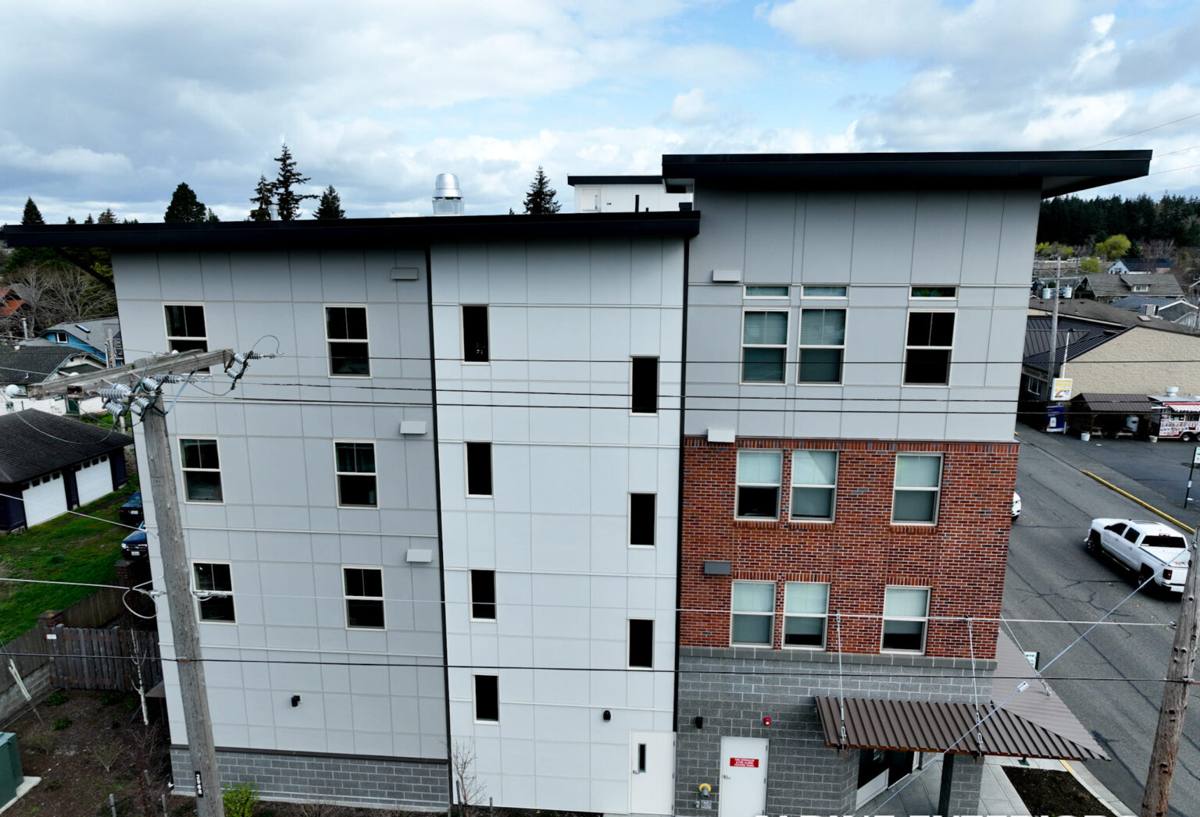
Visual Warning Signs You Can Check From the Ground
Bubbling, Bowing, or Rippling
Siding should lie flat against the wall. If you see waves, bulges, or sections that look like they're bowing outward, moisture has gotten behind the material — either the siding itself is absorbing water and swelling, or water trapped behind it is pushing the panel out of shape. This is common with wood-based products that have taken on moisture faster than they can release it.
Cracking and Splitting
Hairline cracks that follow the grain, cracks at panel edges, or splits radiating from nail holes are all signs the material is stressed — from moisture cycling (swelling when wet, shrinking when dry), impact, or age. Once a crack opens, it becomes a direct path for water to get behind the siding, which accelerates everything else on this list.
Peeling or Chalking Paint
A little chalkiness on old paint is normal weathering. Paint that's actively peeling, blistering, or flaking off in sheets — especially on a wall that was painted within the last five to seven years — usually means moisture is pushing out from underneath the paint film, not just UV wear from the surface.
Persistent Moss and Algae Streaking
Some moss on a shaded north wall during a wet Whatcom winter isn't unusual. What matters is whether it comes back heavier every year, whether it's holding moisture against the siding surface, and whether it's established in seams and laps rather than just on the surface. Moss that's rooting into cracks or gaps is a sign the siding surface has already broken down enough to give it something to hold onto.
Discoloration Near Trim, Corners, and Penetrations
Dark staining or streaking around window trim, corner boards, hose bibs, or anywhere something penetrates the siding is one of the most reliable early indicators of a flashing or sealant failure. Water is finding a way in at that point and running down behind the surface before it shows up as a stain.
Signs You Have to Get Closer to Notice
| Sign | How to Check | What It Usually Means |
|---|---|---|
| Soft or spongy panels | Press firmly with a palm, especially near the bottom courses and around windows | Water absorption and possible rot in the substrate behind the siding |
| Nail heads popping or rust-staining | Look for raised fastener heads or orange streaks running down from them | Fastener corrosion (common in salt-air exposure) or panel movement pulling away from the wall |
| Gaps opening at seams or laps | Run a hand along horizontal seams looking for widened gaps | Material shrinkage, expansion/contraction fatigue, or original installation with insufficient overlap |
| Musty smell near exterior walls | Notice closets, corners, or rooms that border an exterior wall | Moisture has already reached the wall cavity — this is a later-stage sign, not an early one |
| Insect activity at the base of walls | Look for small holes, sawdust-like debris, or increased ant/insect presence | Wood-based substrate or siding has softened enough to attract wood-destroying insects |
Where to Look First
Not all sides of a house fail the same way. If you only have time to check a few spots, prioritize these:
- North and west walls — these hold shade and moisture longest and take the brunt of driving rain in most Whatcom storm patterns.
- Bottom courses near grade — splashback, snow pile-up against the foundation, and poor drainage all concentrate moisture at the lowest few feet of siding.
- Around every window and door — flashing and sealant failures here are the single most common source of hidden water intrusion.
- Under roof valleys and gutter overflow points — concentrated water dumping onto a wall section ages that siding faster than the rest of the house.
- Anywhere two different materials meet — siding-to-trim, siding-to-deck ledger, siding-to-chimney — these transitions are where installation quality shows up first.
Cosmetic vs. Structural: How to Tell the Difference
Not every flaw means the siding is failing. A general rule: if the problem is on the surface and hasn't changed the shape or texture of the material, it's likely cosmetic. If the material itself has changed shape, softened, or opened a gap, water has gotten past the surface and you're dealing with something structural.
- Cosmetic: faded color, light chalking, surface dirt, minor moss on an otherwise flat, solid panel.
- Worth monitoring: hairline cracks, isolated nail pops, small areas of peeling paint on an older paint job.
- Needs a professional look soon: soft or spongy panels, bowing or rippling, dark staining spreading from a specific point, active moss rooted into open seams, any interior sign of moisture on an exterior wall.
Why the Underlying Product Matters
A lot of the warning signs above trace back to how a given siding material handles moisture over time, not just how it was installed. Wood-based and composite wood products can perform well for years, but they rely on an intact paint or coating layer to keep water out — once that layer is compromised by a crack, a fastener failure, or UV breakdown, the substrate underneath is exposed to exactly the kind of damp, cool, salt-tinged conditions Whatcom County specializes in. Vinyl siding sheds water well on a flat wall but relies on laps and J-channels that can let wind-driven rain track behind it, and it doesn't hold paint if a color change is ever wanted.
This is a large part of why we standardized on James Hardie fiber cement for every installation we do. It's non-combustible, doesn't absorb and swell the way wood-based products can, and the ColorPlus factory finish is baked on and warranted separately from the substrate — so the paint failure that triggers a lot of the warning signs above isn't part of the equation the same way. Hardie's HZ5 product line in particular is engineered for wetter, harsher climates like ours. None of that makes a Hardie install maintenance-free, but it removes several of the most common failure paths this list is built around.
A Simple Seasonal Check
You don't need to inspect siding constantly. Twice a year — once after the wettest stretch of winter and once in late summer when everything is dry — walk the full perimeter of the house and look for:
- Any new cracks, gaps, or areas that look different from six months ago
- Soft spots when pressed at the base of walls and around windows
- Fresh staining below trim, corners, or penetrations
- Moss or algae that's spreading rather than staying put
- Paint that's peeling in sheets rather than just fading
- Gutters and downspouts directing water away from — not onto — the siding
If two or more items on that list show up in the same area of the house, it's worth having someone look at it before the next wet season rather than after.
What Happens If You Wait
The reason these signs matter is that siding failure is rarely contained to the siding. Once water gets past the surface, it reaches sheathing, framing, and insulation — materials that are far more expensive to repair or replace than the siding itself, and that take much longer to dry out once they're wet in a climate that doesn't offer many dry, breezy days to help. A siding problem caught at the "peeling paint" stage is a repaint or a panel swap. The same problem caught at the "soft drywall inside" stage is often a wall-opening repair. Catching it early isn't about being fussy — it's about which kind of job you end up needing.
If you've spotted any of these signs on your Whatcom County home, or you're just not sure whether what you're looking at is normal wear or something more, we're happy to take a look. We offer free, no-pressure estimates — no obligation, just an honest read on what's actually going on with your siding.