 Whatcom County
 Why Homeowners Fall for Cedar
Cedar siding has a real pull. It smells good when it's freshly milled, it takes stain beautifully, and there's a warmth to a cedar-clad house that manufactured products spend a lot of marketing dollars trying to imitate. Western red cedar in particular grows right here in the Pacific Northwest, so there's a local, natural-materials appeal to it that resonates with a lot of Whatcom County homeowners. We get why people ask about it.
None of that is wrong. Cedar is a legitimate building material with a long history on homes up and down the Whatcom County coastline, from Bellingham to Blaine to Birch Bay. The problem isn't the wood itself — it's what cedar demands from a homeowner year after year, and whether that demand fits how most people actually want to spend their weekends and their money.
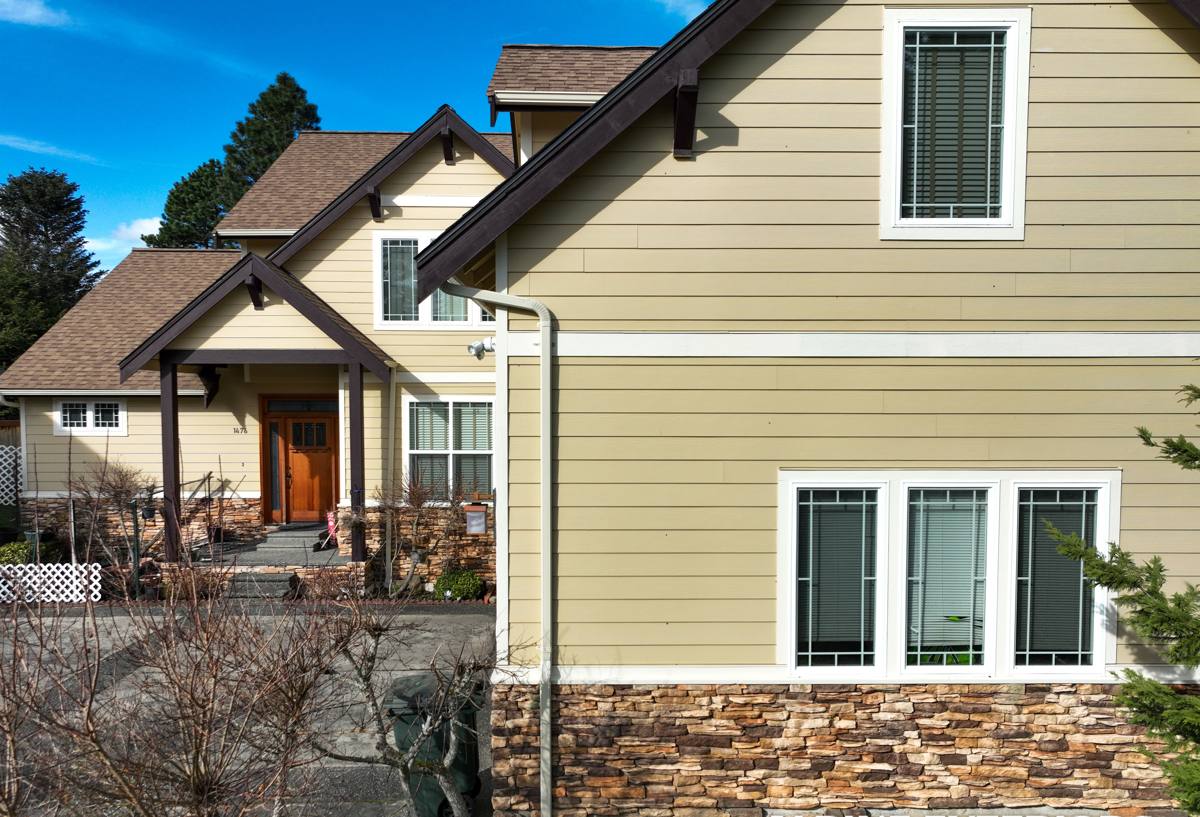
What Cedar Siding Actually Requires
Cedar is a natural product, and natural products move, absorb, and break down over time unless a homeowner actively fights that process. This isn't a defect — it's just wood behaving like wood. Here's what ongoing cedar maintenance typically involves:
Refinishing on a Schedule, Not a Whim
Solid stains and clear sealers on cedar don't last indefinitely. Depending on sun exposure, the finish, and how the siding is oriented to weather, most cedar needs to be re-stained or re-sealed every 3 to 7 years. Skip a cycle and you're not just losing curb appeal — you're exposing bare wood fibers to moisture, which is where the real damage starts.
Caulking and Joint Maintenance
Every board joint, every corner trim, every window and door transition on a cedar-clad house is a place where caulk can crack, shrink, or pull away. That caulk has to be inspected and redone periodically, or water finds its way behind the boards.
Cleaning Before It's Obviously Dirty
Cedar needs periodic washing to remove surface dirt, pollen, and the early stages of mildew and algae growth — before they set in and stain the wood permanently. Pressure washing has to be done carefully, since too much pressure drives water into the grain and behind boards rather than just cleaning the surface.
Ongoing Inspection for Rot, Splitting, and Insect Activity
Cedar is naturally more decay-resistant than many other woods, but "more resistant" isn't "immune." Boards that hold moisture — near grade, behind shrubs, under gutters that overflow — will eventually soften, split, or rot regardless of species. Woodpeckers and carpenter ants also take an interest in softened or already-damaged boards.
Why Whatcom County's Climate Is Especially Hard on Cedar
Every wood siding product faces some version of this maintenance burden, but Whatcom County's specific climate stacks several tough conditions on top of each other:
- Salt air along the coastal parts of the county — Birch Bay, Blaine, Point Roberts, and the Bellingham waterfront — accelerates finish breakdown and pulls moisture into the wood grain faster than it would inland.
- Driving rain off the Sound, often pushed sideways by wind, gets under lap siding and behind trim in ways that straight-down rain never would, stressing every joint and caulk line on the house.
- A long moss and mildew season — Whatcom County's damp, mild winters and shaded, tree-covered lots give moss, algae, and mildew months of ideal growing conditions on north-facing and shaded walls, well beyond what a drier climate would produce.
- Limited hot, dry drying windows mean that once cedar does get wet, it often doesn't fully dry out before the next system rolls through, which is exactly the condition that lets rot take hold.
None of these factors are unique to cedar — they're just part of living on the water in the Pacific Northwest. But they turn a maintenance schedule that might be manageable in a drier climate into a much more demanding, much less forgiving one here.
What Cedar Maintenance Actually Costs Over Time
It's worth being honest about the numbers, in broad terms, rather than pretending cedar maintenance is a minor line item. This isn't about specific bids — every house and every product line varies — but the pattern below is consistent with what we see across siding types.
| Maintenance Factor | Cedar Siding | James Hardie Fiber Cement |
|---|---|---|
| Refinishing cycle | Every 3-7 years (stain/seal) | ColorPlus factory finish typically lasts far longer before repaint is needed |
| Caulk/joint upkeep | Regular inspection and redo required | Fewer joints move; less frequent attention needed |
| Moisture vulnerability | High if finish lapses | Low — fiber cement doesn't absorb and swell like wood |
| Insect/rot risk | Present, especially near grade | Non-organic material — not a food source for insects, won't rot |
| Fire behavior | Combustible | Non-combustible core material |
| Typical homeowner time investment | Ongoing, recurring | Mostly periodic washing and inspection |
The upfront cost of cedar can look competitive with, or even less than, fiber cement in some cases. The gap shows up over 10, 15, and 20 years, in the cumulative cost of stain, labor, caulk, board replacement, and the occasional rot repair that gets discovered later than anyone would like.
Where Cedar Problems Actually Show Up First
If you're evaluating an existing cedar-sided home, or trying to decide whether to maintain or replace, these are the spots worth checking first:
- Bottom courses of siding near grade, where splash-back and soil contact keep wood damp longest
- Any wall facing prevailing wind and rain — typically west and southwest exposures in this region
- North-facing and heavily shaded walls, where moss and algae growth is heaviest and drying time is shortest
- Areas below gutters, especially where gutters are clogged, undersized, or missing splash guards
- Around window and door trim, where caulk failure is most common and least visible until water has already gotten behind the board
- Butt joints between siding boards, which are a natural weak point regardless of how well the job was originally installed
A cedar-sided house that's been meticulously maintained on schedule for 20 years can still look great. The honest question is whether that schedule realistically gets kept, year after year, by a busy household — and what happens to the wood underneath during the years it doesn't.
Why We Don't Install Cedar
We're not going to tell a homeowner that cedar is a bad material — it isn't. What we will say is that we've made a professional decision not to install it, because the long-term maintenance burden it puts on a homeowner doesn't match what we want to stand behind. We'd rather install a product where the finish, the moisture resistance, and the fire performance are engineered in from the start, rather than dependent on a refinishing schedule that has to be kept perfectly for 15-20 years straight in one of the wetter, mossier climates in the country.
This is the same reasoning behind why we don't install several other popular siding products either — the standard we hold ourselves to is that we only install what we're confident will still look and perform well on a Whatcom County home a decade or two from now, with realistic maintenance, not perfect maintenance.
What We Install Instead, and Why
We install James Hardie fiber cement siding exclusively. A few reasons that decision holds up specifically in this climate:
- Non-combustible core — fiber cement doesn't burn, which matters as wildfire smoke and fire risk have become a bigger regional concern even in historically wet parts of Washington.
- ColorPlus factory finish — the color is baked on in a controlled factory process rather than applied on-site, which gives it a fade and wear resistance that field-applied stain simply can't match over time.
- Climate-engineered HZ product lines — Hardie manufactures HZ5 products specifically formulated for wetter, harsher climate zones like ours, rather than a single one-size-fits-all formulation.
- Moisture behavior — fiber cement doesn't absorb water and swell the way wood does, which removes a huge amount of the rot and warping risk that drives cedar's maintenance schedule in the first place.
- A strong, transferable warranty — backed by the manufacturer, which matters more, not less, in a climate that stress-tests siding harder than most.
This isn't a product we picked because it's easy to sell. It's the product we settled on after weighing what actually holds up against salt air, driving rain, and a long moss season without asking a homeowner to be a part-time wood finisher for the life of the house.
Questions Worth Asking Before You Decide
Whether you're building new, replacing failing siding, or just trying to understand what you're maintaining, these questions cut to what matters:
- How often has this siding actually been refinished, versus how often it should have been?
- Are there visible signs of moss, dark staining, or soft spots on north-facing or shaded walls right now?
- What does the bottom few feet of siding near grade look like, especially where sprinklers or landscaping keep it damp?
- If you replace it, does the new product's warranty and finish match the climate you're actually in — not just the climate the marketing photos suggest?
- Who is realistically going to keep up a multi-year refinishing schedule — you, or whoever owns the house after you?
These aren't trick questions. They're the same ones we ask ourselves before recommending any repair, refinish, or full replacement to a homeowner in Whatcom County.
Getting an Honest Second Opinion
If you're staring at cedar siding right now and trying to decide whether to keep maintaining it, repair sections of it, or replace it outright, we're glad to come take a look and give you a straight answer — including telling you if maintaining what you have is the right call for now. If replacement makes sense, we'll walk you through what James Hardie actually involves, line by line, so you're deciding with real information instead of a sales pitch. The estimate is free, there's no pressure, and the form below is the easiest way to get one scheduled.