 Whatcom County
 Lynden Homes Face a Specific Kind of Wear
Lynden sits in the Nooksack Valley, close enough to the Canadian border that winter storms roll through with little to slow them down, and close enough to Bellingham Bay and the Strait of Georgia that the region's marine air shapes the weather year-round. That combination means Lynden homeowners deal with a long stretch of damp months, driving rain that comes in sideways during winter fronts, and a moss and mildew season that can run from fall through spring if siding and trim aren't holding up their end of the job.
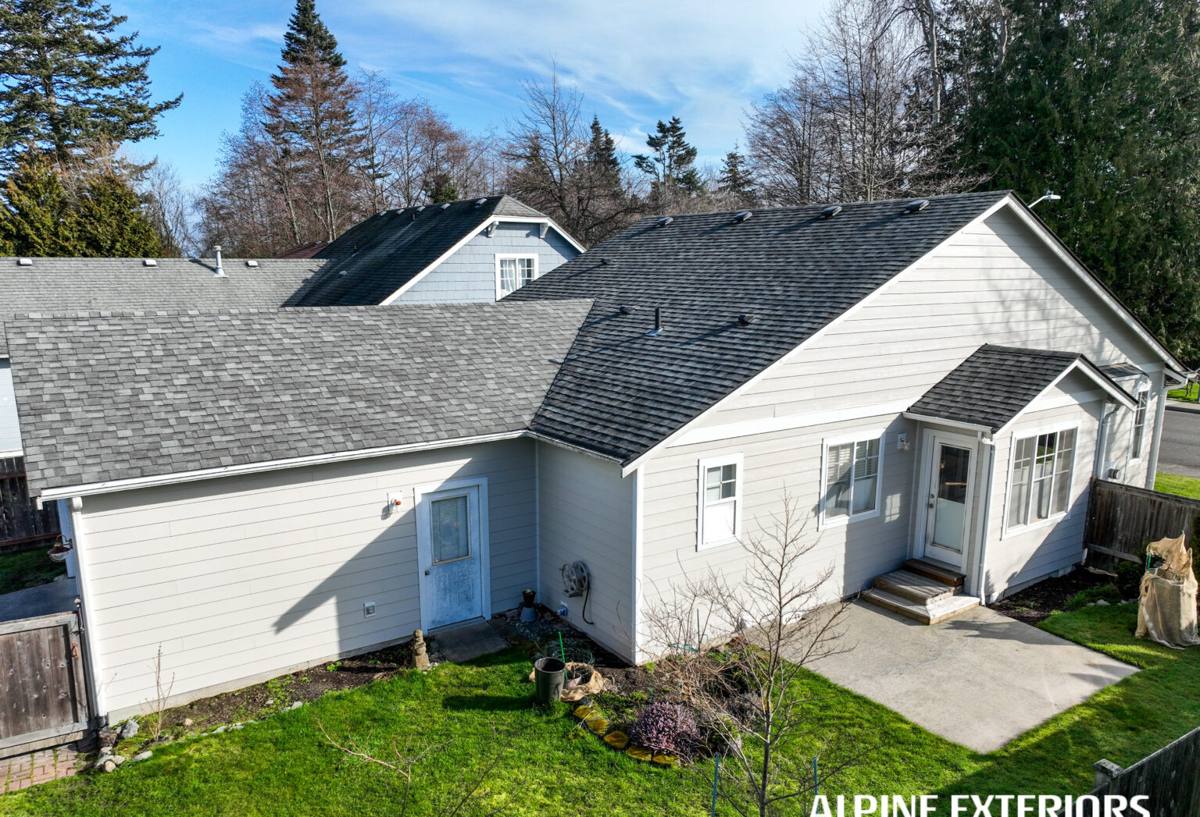
None of that is unique to any one street or subdivision in town — it's a Whatcom County reality, whether you're closer to the river, out toward the farmland, or near the older parts of downtown Lynden. What it means for your house is straightforward: whatever is on the exterior needs to shed water reliably, resist moisture absorption at the seams and butt joints, and hold its finish without constant upkeep. A lot of siding materials struggle with one or more of those requirements once they've been through a decade or two of Whatcom County winters.
Why Moisture Is the Real Enemy Here
It isn't any single storm that damages siding in this part of Washington — it's the cumulative effect of moisture that never fully leaves. Fog off the Nooksack River, persistent overcast, and the marine-influenced air moving in from the coast keep relative humidity high for long stretches. Add driving rain events a few times each winter and you have conditions that punish any siding material with weak seams, absorbent cores, or finishes that weren't engineered for sustained wet exposure.
Wood-based products are the most vulnerable. Even primed spruce and cedar, both of which can look great going up, depend on paint film and caulking staying intact to keep water out of the wood fibers underneath. Once that film cracks or a joint opens up — which happens faster here than in drier climates — moisture gets in, and wood siding starts to swell, cup, or rot from the inside out. That's why we don't install primed spruce or cedar siding. It's a good-looking product in the wrong climate for long-term performance without heavy, recurring maintenance.
What Long Moss Seasons Do to a House
Moss and algae aren't just cosmetic problems. They hold moisture directly against the siding surface, they grow into any texture or seam that offers a foothold, and on north-facing walls and shaded elevations — common on tree-lined Lynden lots — they can establish themselves within a couple of seasons if the material underneath doesn't resist it well. Materials with porous or fibrous surfaces give moss more to grab onto. A dense, factory-finished fiber cement surface gives it much less.
Why We Standardized on James Hardie
We install James Hardie fiber cement siding exclusively. That's not a marketing position — it's a decision built around what actually holds up in Whatcom County conditions over the long run.
- Non-combustible core: Hardie board is fiber cement, not wood or wood-derived material, so it doesn't feed a fire the way wood siding can.
- Climate-engineered product lines: Hardie's HZ5 formulation is built specifically for regions with freeze-thaw cycles and sustained moisture exposure, which describes a Whatcom County winter well.
- ColorPlus factory finish: the color is baked on at the factory under controlled conditions, rather than field-applied paint that has to cure correctly on-site in whatever weather shows up that week.
- Dimensional stability: fiber cement doesn't swell and shrink with moisture the way wood does, so joints and caulk lines stay tighter for longer.
- Strong transferable warranty: Hardie backs its products with warranty coverage that holds up under real ownership changes, which matters if you plan to sell.
We also don't install vinyl siding, LP SmartSide, Cemplank, or Allura. Each of those has a place in the market, and each has legitimate strengths — vinyl is inexpensive and low-maintenance in mild climates, LP SmartSide has a wood-look at a lower cost than fiber cement, and Cemplank and Allura are both fiber cement alternatives to Hardie. Our standard is about what we're willing to put our name behind for a Whatcom County installation specifically: Hardie's combination of manufacturing consistency, climate-matched product engineering, and installation support is what we've found performs best here, and it's what we warranty our workmanship against.
How We Approach a Siding Job in Lynden
Every project starts with an assessment of the existing wall assembly, not just the visible siding. In a wet climate, what's happening behind the siding matters as much as what's on the surface.
What We Check Before We Quote
- Condition of the weather-resistive barrier and flashing at windows, doors, and roof intersections
- Signs of trapped moisture or soft sheathing, especially at the base of walls and around penetrations
- Existing ventilation behind the siding, since fiber cement performs best with a properly detailed rainscreen or drainage plane in a climate like this one
- Trim, fascia, and any areas where two materials meet, which are the most common failure points on any exterior
From there, installation follows Hardie's published fastening, clearance, and caulking specifications closely. A lot of the long-term performance difference between a Hardie installation that lasts decades and one that develops problems early comes down to installation discipline — correct nailing patterns, proper gaps at butt joints, and keeping siding the right distance off grade, decks, and roof lines so water has somewhere to go.
Roofing, Windows, and Decks — the Rest of the Envelope
Siding doesn't work in isolation. We also handle roofing, window replacement, and deck construction, because a home's exterior only performs as well as its weakest connected system.
Roofing
A roof in poor condition sends water down behind siding and trim regardless of how good the siding itself is. Roof-wall intersections and valley flashing are common trouble spots in a climate with sustained rain, and we look at those details as part of any siding conversation, not as a separate afterthought.
Windows
Window flashing integration is one of the most common sources of hidden water intrusion we find when we open up an older wall. Replacing windows at the same time as siding lets us tie the new water management details together correctly instead of caulking around an old window and hoping for the best.
Decks
Decks take direct weather exposure and ledger-board moisture intrusion is a known risk point where a deck meets the house. We build and repair decks with that connection in mind, since it's directly tied to the wall assembly behind your siding.
Comparing Siding Options for a Whatcom County Home
| Material | Moisture Resistance in This Climate | Maintenance Burden | Where It Struggles Here |
|---|---|---|---|
| James Hardie fiber cement | High — engineered for freeze-thaw and sustained moisture | Low; factory finish resists moss and holds color | Higher upfront cost than vinyl or LP |
| Vinyl siding | Moderate; sheds water but seams and panels can warp | Low, but limited repair options if damaged | Can crack in cold snaps; fading over time |
| LP SmartSide | Moderate; engineered wood strand core still wood-based | Moderate; edges need diligent sealing | Vulnerable at cut edges and joints if not maintained |
| Primed spruce / cedar | Lower; natural wood absorbs moisture readily | High; repainting and caulk maintenance on a regular cycle | Rot risk in long wet seasons if paint film fails |
| Cemplank / Allura (fiber cement) | High; similar core material to Hardie | Low to moderate | Differences in finish warranty and product line options versus Hardie |
What to Ask Before Hiring Any Exterior Contractor
Whatcom County has plenty of contractors, and not all of them install to manufacturer specifications, carry proper licensing and insurance, or stand behind their work with a real warranty. A few questions separate a crew that'll do the job right from one that'll leave you with problems in five years.
- Are you a certified installer for the specific siding product you're proposing?
- What does your workmanship warranty cover, and for how long?
- Will you inspect and address the weather barrier and flashing, or just install over what's there?
- Can you walk me through your fastening and clearance details for this specific product?
- Are you licensed and insured in Washington, and can you provide proof?
A local crew that works in Whatcom County regularly has already seen how different products and details perform through several wet seasons here — that's worth more than a lower bid from someone unfamiliar with what this climate does to an exterior over time.
Planning a Project
Whether you're dealing with siding that's showing its age, a roof that needs attention before the next wet season, windows that are letting in drafts, or a deck that needs rebuilding, the right approach starts with an honest look at the whole exterior, not just the piece that's bothering you most. If you're in Lynden or elsewhere in Whatcom County and want a straightforward, no-pressure assessment of what your home actually needs, use the form below to request a free estimate — we'll walk the property, tell you what we see, and give you a clear picture of your options before any work begins.