 Whatcom County
 Why Two Siding Quotes Rarely Match
Get bids from a few different contractors for the same Whatcom County home, and it's common to see numbers that are thousands of dollars apart. That gap usually isn't one company padding the price or another lowballing to win the job — it's a sign that the two bids are pricing different scopes of work, different materials, or different assumptions about what's hiding behind the old siding. Once you know what actually moves the number, a quote stops looking like a guess and starts looking like something you can evaluate line by line.
This page walks through the real cost drivers behind a siding replacement in this part of Washington: the size and shape of the home, what's underneath the existing siding, the material you choose, and the climate conditions — salt air, driving rain, and a long moss season — that shape how a wall assembly needs to be built here. The goal isn't a per-square-foot number; it's enough understanding that you can read a bid and know what it's actually telling you.
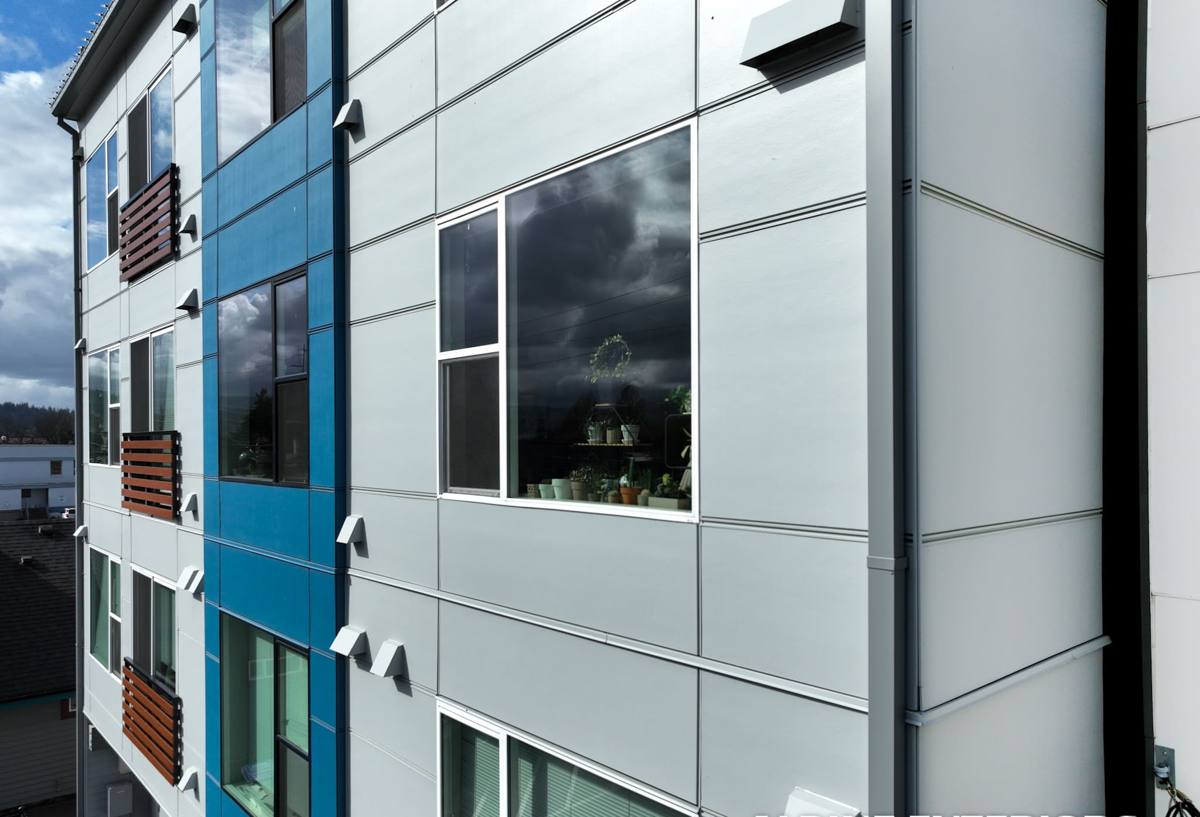
Size and Shape Drive More Than Square Footage Alone
A Simple Box Costs Less Than a Complicated Shape
Two homes with the same total wall area can price very differently depending on how that wall area is broken up. A straightforward two-story with a simple gable roof and few corners goes faster than a home with multiple rooflines, dormers, bump-outs, and bay windows, even if the raw square footage is identical. Every inside corner, outside corner, and roof-to-wall transition adds cutting, fitting, and flashing work that a plain rectangular wall doesn't require.
Height and Access
Single-story homes let a crew work efficiently off ladders and short staging. Two- and three-story homes need more scaffolding, more fall-protection setup, and more careful, time-consuming work at height — all of which adds labor hours without adding wall area. Tight lots, limited space to stage material, decks or porches that need protecting, and mature landscaping crowding the walls all add time too, sometimes on homes that otherwise look modest in size.
Windows, Doors, and Openings
Every opening in a wall needs to be trimmed and flashed around it, and a home with a lot of glass or unusually shaped windows takes longer per square foot than one with fewer, simpler openings. This is one of the quieter reasons two similarly sized homes can land on noticeably different labor estimates.
Tear-Off vs. Overlay: The Fork That Changes Everything
One of the biggest cost decisions in any siding project is whether the old siding comes off the wall or stays in place under the new layer. Overlaying is sometimes possible and lowers upfront labor, but in a marine climate it trades a lower price today for a real risk of paying for it later.
A full tear-off strips the old siding and trim down to bare sheathing, which lets a crew see and repair what's actually there, install a new water-resistive barrier correctly, and start the new siding on a clean, properly prepared surface. It costs more in labor and disposal, but it's the only way to catch problems that have been quietly developing behind the old siding, sometimes for years — and that matters more here than in a dry inland climate, where driving rain works water into wall assemblies steadily rather than occasionally.
Overlay skips that inspection. Whatever moisture damage, rot, or failed flashing already exists stays hidden, and the new siding only performs as well as the surface and drainage plane underneath it. For a wet coastal county like this one, we treat a full tear-off as the standard approach, not an upgrade — it's what lets us actually confirm the wall behind the siding is sound before we put new material on it.
What's Found Once the Old Siding Comes Off
A truly firm number often isn't possible until the old siding is off and the sheathing is exposed, which is why an estimate can shift slightly once work starts. Common discoveries that add cost include:
- Rotted or delaminated sheathing that has to be cut out and replaced before new siding can go on
- Water-damaged framing near windows, doors, or wall penetrations that needs structural repair
- Missing, undersized, or poorly sequenced flashing at windows, doors, and roof-to-wall intersections
- An old, deteriorated, or missing water-resistive barrier that needs to be replaced to current standards
- Wet or compressed insulation that's stopped performing, found once the wall cavity is opened up
A contractor who quotes a firm number and never raises the possibility of hidden repair costs either hasn't torn off many walls in this climate or isn't being straightforward about how these jobs actually unfold. A fair estimate process includes a contingency conversation up front — a plan for how discovered damage gets priced and approved — rather than a surprise change order once your walls are already open.
Material Choice Moves the Number More Than People Expect
Material is usually the first thing homeowners compare across quotes, and it's a real share of the total cost — but the sticker price alone doesn't tell you what you're buying. Durability, finish quality, and long-term maintenance all factor into whether a cheaper material is actually the better value over the life of the siding.
| Material | Relative Material Cost | What Drives Long-Term Value |
|---|---|---|
| Vinyl siding | Lowest upfront | Cheaper material but a shorter practical lifespan, fading, and panel distortion in temperature swings; thin profiles can look and perform accordingly |
| Cedar / primed wood | Moderate to high | Attractive appearance but needs ongoing painting, caulking, and moisture upkeep to hold up in a wet, coastal climate |
| LP SmartSide / engineered wood | Moderate | Lower material cost than fiber cement, but a wood-fiber core that's more sensitive to moisture at cut edges and joints |
| James Hardie fiber cement | Moderate to higher upfront | Factory-applied ColorPlus finish, non-combustible, dimensionally stable, strong transferable warranty, low ongoing maintenance |
We only install James Hardie fiber cement, so we're not the right call if you're already set on vinyl or an engineered-wood product — but it's worth understanding why we standardized on it. Fiber cement costs more per square foot up front than vinyl or engineered wood. What that difference buys is a non-combustible material that doesn't swell or wick moisture the way wood-based products can, a factory-baked finish that holds its color far longer than field-applied paint, and a warranty structure built around long-term performance instead of a low entry price. For a home dealing with salt air and near-constant moisture exposure for much of the year, that upfront gap tends to earn itself back in reduced repainting, caulking, and repair over time.
Why the Specific Hardie Product Line Matters
James Hardie isn't one product — it's a family of profiles (lap siding, shingle-style panels, vertical panels, and trim) engineered for different regional conditions, including an HZ5 formulation built specifically for colder, wetter climates like the Pacific Northwest. Picking the right profile and formulation for a given home's exposure, rather than defaulting to whatever's cheapest in the catalog, is something an experienced installer should walk through with you during the estimate, not something buried in the fine print afterward.
Trim and Finish Details Add Up Fast
The parts of a siding job that get the least attention in a quick estimate are often where quality shows up most. Corner boards, window and door trim, fascia and soffit work, and color-matched caulking all add labor and material cost, but they're also what makes a finished job look intentional instead of assembled. Thinning out this work is one of the quieter ways a bid comes in artificially low — the field of siding looks fine at a glance, but the trim and detail work is minimal or missing entirely.
What Whatcom County's Climate Adds to the Estimate
Coastal weather here doesn't just affect how siding performs after it's installed — it affects what a correctly built wall assembly needs to include from day one, and that shows up as real line items in an honest estimate.
Salt Air and Fastener Corrosion
Homes closer to the water deal with salt-laden air that speeds up corrosion in standard fasteners and metal trim. Corrosion-resistant fasteners and flashing cost a bit more than standard hardware, but out here that's not an optional upgrade — it's what keeps the fastening system from failing years before the siding itself would otherwise need attention.
Driving Rain and Flashing Work
Wind-driven rain hitting walls at an angle, rather than falling straight down, is a regular feature of storms rolling in off the water. Flashing every window, door, and roof-to-wall transition correctly takes noticeably more time than a shortcut approach, and it's one of the first places corner-cutting on a rushed bid shows up — usually as a callback a year or two down the road.
A Long Moss Season and Drainage Planning
Shaded and north-facing walls here can stay damp long enough to grow moss for much of the year, which means drainage detailing — a rainscreen gap, correct clearance at grade, clean water paths off the wall — matters more than it would in a drier climate. Building that in during installation is far cheaper than retrofitting it later, which is one more reason a proper tear-off tends to outperform an overlay over the long run in this county.
Labor, Permits, and Local Code
Labor is typically the largest single cost category on a siding project, often exceeding material cost, and it's driven by the size, shape, and access factors covered above, plus crew size and project timeline. Siding replacement in Whatcom County generally requires a building permit, and permit and inspection fees are a modest but real part of the total cost. A licensed, bonded, and insured contractor should handle permitting as part of the job, not leave it for the homeowner to sort out — that oversight is part of what you're paying for with an established local company versus an unlicensed crew working under the radar.
What to Check Before You Compare Quotes
Comparing bids isn't just "which number is lowest" — it's confirming every quote is actually pricing the same scope of work. Before lining numbers up side by side, make sure each bid specifies:
- Full tear-off to the sheathing, or overlay over the existing siding
- Whether sheathing inspection and repair, if needed, is included or billed separately as discovered
- The specific material, product line, and profile being installed, not just "fiber cement" or "vinyl" in general terms
- Whether a new water-resistive barrier and drainage gap are part of the scope
- Fastener and flashing hardware specified for a coastal, high-moisture climate
- Trim, corner, and soffit/fascia work included in the price, not added later as an extra
- Permit handling and manufacturer warranty registration included
- A written process for pricing hidden damage discovered once the old siding is off
A bid missing several of these isn't automatically dishonest, but it makes an apples-to-apples comparison difficult. The lowest number on paper is sometimes lowest because it's leaving out work another bid included.
Getting a Number You Can Actually Rely On
The most reliable way to understand what your specific home will cost is a walkthrough where someone can actually see its size, shape, access, existing siding condition, and window and door count, rather than estimating from a square footage figure alone. That's also when risk factors — an older home with unknown sheathing condition, a shaded wall already showing moss, a section that's clearly seen water damage — get flagged before they turn into surprises mid-project.
If you're weighing a siding replacement and want a clear, honest breakdown of what your home specifically would involve, we're glad to walk the property with you and explain exactly what we see. Reach out below for a free, no-pressure estimate.