 Whatcom County
 Siding in Columbia, Built for Whatcom County Weather
Columbia sits inside a stretch of Whatcom County where the exterior of a house works hard every single month of the year. It isn't one dramatic storm that wears siding down here — it's the accumulation of salt-laden air, sideways rain that finds every gap in a wall system, and a moss season that seems to start earlier and last longer with each passing year. Homes in this part of Washington need an exterior that's engineered for that combination, not just painted or coated to look good on the day it goes up.
We're a local siding, roofing, window, and deck crew that works throughout Whatcom County, and Columbia is one of the areas we're in regularly. That matters more than it sounds like it should. A contractor who understands how this specific stretch of coastline behaves — where the wind-driven rain tends to hit hardest, which sides of a house take the brunt of the salt air, where moss tends to establish first — makes better decisions on your project than a crew seeing the area for the first time.
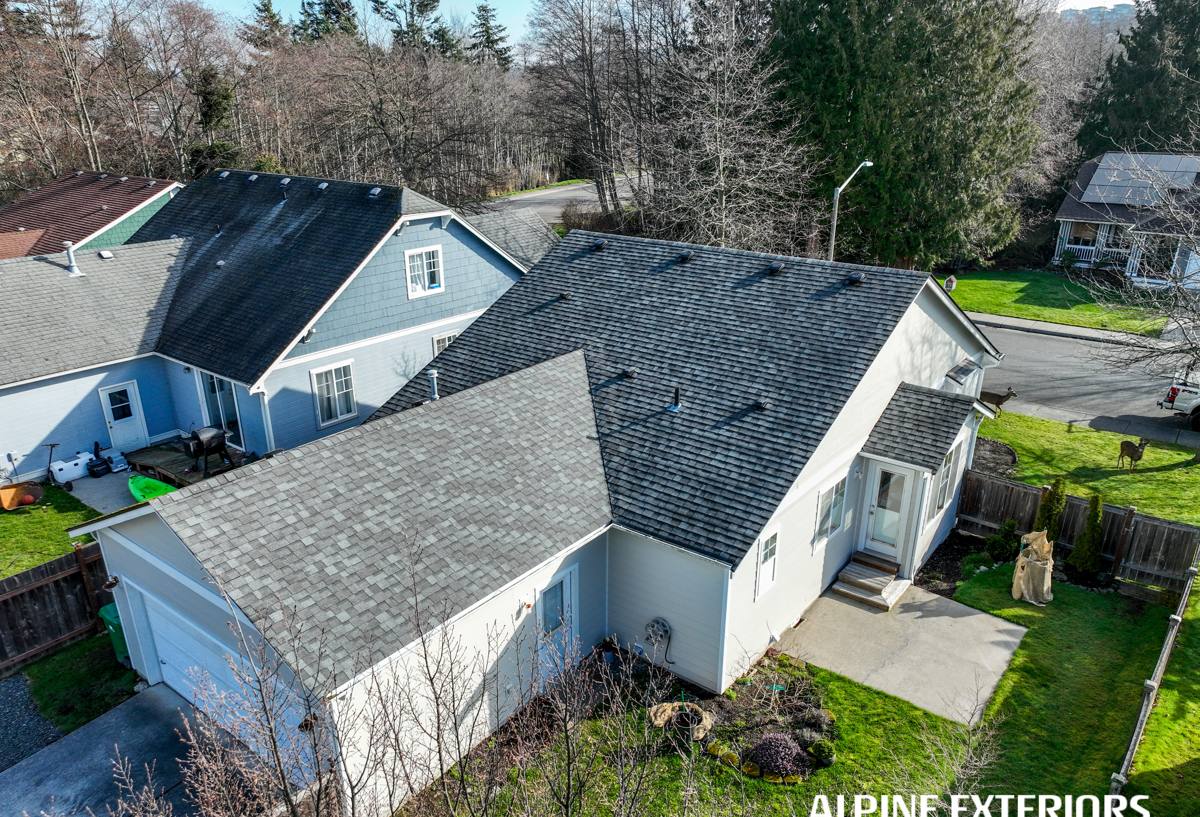
What Columbia Homes Are Actually Up Against
Salt Air and Coastal Moisture
Proximity to the Salish Sea means airborne salt is a constant, low-level presence on exterior surfaces. Salt air accelerates the breakdown of paint films, corrodes exposed metal fasteners, and speeds up the failure of materials that rely on a surface coating to keep water out. It's a slow process, which is exactly why it catches homeowners off guard — the damage is cumulative and easy to miss until a section of siding is visibly compromised.
Driving Rain
Whatcom County doesn't just get rain, it gets rain that moves horizontally in a stiff wind off the water. That kind of weather tests every seam, every joint, and every piece of flashing on a house. Siding that depends on a tight, unbroken paint or coating layer to stay watertight is far more exposed to this pattern than a product engineered to handle moisture at the material level.
A Long Moss Season
Shade, moisture, and mild temperatures are a perfect combination for moss and algae growth, and Whatcom County offers all three for a good part of the year. Moss holds moisture against a wall surface long after a storm has passed, which is exactly the condition that causes rot in wood-based products and accelerates coating breakdown on others. On north-facing walls and in tree-shaded yards, moss can become a near-permanent tenant if the siding material and installation don't account for it.
Why We Install Only James Hardie Fiber Cement
We made a deliberate decision to install James Hardie fiber cement siding exclusively. We don't install vinyl, LP SmartSide, Cemplank, Allura, primed spruce, or cedar. That's not a marketing position — it's a standard we hold because of what we've seen hold up in coastal Washington weather over time, and what tends to struggle.
Fiber cement is a blend of cement, sand, and cellulose fibers, which means it doesn't rely on a factory or field-applied coating to keep water out the way wood-based and some engineered wood products do. It's also non-combustible, which is a genuine safety advantage regardless of climate. James Hardie backs its products with ColorPlus Technology, a factory-applied finish that's baked on rather than sprayed and air-dried, and their HZ5 product line is specifically engineered for the moisture and freeze-thaw conditions found in the Pacific Northwest.
We'll talk honestly about other products if you ask — every material has real strengths. But when a house in Columbia is going to sit through decades of salt air, driving rain, and moss, we want our name on an installation we're confident will still be doing its job in 20 or 30 years, not one that needs recaulking, repainting, or panel replacement every few seasons.
How Our Process Works for a Columbia Property
Every project starts with an actual walk of the property, not a drive-by estimate. We look at:
- Which elevations take the most direct wind-driven rain and salt exposure
- Existing moisture damage, soft spots, or rot behind current siding
- Trim, flashing, and window/door transitions — the places water actually gets in
- Shaded or low-airflow areas where moss and algae are likely to return
- Whether the existing water-resistive barrier and sheathing need attention before new siding goes on
From there we build a scope specific to that house — not a generic package. Fiber cement installation has real technical requirements: proper fastener placement and spacing, correct clearances from grade and roof lines, sealed and flashed penetrations, and manufacturer-specified gaps at butt joints. Installed to spec, James Hardie siding performs the way it's designed to. Installed loosely, any siding product can fail early — which is why we don't treat installation as an afterthought to the material choice.
Comparing Materials for This Climate
| Material | How It Handles Salt Air | How It Handles Driving Rain | Moss/Algae Resistance |
|---|---|---|---|
| James Hardie fiber cement | Non-combustible core, factory ColorPlus finish resists salt-driven fading | Engineered HZ5 line built for PNW moisture patterns | Dense material resists moisture intrusion behind the surface |
| Vinyl | Can chalk and fade faster near salt air over time | Seams and panel laps can allow water intrusion if not installed precisely | Surface growth is common; panels can trap moisture behind them |
| LP SmartSide | Engineered wood strand product, relies on coating integrity | Edge sealing and caulking maintenance are important to prevent swelling | Wood-based core is more vulnerable if moss holds moisture at the surface |
| Cedar / primed spruce | Natural wood, coating breakdown from salt exposure is common | Prone to cupping, checking, and moisture absorption without diligent upkeep | Highly susceptible to moss and rot in shaded, damp conditions |
This isn't a claim that other products can't be maintained successfully — many homeowners do maintain them well. It's a reflection of the ongoing attention those materials tend to need in this specific climate, versus what fiber cement asks of you over the same stretch of time.
Signs Your Current Siding Is Already Losing the Fight
- Soft or spongy spots when you press on the siding, especially near the bottom courses
- Paint that's peeling, bubbling, or chalking faster than it used to
- Persistent moss or dark streaking that comes back within a season of cleaning
- Visible gaps, warping, or separation at seams and corners
- Rising energy bills that could point to a compromised weather barrier behind the siding
- Rust streaking from fasteners, a sign of corrosion working through the material
None of these are emergencies on their own, but they're worth a professional look before a small issue becomes a wall-sheathing problem.
Roofing, Windows, and Decks Work Together
Siding doesn't perform in isolation. A roof that's shedding water improperly onto a wall, windows that aren't flashed correctly, or a deck ledger that's trapping moisture against the house can undermine even the best siding installation. Because we handle roofing, windows, and decks in addition to siding, we can look at a Columbia home's whole exterior envelope as one system rather than treating each component separately. That's often where the real, lasting fixes come from — not just new siding, but making sure the water management around it is actually working.
Why a Local Crew Matters Here
Whatcom County's microclimates vary more than people expect over a short distance — proximity to water, elevation, and tree cover all change how a house experiences weather. A crew that works this county regularly has a feel for those differences: which properties need extra attention to ventilation, where moisture tends to collect, and how local permitting and inspection processes typically go. That local knowledge shows up in the details of a project, not just the sales pitch.
What to Expect After Installation
James Hardie siding, installed correctly, is genuinely low-maintenance — it's not zero-maintenance. Periodic rinsing to keep salt residue and organic growth from building up, an occasional check of caulking at trim and penetrations, and prompt attention to any impact damage will keep it performing for the long haul. James Hardie also offers a strong, transferable limited warranty on the product itself, which matters if you ever sell the home — a documented, well-installed exterior is a genuine selling point in this market.
If you're weighing a siding project in Columbia — whether it's a full replacement, storm damage repair, or you're just trying to figure out how much longer your current siding has — we're happy to come take a look. The estimate is free, there's no pressure, and you'll get a straight answer about what your home actually needs.