 Whatcom County
 Vinyl siding covers a huge share of homes across Washington, and it's easy to see why. It's inexpensive, widely available, and installs quickly. But after years of working on homes throughout Whatcom County — from Bellingham to Ferndale, Lynden, and Blaine — we made a deliberate decision to stop installing it. This page explains the honest reasoning behind that decision, not to bad-mouth a product millions of homeowners live with just fine, but to explain why the climate here changes the math.
What Vinyl Siding Actually Gets Right
Fair is fair. Vinyl siding is lightweight, relatively cheap to purchase, and doesn't rust or rot in the way wood does. For a starter home, a rental property, or a tight budget, it can be a reasonable choice in a lot of the country. In dry, moderate climates with less wind-driven moisture, vinyl can perform acceptably for a couple of decades with minimal fuss.
The problem isn't that vinyl is a bad product everywhere. The problem is that Whatcom County isn't "everywhere." Our combination of marine air off Puget Sound and Bellingham Bay, near-constant winter rain, and long stretches of shade and dampness that feed moss and algae growth puts real stress on a product that was engineered for average American weather, not for ours specifically.
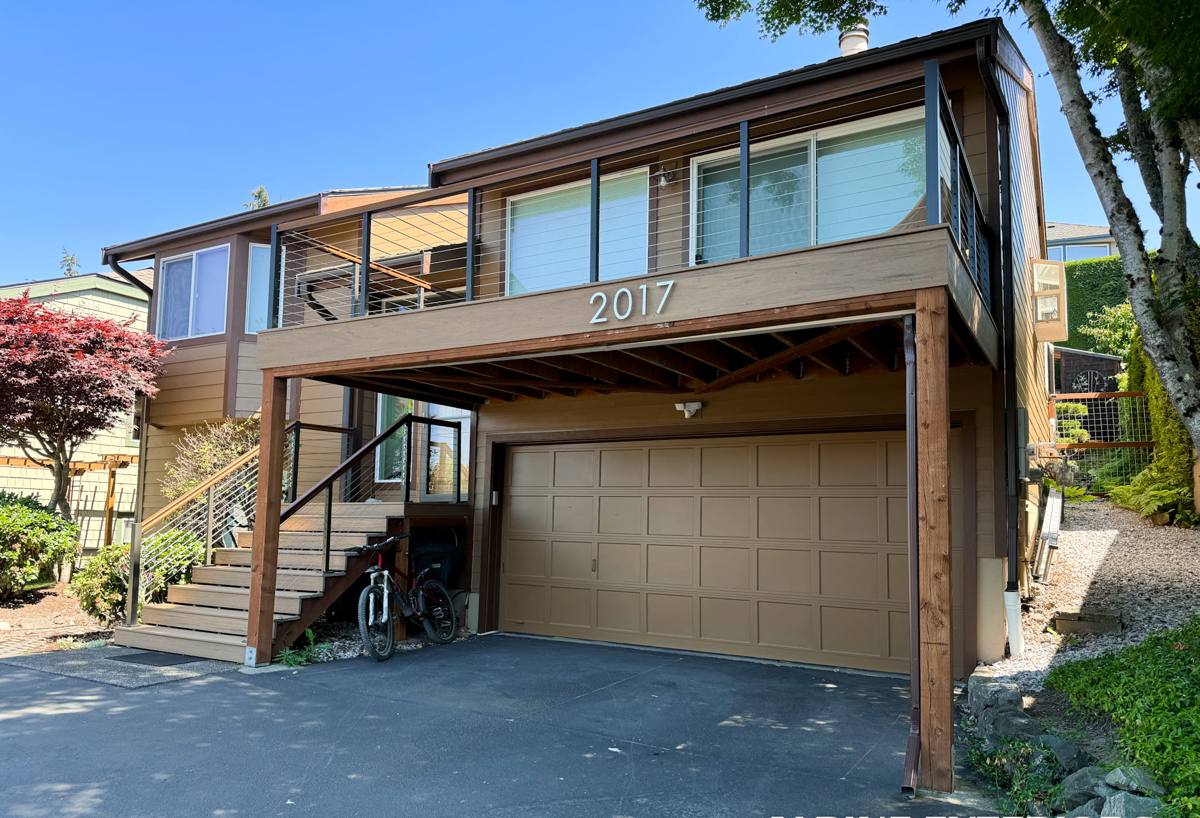
Salt Air, Driving Rain, and the Moss Season
Whatcom County sits close enough to salt water that airborne salt is a real factor on siding, trim, and fasteners, especially for homes near Birch Bay, Blaine, and the Bellingham waterfront. Salt-laden moisture accelerates the breakdown of coatings and adhesives, and it settles into every seam and lap joint a siding system has.
Add to that the driving rain that comes through on Pacific storm systems — rain that doesn't just fall straight down but gets pushed sideways into wall assemblies — and you have conditions that test any cladding's ability to shed water rather than trap it. Then there's our moss season, which in this county can run most of the year on north-facing walls and shaded elevations. Persistent dampness is exactly what moss and algae need to take hold, and it's exactly the condition vinyl handles the least gracefully.
The Moisture Problem Behind the Panels
Vinyl siding is not a waterproof wall system by itself — it's a rain screen that relies on the housewrap and flashing behind it to do the real work of keeping a house dry. That's true of most siding, including fiber cement. But vinyl's thin profile, its lap-and-lock installation method, and its tendency to expand and contract with temperature swings mean water finds its way behind panels more easily over time, especially at corners, window returns, and butt joints.
Once moisture gets behind a wall assembly in a climate this wet, it doesn't dry out quickly. We've opened up vinyl-clad walls in this county and found trapped moisture, soft sheathing, and mold growth that the homeowner had no idea was happening because the vinyl on the surface still looked fine. That's the core issue: vinyl can hide a moisture problem for years before it shows up as a soft spot or a musty smell inside.
Expansion and Contraction
Vinyl panels are engineered to expand and contract with temperature, which is why installers leave gaps at nail slots. Over years of our wet-cold winters and warmer summers, that constant movement can loosen panels, warp them, or cause visible waviness — especially on south and west-facing walls that see the most temperature swing.
Fading, Chalking, and the Color Question
Vinyl's color runs through the material, not on top of it, but it still fades with UV exposure, and darker colors fade faster and more unevenly. Once a vinyl panel fades or chalks, there's no practical way to restore the original color — painting vinyl is possible but often voids warranties and rarely looks factory-finished. On a county with plenty of gray days but also intense summer sun on south-facing exposures, uneven fading across a home's elevations is common within 10 to 15 years.
Impact and Wind Resistance
Vinyl becomes more brittle in cold temperatures, which means it's more prone to cracking from impacts — a thrown rock, a ladder bump, hail, or debris in a windstorm — during our colder months. And because panels rely on interlocking with each other rather than being solidly fastened, sustained wind events can work panels loose or blow them off entirely. Whatcom County gets its share of windstorms off the Sound, and we've done more than a few service calls for vinyl panels that came apart in weather that a heavier cladding would have shrugged off.
The Warranty Fine Print
Vinyl siding warranties often look generous on paper — "lifetime" coverage is common marketing language. In practice, most vinyl warranties are prorated, meaning the coverage value shrinks every year you own the product, and they typically cover manufacturing defects only, not fading, warping, or impact damage from normal weather exposure. They're also frequently non-transferable, or transferable only once, which matters if you plan to sell the home. Homeowners are often surprised, years in, at how little a vinyl warranty actually pays out.
Vinyl vs. Fiber Cement: A Straight Comparison
| Factor | Vinyl Siding | James Hardie Fiber Cement |
|---|---|---|
| Upfront material cost | Lower | Higher |
| Moisture behavior in wet climates | Prone to trapping water behind panels over time | Engineered HZ product lines rated for Pacific Northwest moisture exposure |
| Fire resistance | Combustible | Non-combustible fiber cement |
| Color durability | Fades and chalks with UV/salt exposure | ColorPlus factory finish resists fading, backed by finish warranty |
| Impact resistance | Brittle in cold, cracks on impact | Dense fiber cement resists dents and impacts |
| Wind performance | Can loosen or blow off in sustained wind | Fastened solidly, rated for high wind exposure |
| Warranty structure | Often prorated, limited transferability | Strong transferable non-prorated warranty |
| Typical service life | 15-25 years before visible degradation | 30+ years when installed to spec |
Why We Standardized on James Hardie
After weighing what we've seen come off homes in this county over the years, we made the call to install only James Hardie fiber cement siding — nothing else leaves our trucks. It's non-combustible, which matters given the dry-summer wildfire smoke and ember risk that reaches Western Washington in fire season even if direct wildfire exposure here is lower than east of the mountains. Its ColorPlus factory finish is baked on and warrantied against fading in a way field-applied paint on other materials isn't. Hardie's HZ5 and similar climate-engineered product lines are formulated specifically for moisture- and moss-prone regions like ours. And the warranty is transferable and structured to actually mean something 20 years down the road, not just in year one.
None of this is about vinyl being a scam or a defective product. It's about the fact that we'd rather install one material we can stand behind completely in this specific climate than offer several options and have to explain, years later, why the cheaper one didn't hold up the way a homeowner expected.
What to Ask Before You Choose a Siding Material
- How does this material perform specifically in wet, salt-air, marine climates — not just "in general"?
- Is the warranty prorated, and does it cover fading and impact damage or only manufacturing defects?
- What happens if moisture gets behind the panels — how would I even know, and how is it repaired?
- Is the color factory-applied or field-applied, and what's actually warrantied against fading?
- How does the material handle our wind events and winter cold snaps without cracking or loosening?
- Is the warranty transferable if I sell the home within the next 10-15 years?
Making the Right Call for Your Home
Every siding material is a set of trade-offs, and vinyl's trade-offs happen to line up poorly with Whatcom County's salt air, driving rain, and moss season specifically. That's a climate argument, not a quality argument — vinyl does fine in plenty of places. We just don't think it's the right long-term investment for homes here, which is why we've built our business around a single product line we trust to hold up through everything this corner of Washington throws at it.
If you're weighing siding options for a home in Bellingham, Lynden, Ferndale, Blaine, or anywhere else in Whatcom County, we're happy to walk your property, point out what we're actually seeing on your walls, and give you a straightforward, no-pressure estimate for a James Hardie replacement — no sales script, just what we'd do on our own house.