 Whatcom County
 Exterior Work That Holds Up in Sunnyland
Sunnyland sits in one of Whatcom County's older, established residential pockets, and that shows in the housing stock — a mix of mid-century ranches, postwar bungalows, and newer infill homes, many of them now 40, 60, even 80 years past their original siding job. If you've owned a home here for more than a few years, you already know what the exterior takes on: damp air rolling in off the water, long stretches of drizzle that never quite turns into a hard rain, and a shade-and-moisture combination that keeps moss and algae in business nearly year-round. None of that is unusual for this part of Washington. But it does mean the exterior materials on your home have a tougher job here than they would in a drier climate, and it's worth choosing them with that in mind.
We handle siding, roofing, windows, and decks for homeowners throughout Whatcom County, and Sunnyland is a neighborhood we know well. This page walks through what the local climate actually does to a home's exterior over time, how our services address it, and why we've standardized on one siding product instead of offering the usual lineup of options.
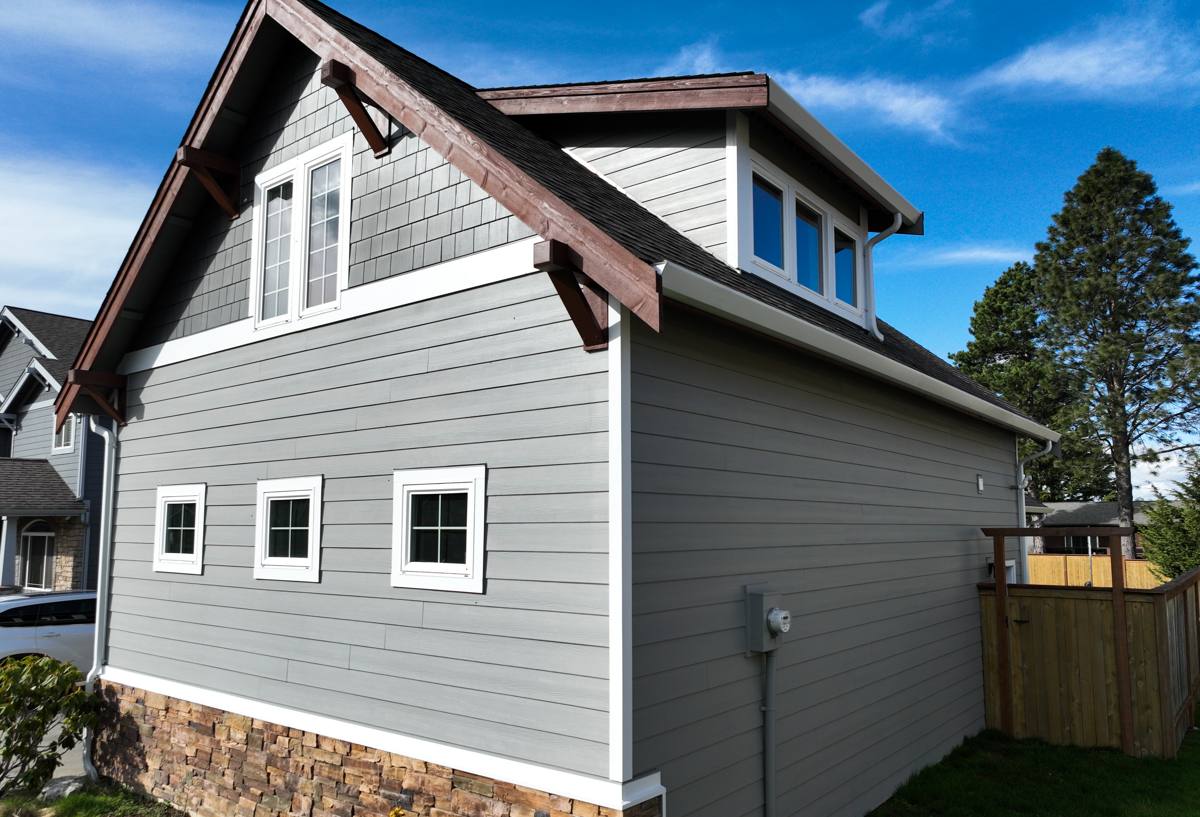
What Whatcom County Weather Does to a Home's Exterior
Moisture Is the Constant
Whatcom County doesn't get the heaviest rainfall in the state, but it gets a lot of days of it — long, low-intensity soakings rather than short downpours. That pattern is hard on exterior materials because it keeps surfaces wet for extended periods rather than drenching them and drying out quickly. Wood-based siding products, in particular, depend on drying time between wet cycles to stay stable. When that drying window shrinks, moisture works its way into seams, fastener holes, and butt joints, and the damage builds slowly — you often don't see it until paint starts failing or boards start softening at the edges.
Salt Air and Coastal Proximity
Being close to Bellingham Bay means homes in this area deal with a mild but persistent salt-air exposure. Salt accelerates corrosion on fasteners, flashing, and any exposed metal trim, and it can also affect how paint and coatings hold up over time. It's a slower process than what you'd see right on the waterfront, but over a couple of decades it adds up, especially on the weather-facing sides of a house.
Moss and Algae Season Runs Long
Shade from mature trees, consistent moisture, and mild temperatures give moss and algae a long growing season in Whatcom County — often close to year-round in shaded or north-facing areas. Moss on a roof holds water against shingles and can work its way under the roofing material over time. On siding, algae staining is mostly cosmetic, but it's a good visual marker of where moisture is lingering longest on your home, which is often exactly where problems eventually show up.
Wind-Driven Rain
Storms coming off the Strait of Georgia and Puget Sound frequently bring rain sideways rather than straight down. Wind-driven rain finds weaknesses that vertical rain never would — gaps in flashing, poorly lapped siding joints, undersized window trim. It's one of the main reasons installation quality matters as much as material choice.
Siding: Why We Only Install James Hardie
We get asked fairly often why we don't offer vinyl, LP SmartSide, or the various fiber cement alternatives on the market. The honest answer is that after years of doing exterior work in this climate, we settled on James Hardie fiber cement as the only product we're willing to stand behind, and we'd rather be straightforward about that than sell homeowners something we have reservations about.
Vinyl Siding
Vinyl is inexpensive and low-maintenance in the sense that it doesn't need painting, but it's a thin plastic product that expands and contracts significantly with temperature swings, can crack in impact events, and tends to fade and become brittle with UV exposure over the years. In a marine climate with driving rain, vinyl's lap-and-gap installation style also relies heavily on a properly executed water-resistive barrier behind it, since the siding itself isn't doing much to manage moisture on its own.
LP SmartSide and Engineered Wood
Engineered wood products like LP SmartSide have improved a lot over the years and hold paint well when installed and maintained correctly. But they're still wood-based, which means they're more sensitive to sustained moisture exposure than fiber cement, and in a climate where wood doesn't get much of a chance to dry out between rain events, that's a real consideration over a 20-30 year ownership horizon.
Cemplank, Allura, and Other Fiber Cement Brands
These are legitimate fiber cement products and share the same basic material science as James Hardie. Our reasons for standardizing on Hardie specifically come down to the factory-applied ColorPlus finish (which carries its own separate finish warranty), the depth of their climate-specific engineering for products designed for wet regions, and the consistency we've seen installing their product lines over time. It's a business decision to concentrate our expertise on one system rather than a claim that the alternatives are unusable.
Primed Spruce and Cedar
Natural wood siding has real appeal — it's the classic look many homeowners want — but it also demands the most ongoing maintenance of any option: regular repainting or staining, careful caulking, and vigilant moisture management. In Whatcom County's climate, that maintenance schedule tends to compress, and skipped maintenance shows up as rot faster than it would in a drier region.
What James Hardie Gets Right for This Climate
- Fiber cement is non-combustible, which matters for insurance and for wildfire-adjacent exposure in drier summer months.
- It doesn't absorb and swell with moisture the way wood-based products can, which matters in a region where materials rarely get a long dry stretch.
- The HZ5 product line is engineered specifically for cold, wet, freeze-prone climates like ours.
- ColorPlus factory finish reduces on-site painting variability and comes with its own finish warranty separate from the substrate warranty.
- Properly installed Hardie siding has a long track record of holding paint and resisting moss and algae staining better than wood-based alternatives.
Installation Quality Matters as Much as the Product
Even the best siding product fails early if it's installed wrong, and fiber cement is less forgiving of shortcuts than people expect. Proper installation in a wind-driven-rain climate means correct flashing at every window, door, and penetration; proper clearance from grade and roof lines; correctly lapped joints; and fastening patterns that match the manufacturer's specifications for the wind exposure of your site. This is a big part of why we emphasize a local crew for Sunnyland projects — we're familiar with how houses here are sited relative to prevailing weather, which sides typically take the worst of it, and where past callbacks in this kind of neighborhood have originated.
Roofing, Windows, and Decks: The Rest of the Building Envelope
Roofing
Given the moss and moisture patterns described above, roofing in this area needs attention to underlayment quality, proper ventilation, and moss-resistant material choices where appropriate. A roof that traps moisture underneath shingles is one of the most common sources of hidden damage we find on older Whatcom County homes.
Windows
Older single-pane or early dual-pane windows are common in Sunnyland's older housing stock. Beyond energy performance, window replacement is also a moisture-management opportunity — new flashing and proper integration with the siding around each opening closes off one of the most common water entry points on a house.
Decks
Decks take the most direct, unsheltered exposure to rain and moss of any exterior feature. Material choice, proper drainage detailing, and joist protection all matter more here than in drier climates, where a deck can get away with less careful build-out.
Cost Factors to Understand Before You Get Estimates
| Factor | Why It Affects Price |
|---|---|
| Home size and story count | More square footage and higher walls mean more material and labor, plus scaffolding/lift needs on multi-story homes |
| Existing siding removal | Tear-off of old siding, especially if it's layered over prior siding, adds labor and disposal cost |
| Trim and detail complexity | Homes with lots of corners, dormers, or architectural detail take longer to trim out correctly |
| Moisture damage discovered mid-project | Rotted sheathing or framing found once old siding comes off needs repair before new siding goes on |
| Siding profile and color | Lap width, texture (smooth vs. cedar-shake style), and ColorPlus color selection affect material pricing |
| Access and site conditions | Tight lots, mature landscaping, or slope can add setup time and equipment cost |
What to Ask Before Hiring an Exterior Contractor
- Are you licensed and insured to work in Washington State, and can you provide proof?
- Who is doing the actual installation — your own crew, or subcontractors?
- What's your experience specifically with James Hardie fiber cement installation requirements?
- How do you handle moisture or rot discovered once old siding or roofing comes off?
- What does your warranty cover, and how does it interact with the manufacturer's warranty?
- Can you walk me through your flashing and water-management details before work starts?
A Local Crew Matters More Than It Sounds
Whatcom County's mix of coastal exposure, elevation changes, and tree cover means two houses a few blocks apart can face genuinely different weather realities. A crew that works across this county regularly has a feel for which details matter most on a given lot — how close it sits to the water, how much shade it gets, which direction the weather usually comes from — and builds that judgment into the estimate and the installation, not just the sales pitch.
If you're weighing a siding, roofing, window, or deck project in Sunnyland, we're glad to walk your property, look at what your home is actually dealing with, and put together a straightforward, no-pressure estimate using the form below.