 Whatcom County
 Blaine's Exterior Climate: Border Town, Bay Town
Blaine sits at the northwest corner of Whatcom County, wrapped by Drayton Harbor and Semiahmoo Bay, with the Canadian border a few minutes away and the open Strait of Georgia not much farther. That geography matters more to a house's exterior than most homeowners realize. Being this close to saltwater means airborne salt is a constant, low-grade presence on siding, trim, gutters, and fasteners — even on homes that aren't waterfront. Add in Whatcom County's long wet season, where fog and drizzle can sit over the water and roll into town for days at a stretch, and you get a combination that's genuinely harder on building materials than most inland Washington towns ever see.
None of this means a home in Blaine is doomed to premature siding failure. It means the materials and installation details matter more here than they do fifty miles inland. That's the lens we bring to every estimate in this area.
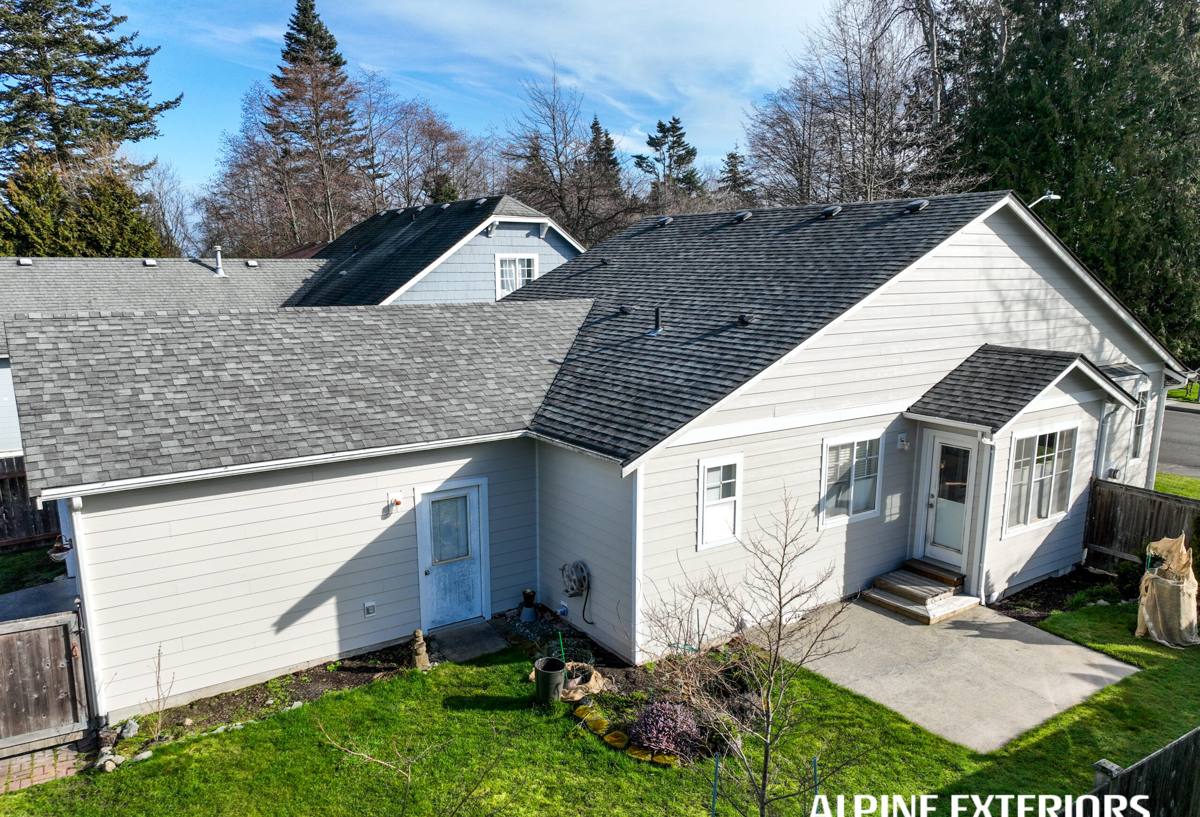
What Salt Air Actually Does to a House
Salt air isn't just a smell near the water — it's fine airborne salt particles that settle on every exterior surface and get reactivated every time it rains or the humidity climbs. Over years, this accelerates corrosion of exposed metal fasteners, staples, and any hardware that isn't rated for coastal exposure. It also means paint films on wood siding tend to break down faster near the coast than they do inland, because the salt crystals draw moisture into the coating and hold it there.
Why This Matters for Siding Choice
Fiber cement doesn't corrode — it's cement, sand, and cellulose fiber, not metal. That removes one entire failure mode that coastal homes near Blaine otherwise have to manage. It's a big part of why we standardized on James Hardie products rather than continuing to install materials that ask a homeowner to fight corrosion and coating breakdown every few years.
Moss Season and What It Means for Siding
Anyone who's lived in Whatcom County through a full winter knows moss season isn't a one-time event — it's a standing condition from roughly fall through spring, longer in shaded yards or on the north side of a house. Moss and algae need moisture and organic material to take hold, and they'll colonize almost any siding surface that stays damp and doesn't get direct sun. Wood-based sidings — cedar, primed spruce, and even some engineered wood products — are more vulnerable because moss can hold moisture directly against the substrate, and once that substrate is wood fiber, sustained dampness is exactly what leads to rot.
Where Moss Tends to Take Hold
- North- and east-facing walls that get little direct sun
- Areas under tree canopy or close to fences and shrubs
- Lower courses of siding near grade, where splashback keeps material damp longer
- Behind gutters or downspouts that aren't draining cleanly
Fiber cement siding won't feed moss the way an organic substrate can, and a factory-applied finish sheds surface growth more easily during a wash-down than a field-painted wood surface does. That doesn't mean moss and algae can't grow on any siding near a damp bay-side lot — it means the material underneath isn't part of the problem.
Driving Rain and Water Management
Whatcom County storms coming off the water aren't always straight-down rain — wind-driven rain is common in Blaine, and it behaves differently than a calm downpour. It gets pushed sideways and upward under laps, around trim, and into any gap in the water-resistive barrier that a marginal installation left behind. This is where installation quality matters as much as the product itself. Correct flashing at windows, doors, and horizontal trim; proper lap and fastening; and a water-resistive barrier installed to the manufacturer's actual detail — not just "close enough" — are what keep driving rain from finding its way behind the cladding.
Our Installation Standard
We install James Hardie panels and lap siding to Hardie's published installation instructions, which includes specific guidance for climates like this one — proper clearances at grade, correct flashing integration, and fastener patterns suited to wind exposure. A great product installed loosely will still leak. A well-detailed installation is what actually keeps a house dry through a Blaine winter.
Why We Only Install James Hardie
We get asked fairly often why we don't offer vinyl, LP SmartSide, or other engineered wood or fiber cement alternatives like Cemplank or Allura. The honest answer is that we made a standardization decision based on what holds up with the least maintenance burden in this specific climate, and James Hardie is what we're willing to warranty our work on.
| Factor | What It Means Near the Bay |
|---|---|
| Combustibility | Fiber cement is non-combustible, relevant given regional wildfire smoke seasons and general fire-safety codes |
| Moisture behavior | Won't rot or swell from sustained dampness the way wood-based products can |
| Finish durability | ColorPlus factory finish is baked on and engineered to resist fading and hold up against coastal UV and salt exposure better than field-applied paint |
| Corrosion | Cement-based product has no metal substrate to corrode from salt air |
| Warranty | Manufacturer-backed, transferable warranty on both the substrate and factory finish |
Vinyl siding has its place in the market — it's inexpensive and low-maintenance in mild climates — but it can become brittle in freeze-thaw cycles, and its seams and J-channels give wind-driven rain more opportunities to find a path behind it. LP SmartSide and other engineered wood products have improved over the years, but they're still wood-based at the core, which means they depend entirely on an intact factory coating to keep moisture out; any breach — a nail pop, a saw cut left unsealed, a woodpecker hole — opens a path for water into a material that can swell and deteriorate once wet. Cemplank and Allura are also fiber cement and reasonable products in their own right, but we don't carry every fiber cement line — we chose to build our crews' expertise, warranty relationships, and installation training around one system so we can stand fully behind the work.
Roofing, Windows, and Decks for the Same Climate
Siding doesn't work in isolation — a roof that's shedding water properly, windows that are flashed correctly, and a deck that's built to handle standing moisture all work together to keep a Blaine home dry. We handle all four trades, which means when we're on-site for a siding job we're also looking at roof-to-wall transitions, window flashing, and deck ledger connections — the places where two systems meet are usually where problems start.
Common Trouble Spots We Check
- Roof-to-wall step flashing and kickout flashing at gutter lines
- Window and door head flashing integration with the siding water-resistive barrier
- Deck ledger board attachment and flashing where it meets the house
- Gutter condition and downspout discharge away from the foundation
What a Whatcom County Crew Brings to a Blaine Job
A crew that works this county regularly knows what a wet Blaine winter does to a jobsite schedule, understands local permitting through the county and city, and has already made the calls on flashing details for this climate on other homes nearby. That's different from a crew driving up from out of the area for a single job. Local crews also tend to be more responsive if a warranty question or a minor issue comes up after the work is done — no travel time, no scheduling around a distant home base.
What to Expect from an Estimate
A siding estimate on a Blaine home starts with a walk-around to assess current siding condition, moisture damage if any, moss or algae buildup, and how exposed the home is to prevailing wind and rain direction. We'll look at trim, flashing, and any spots where past patch jobs suggest recurring water issues. From there we can talk through Hardie's product lines — lap siding, panel siding, and trim — and what makes sense for the home's style and exposure.
Questions Worth Asking Any Contractor
- What siding material do you install, and why that one specifically?
- How do you detail flashing at windows, doors, and grade?
- What does the manufacturer's warranty actually cover, and is it transferable?
- Do you carry current licensing and insurance for work in Washington?
- Can you walk me through how you'd handle this home's specific moss or moisture trouble spots?
If you're weighing a siding replacement, dealing with visible moss buildup, or just want an honest read on how your current exterior is holding up against the salt air and rain here in Blaine, we're happy to come take a look. The estimate is free, there's no pressure, and you'll get a straight answer about what your home actually needs.