 Whatcom County
 Bellingham Siding: Built for a Coastal, Wet Climate
Bellingham sits close enough to the water that salt air is a real factor in how siding ages, and far enough into the Pacific Northwest's rain belt that moisture exposure is a year-round condition, not a seasonal one. Add in the region's long, damp shoulder seasons that favor moss and algae growth on north-facing walls and shaded siding runs, and you have a climate that is genuinely tougher on exterior cladding than most homeowners realize until they're dealing with the damage. A siding installation done for a drier, inland market simply doesn't hold up the same way here.
This page is about one thing: what it actually takes to install siding correctly on a Bellingham home, given Whatcom County's specific climate pressures, and why the details of that installation matter more here than almost anywhere else in the state.
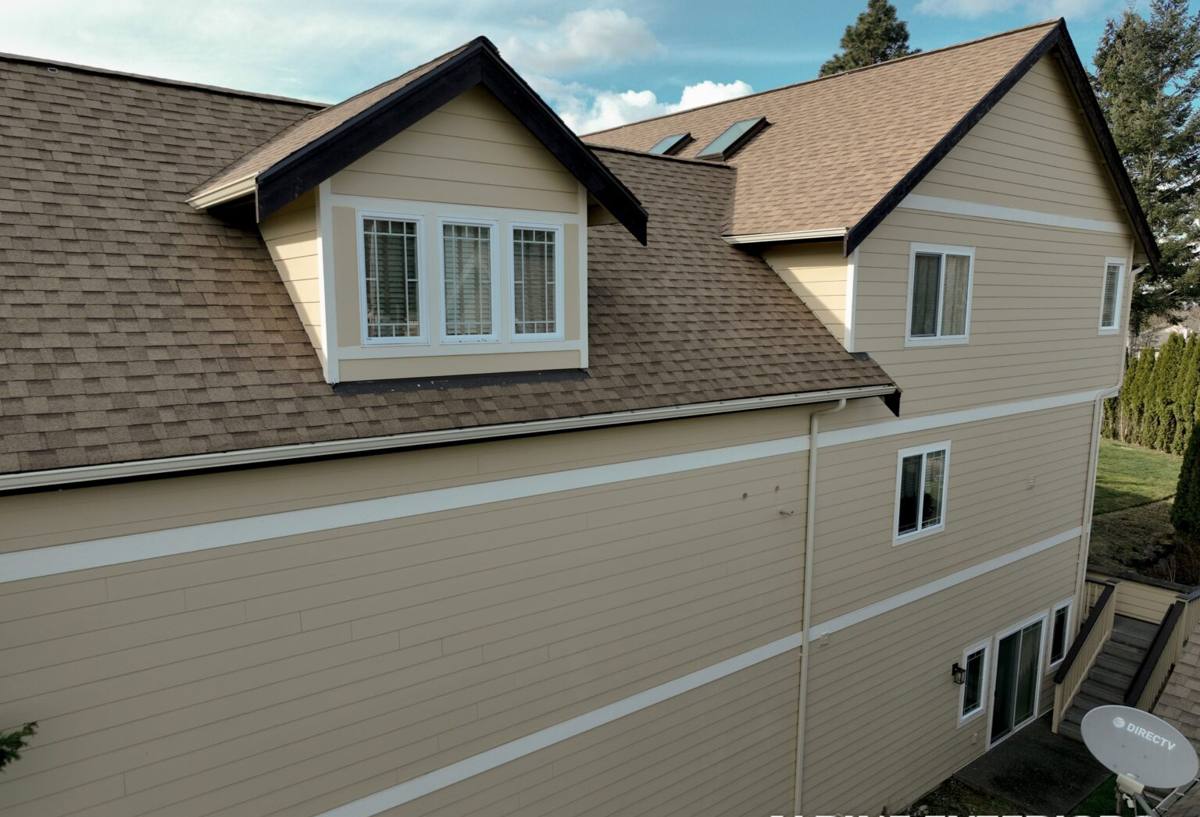
What Salt Air, Driving Rain, and Moss Season Actually Do to Siding
Salt Air
Homes closer to Bellingham Bay and the surrounding shoreline are exposed to airborne salt that accelerates corrosion on fasteners, flashing, and any metal trim components. Over years, this can lead to streaking, premature rust bleed-through, and weakened fastening points if the wrong materials were used to begin with. Salt exposure doesn't ruin siding overnight — it's a slow, cumulative wear pattern that shows up as pitting and staining long before anyone notices a structural problem.
Driving Rain
Whatcom County doesn't just get a lot of rain — it gets wind-driven rain that hits walls at an angle instead of simply running down them. That means water finds its way into every gap, seam, and poorly lapped joint that a fair-weather installation might get away with elsewhere. Siding that isn't installed with proper overlaps, flashing, and a functioning drainage plane behind it will eventually let water behind the cladding, where it causes problems you can't see until they're expensive.
Moss and Algae Season
Bellingham's extended damp season, especially on shaded or north-facing walls, creates ideal conditions for moss and algae to take hold on siding surfaces. Beyond the cosmetic issue, moss holds moisture against the surface for extended periods, which shortens the useful life of any siding material that isn't formulated to resist it. This is a bigger factor in material selection here than in drier parts of the state.
Why We Install Only James Hardie Fiber Cement Siding
We made a decision as a company to install James Hardie fiber cement exclusively — not vinyl, not LP SmartSide, not primed wood, not other fiber cement brands. That's not a marketing position; it's a response to what we've seen hold up in this exact climate over time. Fiber cement is non-combustible, dimensionally stable in wet-dry cycling, and Hardie's HZ5 product line is engineered specifically for the kind of wet, marine-influenced climate Whatcom County sits in. The ColorPlus factory finish also resists the fading and chalking that field-applied paint struggles with under constant moisture exposure, and it comes backed by a real transferable warranty.
We're not going to tell you every other product is worthless — vinyl and engineered wood both have legitimate uses and reasonable price points. But when a homeowner asks us to install something other than Hardie, we explain honestly why we've chosen not to offer it, rather than just saying yes. That standard shapes everything about how we approach a Bellingham siding project.
What a Correct Siding Installation Actually Involves
Weather-Resistive Barrier and Drainage Plane
Before a single piece of siding goes up, the wall needs a properly lapped weather-resistive barrier and, in most cases on a wet-climate installation, a drainage gap that lets any incidental moisture behind the cladding drain and dry out instead of sitting against the sheathing. This step is invisible once the job is done, which is exactly why it's the step that gets cut corners on lower-bid jobs.
Flashing at Every Penetration
Windows, doors, vents, hose bibs, light fixtures — every penetration through the siding is a potential entry point for wind-driven rain. Correct flashing detail at each one, integrated with the weather barrier in the right shingle-lap order, is what actually keeps Bellingham's driving rain out of the wall assembly.
Fastening and Gapping
James Hardie has specific fastener spacing, embedment, and gapping requirements, and they differ slightly by product line and exposure. In a salt-air environment, fastener material matters too — the wrong fastener corrodes faster and can eventually stain the siding face or lose holding strength. Panel and plank gaps also need to be set correctly and caulked with a product rated for the application, not just whatever's on the truck.
Trim, Caulking, and Sealant Details
Butt joints, corner boards, and trim-to-siding transitions are where most callback problems originate. In a climate with this much sustained moisture, sealant choice and joint design aren't cosmetic details — they're the difference between a wall that sheds water and one that eventually traps it.
Our Process on a Bellingham Project
- Assessment: We look at the home's exposure — how much direct weather it takes, shaded sides prone to moss, proximity to salt air — and factor that into product selection and detailing before we quote anything.
- Prep and tear-off: Removing existing siding lets us actually inspect the sheathing and framing underneath for moisture damage that's often invisible from the outside. We address anything we find before covering it back up.
- Weather barrier and drainage plane installation: Done to manufacturer spec, with attention to lap order and penetration flashing.
- Hardie installation: Panels or planks installed to James Hardie's fastening, gapping, and clearance specifications for this climate zone.
- Trim, caulking, and final detailing: The finish work that determines how the job actually performs over the next 20-plus years.
- Final walkthrough: We go over the completed work with the homeowner before calling the job done.
Comparing Siding Materials for a Whatcom County Home
| Material | Moisture Behavior in This Climate | Moss/Algae Resistance | Our Position |
|---|---|---|---|
| James Hardie fiber cement | Dimensionally stable, non-combustible, engineered HZ5 line for marine/wet climates | Factory finish formulated to resist growth better than bare wood | What we install |
| Vinyl siding | Can warp or buckle with temperature swings; seams can allow water intrusion if not detailed well | Moderate; surface can still host growth in shaded areas | Not installed by us |
| LP SmartSide (engineered wood) | Wood-based core is more sensitive to sustained moisture exposure than fiber cement | Requires diligent maintenance to prevent moisture-related breakdown | Not installed by us |
| Primed cedar or spruce | Natural wood movement and moisture absorption are a poor match for constant wet exposure | Prone to moss and mildew without frequent maintenance | Not installed by us |
This isn't a claim that every alternative material fails — it's an honest summary of why, given what Bellingham's climate does to siding over a 20- to 30-year timeline, we standardized on one product system instead of offering several.
Cost Factors on a Bellingham Siding Installation
Every project is different, but a few factors consistently move the price on jobs in this area:
| Factor | Why It Matters Here |
|---|---|
| Existing wall condition | Moisture-related sheathing repair, if needed, is common on older homes that have taken years of wind-driven rain |
| Home size and wall complexity | More corners, dormers, and trim transitions mean more flashing and detail work |
| Siding profile and color | ColorPlus factory finishes and certain plank profiles carry different material costs |
| Exposure level | Homes with direct salt air or wind exposure may warrant additional detailing at penetrations and trim |
We'll walk through these specifics for your home during an estimate rather than quoting a number sight unseen.
Signs Your Bellingham Home's Siding Needs Attention
- Persistent moss or algae growth that returns shortly after cleaning
- Soft spots, or a "give" when you press on the siding, especially near the bottom edges
- Visible gaps, warping, or buckling at seams and panel joints
- Paint that's peeling or bubbling repeatedly in the same spots
- Staining or rust streaks running down from fasteners or trim
- Rising energy bills that may point to a compromised weather barrier behind the siding
Any one of these on its own isn't necessarily an emergency, but a few together usually mean the wall assembly behind the siding has been taking on moisture for a while.
Why Hiring a Crew That Already Works in Whatcom County Matters
A crew that installs siding all over the state might do fine work in a drier region and still miss details that matter specifically here — the extra flashing at a shaded north wall, the fastener choice near the water, the drainage detailing that a wetter, wind-driven climate calls for. Working regularly in Whatcom County means we're not guessing at how a job will hold up in Bellingham's conditions; we've seen how these details perform over years in this exact climate, on homes exposed to the same salt air, rain patterns, and moss pressure yours is.
That local familiarity, paired with installing a single product system we know inside and out, is what lets us stand behind a Bellingham siding job with confidence rather than hope.
If your Bellingham home's siding is showing wear, or you're planning ahead for a replacement, we're happy to take a look and walk you through what correct James Hardie installation would involve for your specific home — no pressure, no obligation. Use the form below to request a free estimate.