 Whatcom County
 Why Birchwood Homes Put Extra Demands on a Roof
Birchwood sits in a part of Whatcom County where a roof rarely gets a break. Moist marine air moves in off the water most of the year, rain falls sideways more often than most homeowners would like, and the tree canopy that makes the neighborhood attractive also keeps roof surfaces shaded and damp for long stretches. None of that is unusual for this part of Washington, but it does mean a roofing material has to hold up to a specific combination of stresses rather than just shed water on a dry day.
A roof in Birchwood is doing three jobs at once: keeping wind-driven rain out at every seam and penetration, resisting corrosion from salt-laden air, and staying clean enough that moss and algae don't get a foothold. Asphalt shingles can handle any one of those conditions reasonably well. Handling all three, year after year, without granule loss, moss undergrowth, or fastener corrosion, is where metal roofing earns its reputation locally.
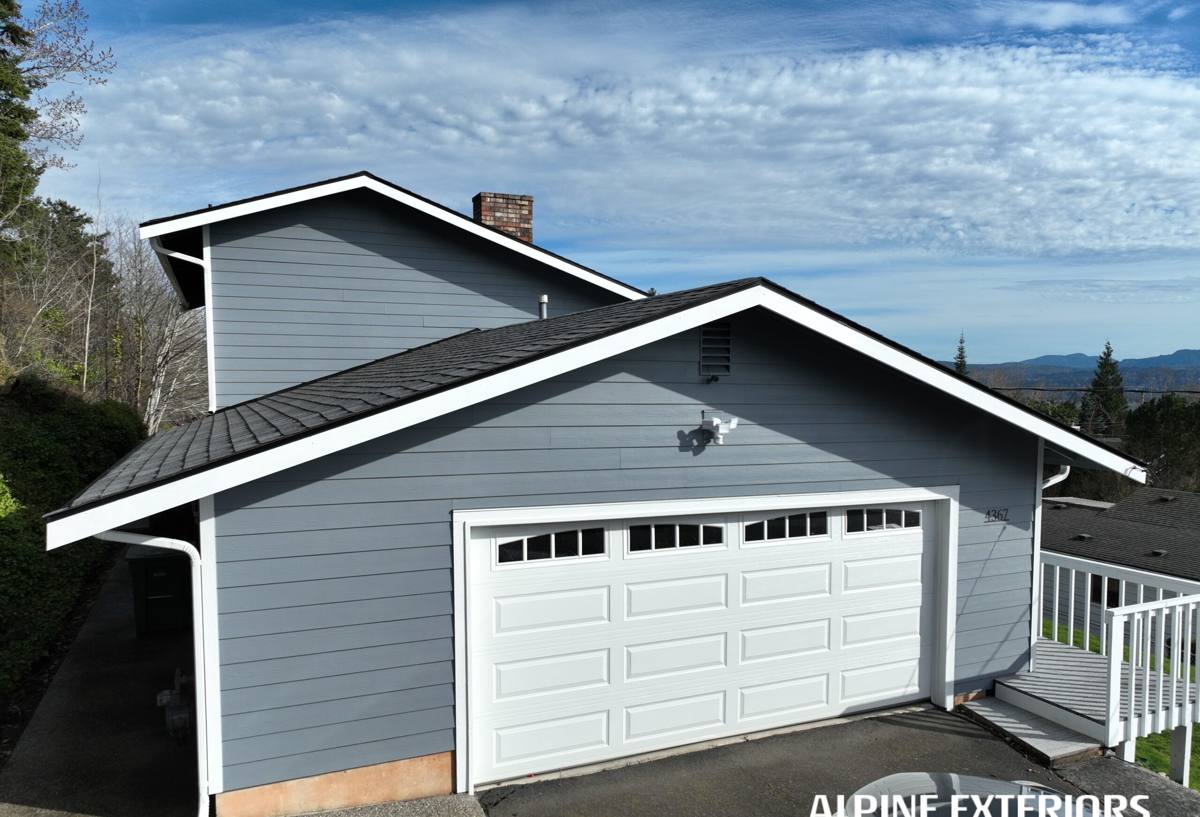
What Salt Air, Rain, and Moss Actually Do to a Roof Over Time
Salt Air and Metal Fatigue
Salt-laden air accelerates corrosion on any exposed metal — fasteners, flashing, valleys, and vents included. On a standard asphalt roof, the exposed metal components (not the shingles themselves) are usually the first things to show wear near the water. A properly specified metal roofing system uses coatings and fastener grades chosen specifically to resist that kind of exposure, rather than generic hardware that was never rated for it.
Driving Rain and Wind-Driven Water
Whatcom County storms don't always drop rain straight down. When wind pushes rain sideways or upward under an eave, the roofing system depends on proper lap, underlayment, and flashing detail to keep water from finding a way in — the field material matters less than the details around edges, valleys, and penetrations.
Moss and the Long Wet Season
Shaded, north-facing, or tree-covered roof sections in Birchwood can stay damp for weeks at a time, especially through fall and winter. Moss and algae take hold on porous, textured surfaces where moisture and organic debris can sit. Left unaddressed, moss holds water against the roof surface, lifts shingle edges, and works its way under flashing over time.
Why Metal Roofing Is a Strong Fit for This Climate
Metal roofing addresses each of those three stressors directly rather than through added maintenance:
- Smooth, non-porous surface — moss and algae have far less to grip compared to a textured shingle surface, so growth is slower and easier to remove when it does appear.
- Fast water shedding — steep-profile metal panels move water off the roof quickly, which matters when rain is heavy or wind-driven.
- Corrosion-resistant coatings — quality metal roofing systems are finished specifically to resist coastal and marine-influenced air, not just general weather.
- Long service life — a correctly installed metal roof typically outlasts asphalt shingle roofing by decades, which matters on a property that's going to see this climate for a long time.
None of this means metal roofing is maintenance-free or that every roof in Birchwood should be metal — it's a real trade-off decision based on the home's design, budget, and how the current roof is performing. We'll walk through that honestly during an estimate rather than push one material as a default.
Metal Roofing Options: How the Common Types Compare
Not all metal roofing is the same product. Homeowners in Birchwood typically ask about standing seam, exposed-fastener panels, and stone-coated steel. Here's how they generally compare for this climate:
| Type | Fastener Exposure | Best For | Trade-Offs |
|---|---|---|---|
| Standing Seam | Concealed clips, no exposed fasteners | Long-term watertightness, clean modern look | Higher material and install cost |
| Exposed-Fastener Panel | Screws through the panel face | Budget-conscious projects, outbuildings, some homes | Fasteners need periodic inspection and eventual re-torque or replacement |
| Stone-Coated Steel | Concealed, interlocking panels | Homeowners who want a shake or tile look with metal's durability | Heavier system, more installation detail work |
For salt-air exposure specifically, standing seam is generally the more resilient long-term choice because there are far fewer penetration points for moisture and corrosion to start at. Exposed-fastener systems can still perform well, but they require honest disclosure that the fasteners are a maintenance item over the life of the roof.
What a Correct Metal Roofing Installation Actually Involves
Metal roofing performs the way it's supposed to only when the details underneath it are done right. A metal panel is not a waterproofing system on its own — it works together with the underlayment, flashing, and ventilation beneath it.
Underlayment and Moisture Barrier
A high-quality synthetic or ice-and-water-shield underlayment goes down first, with extra protection at eaves, valleys, and any low-slope transitions where water tends to linger.
Flashing at Every Penetration
Chimneys, vents, skylights, and wall transitions all need properly formed and sealed flashing. This is where most roof leaks actually originate, on metal or any other material, so it's not a step we shortcut to save time.
Ventilation
Metal roofs perform best with proper attic and roof ventilation. Good airflow limits condensation buildup on the underside of the panels and helps control moisture in the attic space, which matters in a climate this humid.
Fastening and Panel Layout
Panel spacing, seam alignment, and fastener pattern all affect how the roof handles thermal expansion and wind uplift. Metal panels expand and contract with temperature more than shingles do, and a correctly installed system accounts for that movement instead of fighting it.
How Our Process Works, Start to Finish
- On-site assessment — we look at the existing roof, decking condition, ventilation, and any problem areas (moss buildup, past leaks, damaged flashing) before recommending anything.
- Honest scope and estimate — we explain what the job actually requires, including any decking repair or ventilation upgrades, so the estimate reflects the real roof rather than a best-case guess.
- Material selection — we go over panel type, gauge, and finish options based on the home's exposure, roofline, and budget.
- Tear-off and prep — old roofing is removed, decking is inspected and repaired as needed, and the surface is prepped for new underlayment.
- Underlayment and flashing — moisture barrier and flashing go in first, with extra attention at valleys, penetrations, and edges.
- Panel installation — panels are installed to spec with proper fastening and seam work for the chosen system.
- Final walkthrough and cleanup — we check the finished roof with you, clear the site of debris and fasteners, and confirm everything before we consider the job done.
Maintenance: What Actually Matters After Installation
A metal roof needs far less upkeep than an asphalt roof, but "less" isn't "none," especially in a climate that stays wet as long as Whatcom County's does.
- Clear leaves, needles, and debris from valleys and gutters, especially in fall.
- Keep overhanging branches trimmed back to reduce shade and debris buildup on the roof.
- Have exposed fasteners (on fastener-style panels) checked periodically, since they can loosen slightly with thermal cycling over the years.
- Address any scratches to the panel coating promptly to prevent localized corrosion from starting.
- Schedule a visual inspection after major windstorms to catch any lifted flashing or panel movement early.
Why It Matters to Hire a Crew That Already Works in Birchwood
Metal roofing rewards correct installation and punishes shortcuts, and the details that matter most — flashing design, ventilation, fastener choice, underlayment strategy — are exactly the ones that shift based on local exposure. A crew that regularly works Whatcom County roofs already knows which roof sections in a neighborhood like Birchwood tend to hold moss, how much salt exposure to plan for depending on proximity to the water, and how local wind and rain patterns should shape flashing decisions. That's judgment built from repetition in this specific climate, not something that transfers cleanly from a drier region or a generic installation manual.
It also matters for accountability. A local, established crew is easy to reach if a question comes up two years after installation, and stands behind the workmanship on a roof they know they'll likely see again during a neighborhood project down the street.
Is Metal Roofing the Right Call for Your Home?
Metal roofing isn't automatically the right choice for every Birchwood home. Roof pitch, existing structure, budget, and how long you plan to stay in the home all factor into whether the upfront cost makes sense compared to a well-installed asphalt system. We'll give you a straight answer on that during an estimate — including if we think a different roofing approach fits your situation and budget better.
If you're weighing options for a roof that has to handle Whatcom County's salt air, driving rain, and moss season, we're happy to take a look and walk you through what we see, no pressure either way. Use the form below to request a free estimate.