 Whatcom County
 Board & Batten in a Neighborhood Like Sunnyland
Sunnyland is one of Bellingham's older residential neighborhoods, with a mix of mid-century homes, craftsman-style houses, and newer infill construction tucked among mature trees. Board & batten siding shows up often in this kind of neighborhood because the vertical lines suit both the older bungalow-style homes and the more modern builds going up on smaller lots. It reads as clean and a little more architectural than lap siding, without looking out of place next to a 1950s ranch or a newly built two-story.
But board & batten is also one of the siding profiles most sensitive to what climate and installation quality actually do to it over time. The style is simple — wide flat panels with narrow battens covering the seams — but the vertical seams, the batten-to-panel gaps, and the extra fastening points all create more places for water to find a way in if the job isn't done correctly. In a neighborhood that sits within a few miles of Bellingham Bay and gets Whatcom County's full share of fall and winter rain, that detail work matters more than the style choice itself.
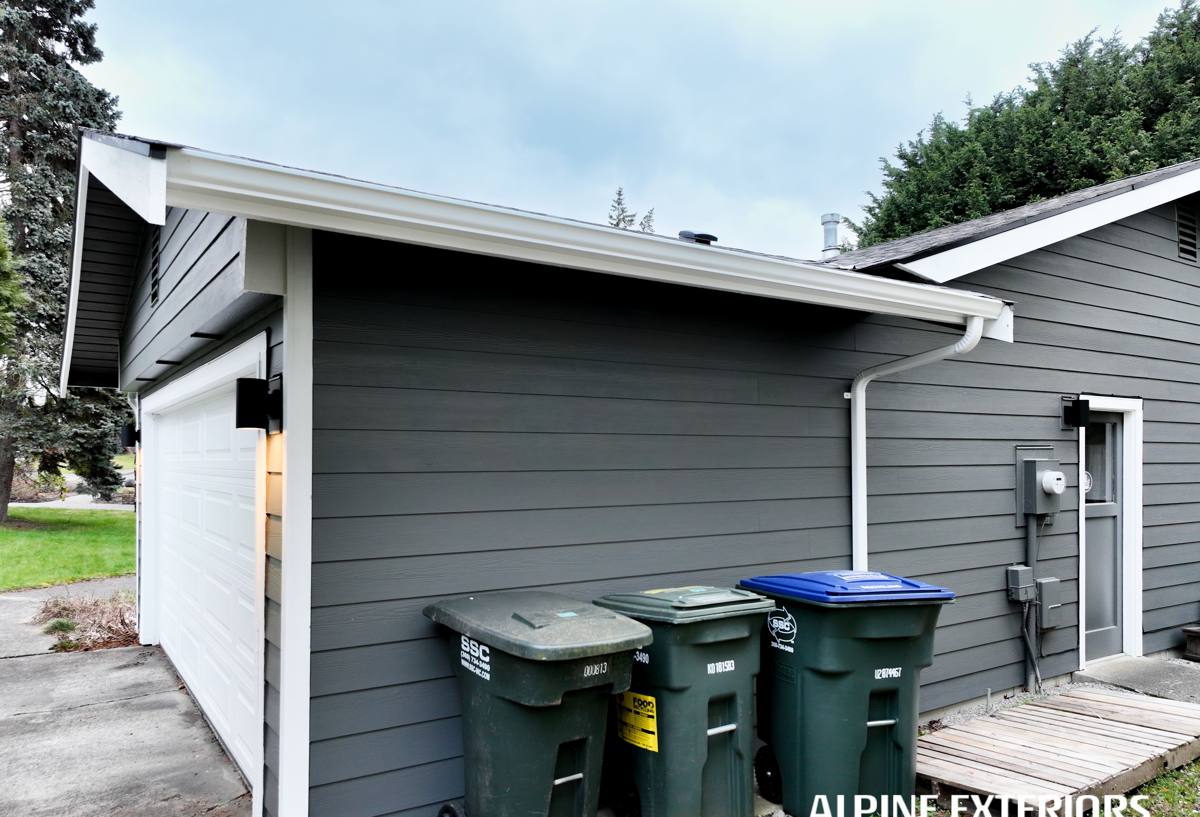
What Whatcom County's Climate Does to Vertical Siding
Homes in and around Sunnyland deal with three climate factors that hit board & batten siding harder than they hit some other profiles:
Salt air off the Sound
Proximity to Bellingham Bay means a steady low-level exposure to salt-laden moisture in the air, even a few miles inland. Salt air accelerates corrosion on fasteners and metal flashing, and it degrades cheaper coatings and finishes faster than an interior-county climate would. On board & batten specifically, the battens are fastened at both edges, doubling the number of exposed fastener points compared to a plain lap profile.
Driving rain
Whatcom County's weather doesn't just rain straight down — wind off the water regularly pushes rain sideways against west- and south-facing walls. Vertical board & batten seams run parallel to that wind-driven water path, which is exactly why the gap behind each batten, the fastening pattern, and the drainage plane behind the whole assembly need to be right. Get it wrong and water doesn't just sit on the surface — it tracks down the seam and behind the panel.
A long moss season
Mild temperatures and near-constant fall-to-spring dampness give moss and algae a long growing window here. On any vertical siding, moss tends to establish first in the shaded batten-to-panel joints and along the bottom edge where boards sit closest to grade, landscaping, or downspout runoff. Left alone, it holds moisture against the material and, on the wrong substrate, keeps the surface wet longer than it should ever stay.
What Correct Board & Batten Installation Involves
Board & batten looks simple from the curb, but a correct install has more going on behind the surface than most homeowners realize:
- Drainage plane / rainscreen gap: a code-compliant weather-resistive barrier plus an air gap behind the siding so any moisture that gets past the battens can drain and dry rather than sitting against the sheathing.
- Batten spacing and fastening: battens fastened into studs (not just through the panel into sheathing) at spacing that matches the manufacturer's engineering, not just what looks even.
- Flashing at every penetration: window and door trim, hose bibs, light fixtures, and vents all need proper flashing details before the siding goes on — this is where most water intrusion problems actually start.
- Clearance at grade and hard surfaces: the bottom edge needs the manufacturer's minimum clearance from soil, decking, and paved surfaces so splash-back and standing moisture don't sit against the material.
- Factory-finished, pre-cut material where possible: field-cut edges need to be sealed per manufacturer spec, especially on fiber cement, or the cut edge becomes the first place moisture gets in.
None of this is visible once the job is finished, which is exactly why it's worth asking a contractor to walk through these details before work starts rather than judging the bid on the finished look alone.
Why We Only Install This in James Hardie Fiber Cement
We get asked why we don't offer board & batten in engineered wood, primed spruce, or vinyl-style panel systems, all of which are available and all of which can look fine on day one. The honest answer is what happens after year one in a climate like this.
Engineered wood and primed wood products depend heavily on an intact factory coating and on every cut edge being sealed correctly in the field — miss one spot, and moisture gets into the wood fiber core, which swells and doesn't recover. In a climate with this much sustained dampness and a long moss season, that's a real risk over the life of the siding, not a hypothetical one. Vinyl-style board & batten sheds water fine but is a thinner, more flexible material that shows waviness and impact damage more readily, and it isn't the look most homeowners choosing board & batten are actually after — the profile depends on crisp, flat panels to look right.
James Hardie fiber cement is cement, sand, and cellulose fiber — it doesn't absorb and swell the way wood-based products do, and it isn't UV- or impact-sensitive the way vinyl is. Hardie's ColorPlus factory finish is baked on and warrantied against fading and peeling, which matters in coastal, moisture-heavy air where lesser coatings break down faster. That's the whole reason we standardized on one material system instead of offering several: we'd rather install the product that holds up here than sell a homeowner something that looks the same on the sales sheet but doesn't perform the same over ten winters near Bellingham Bay.
Board & Batten Material Comparison
| Material | Moisture behavior in this climate | Coating durability | Long-term maintenance |
|---|---|---|---|
| James Hardie fiber cement | Does not absorb/swell; engineered for wet climates | Factory ColorPlus finish, backed by product warranty | Low — periodic wash, occasional caulk check |
| Engineered wood (e.g. LP-style) | Wood-fiber core can swell if coating or seals fail | Factory-primed or coated; edge sealing is critical | Moderate — inspect cut edges and seams regularly |
| Primed solid wood (spruce/cedar) | Absorbs moisture readily; prone to cupping/rot over time | Field-applied paint, needs repainting on a cycle | High — repaint every several years, watch for rot |
| Vinyl-style board & batten | Sheds water but can trap moisture behind if installed poorly | Color is through-body but can fade/chalk over time | Low, but panels can warp, fade, or crack on impact |
Our Process for a Board & Batten Project in Sunnyland
- On-site assessment: we look at wall orientation, existing moisture damage, grade clearance, and the trim/window details the new siding has to tie into.
- Water management plan: we confirm the weather-resistive barrier and drainage gap approach for the specific walls being sided, since a wall facing the prevailing rain direction may need extra attention.
- Material and color selection: we walk through Hardie's board & batten profile options and ColorPlus palette so the final look fits the house and the neighborhood.
- Flashing and prep: all window, door, and penetration flashing is installed or verified before a single panel goes up.
- Installation to manufacturer spec: panels and battens fastened per Hardie's engineering, not by eye, including fastener spacing and cut-edge sealing.
- Final walkthrough: we go over the finished job with the homeowner, including what routine maintenance looks like going forward.
Maintenance Checklist for Board & Batten in This Climate
- Rinse siding with a garden hose (not a pressure washer aimed directly at seams) once or twice a year to clear pollen, salt residue, and early moss growth.
- Keep gutters and downspouts clear so runoff doesn't sheet down the wall or pool at the base of the siding.
- Trim back shrubs and tree limbs that keep any wall shaded and damp longer than the rest of the house.
- Check caulking around windows, doors, and trim annually — caulk is a maintenance item on any siding system and is the first line of defense against water intrusion.
- Look at the bottom few feet of siding near grade, decks, and walkways for moss or discoloration, since that's where moisture problems typically start first.
What Board & Batten Typically Costs
Board & batten in fiber cement generally costs somewhat more than standard lap siding in the same material, mainly because of the extra batten material and labor for the additional fastening and trim work. Exact pricing depends heavily on the specifics of the house, so we always recommend an on-site estimate rather than relying on a rough per-square-foot number.
| Cost factor | Why it matters for board & batten |
|---|---|
| Wall height and complexity | More corners, gables, and dormers mean more batten cuts and trim details |
| Existing wall condition | Sheathing repair or added drainage plane work adds labor before siding starts |
| Trim and window integration | Board & batten often pairs with trim upgrades around windows and corners |
| Color and finish selection | Standard ColorPlus colors versus custom options can affect material cost |
| Tear-off vs. new construction | Removing and disposing of old siding adds labor compared to new-build install |
Why Hiring a Crew That Already Works in Whatcom County Matters
Board & batten installed correctly in a dry, mild climate can tolerate more shortcuts than the same siding installed here. A crew that hasn't worked much in Whatcom County may not think twice about batten spacing, drainage gap details, or grade clearance the way a crew that deals with this rain pattern and moss season every year does. Local experience also means knowing which orientations on a Sunnyland-area lot tend to take the worst of the wind-driven rain, and building the water management plan around that instead of a generic install spec.
We install board & batten the same way on every job — proper drainage plane, correct fastening, sealed cut edges, and James Hardie material chosen specifically because it holds up to this climate rather than just tolerating it for a few years. If you're considering board & batten for a home in Sunnyland or elsewhere in Whatcom County, we're happy to walk your property, look at your walls' exposure, and give you a straightforward, no-pressure estimate.