 Whatcom County
 Why Everson Homes Ask More of Their Windows
Everson sits in the Nooksack River valley, far enough inland that people assume the weather is milder than it is on the Whatcom County coastline. It isn't, really — the same marine air that moves off the Salish Sea pushes up the valley on storm systems, bringing driving, wind-blown rain that hits windows sideways rather than straight down. Add in a moss and mildew season that can run eight or nine months out of the year in this part of Washington, and a window is being asked to do more than look good and open and close. It has to keep water out under lateral pressure, resist a fine coating of salt-tinged moisture that never fully dries, and shed condensation without feeding mold growth in the frame or the wall cavity behind it.
Most window failures we see in Whatcom County homes aren't glass failures — they're installation and flashing failures. The window unit itself is usually fine. Water got in around it because the flashing, sealant, or integration with the siding wasn't done correctly for this climate, and it took two or three wet seasons for that to show up as rot, staining, or a soft spot in the wall.
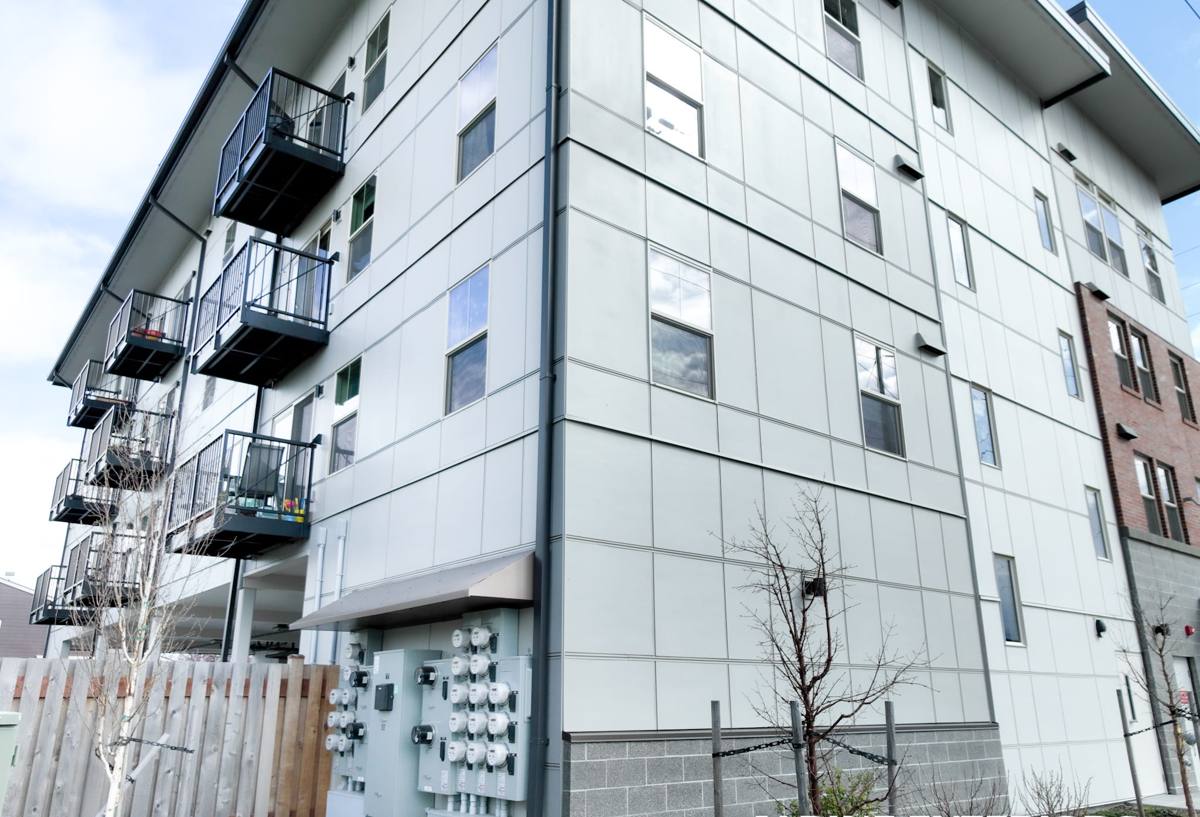
What a Correct Window Installation Involves Here
Flashing and Integration With the Siding
A window opening is only as watertight as its weakest flashing detail. In a climate with sustained driving rain, the header flashing, side flashing, and sill pan all have to work together and lap correctly with the water-resistive barrier behind your siding — water has to be directed out and down, never trapped behind the cladding. This is one of the reasons we handle windows as part of siding work rather than as a stand-alone trade: when we're already opening up the wall to re-side, we can tie the window flashing into the new weather barrier properly instead of caulking a gap and hoping.
Sill Pans and Drainage
A sloped sill pan under the window rough opening gives any water that does get past the sash somewhere to go besides straight into your wall framing. This is inexpensive to do right during installation and expensive to fix later, once trim, siding, and interior finishes have to come back off.
Sealant Selection and Placement
Not every exterior sealant holds up to constant damp and UV cycling the way a good polyurethane or hybrid sealant does. We also don't seal a window on all four sides — the bottom edge of the exterior trim needs to stay a weep path, not a dam, or condensation and wind-driven water have nowhere to escape.
Choosing a Frame Material for This Climate
There's no single "best" window material — the right choice depends on your home's exposure, your budget, and how much upkeep you want to take on. Here's how the common options actually perform in a wet, moss-prone climate like Whatcom County's:
| Frame Material | Moisture Behavior | Maintenance | Typical Trade-Off |
|---|---|---|---|
| Vinyl | Won't rot; seams and welds matter more than the material itself | Low — occasional cleaning | Limited color/finish options; can look utilitarian on older or higher-end homes |
| Fiberglass | Very stable in wet/dry cycling, minimal expansion or contraction | Low | Higher upfront cost than vinyl |
| Aluminum-clad wood | Exterior sheds water well; interior wood needs the cladding to stay intact | Moderate — depends on cladding integrity over time | Higher cost; best where a wood interior look matters |
| Bare wood | Requires diligent paint/finish maintenance to resist our rot-favoring climate | High | We're generally cautious recommending this for full weather-side exposure here |
For most Everson homes, we lean toward vinyl or fiberglass on rain-exposed elevations because they tolerate the wet-dry cycling and salt-tinged air without the ongoing finish maintenance that wood demands. Where a homeowner wants a wood look, clad options let us keep that appearance with better long-term moisture performance.
Signs Your Current Windows Are Losing the Battle
Because window failures develop slowly, most homeowners don't notice until damage has already reached the wall framing. Walk your home's exterior and check for these:
- Soft, dark, or bubbling paint/trim directly below or beside window openings
- Fogging or persistent condensation between glass panes (a sign the seal has failed)
- Visible gaps, cracked, or missing exterior caulk at the window-to-siding joint
- Moss or dark streaking concentrated around window trim, more than the surrounding wall
- Windows that are noticeably harder to open, close, or latch than they used to be
- Drafts or a cold band of air felt near the frame on windy, rainy days
- Musty smell near a window that doesn't go away with ventilation
Any one of these on its own may be minor. Two or three together, especially clustered on a wall that takes the brunt of storm-direction wind, usually means water has been getting behind the window for a while.
Energy Performance and Condensation Control
In a climate this consistently damp and mild, condensation control matters as much as raw insulation value. A double-pane, low-E, argon-filled window is the practical standard for most Whatcom County homes and performs well against both heat loss and interior fogging. Triple-pane units offer a modest additional step up in U-factor and sound dampening, at added cost and weight — worth it on some north- or wind-exposed walls, unnecessary on others. We size the glass package to the wall, not the whole house to one spec, since a $40-a-window upgrade on a sheltered elevation rarely pays for itself the way it does on an exposed one.
Interior condensation on newer, well-sealed windows is often a household humidity issue rather than a window defect — tight, well-insulated homes need adequate ventilation, especially through our long wet season, or moisture has nowhere to go but the coldest surface in the room, which is usually the glass.
How We Approach a Custom Window Project in Everson
- On-site assessment — we look at each elevation's actual weather exposure, not just the window itself, since a south wall and a storm-facing wall don't need the same spec.
- Flashing and opening inspection — once trim or siding comes off around the opening, we check the sheathing and framing underneath for any hidden moisture damage before installing anything new.
- Sill pan and flashing installation — built and lapped correctly into the surrounding weather-resistive barrier, whether that's existing siding we're tying into or new siding going on at the same time.
- Window installation and shimming — set plumb, level, and square, with proper fastening per the manufacturer's instructions to keep any warranty intact.
- Sealant and trim finish — sealed where it should be sealed, left open where it needs to weep, and trimmed to match the surrounding siding profile.
- Final walkthrough — operation check on every sash and lock, and a look at the finished flashing lines from the exterior.
Cost Factors Worth Understanding
Window pricing varies enough between homes that a single number isn't useful. What actually moves the estimate:
| Factor | Why It Matters |
|---|---|
| Full-frame vs. insert replacement | Full-frame lets us fix flashing and rot issues; insert is faster and cheaper but only appropriate when the existing frame and flashing are sound |
| Frame material and glass package | Vinyl to fiberglass to clad-wood is a real cost spread; double- vs. triple-pane adds further |
| Number of openings and sizing | Custom or oversized openings cost more than stock sizes |
| Condition behind the window | Hidden rot or water damage found during removal adds repair scope before the new window goes in |
| Tied into a siding project or standalone | Doing windows and siding together often saves on labor and gets better flashing integration than doing them separately |
Why Hiring a Crew That Already Works in Everson Matters
Window and siding work in Whatcom County isn't identical to the same job in a drier climate, and it isn't identical to coastal Washington either — the Nooksack valley gets its own mix of wind direction, rainfall pattern, and moss growth. A crew that already works this area knows which elevations on a typical Everson home take the worst weather, what moisture problems tend to show up in homes of a given age and construction type here, and how to sequence a window replacement so the opening isn't sitting exposed to rain overnight. That local pattern recognition is the difference between a window that's installed correctly and one that's installed correctly for a different climate.
Keeping New Windows Performing Between Services
Once new windows are in, a little seasonal attention keeps them performing for the long run in this climate:
- Clear moss and debris from tracks and sills before it holds moisture against the frame
- Check exterior caulk lines each fall, before the wet season sets in
- Wipe down frames periodically to clear salt-tinged residue that can dull finishes over time
- Run bathroom and kitchen exhaust fans during and after showers or cooking to keep interior humidity in check
- Report any new fogging, drafts, or operational stiffness early rather than waiting a season
If your Everson home's windows are showing their age, or you're planning a siding project and want the window flashing done right the first time, we're happy to take a look and give you a straightforward, no-pressure estimate. There's a form below — reach out and we'll get you scheduled.