 Whatcom County
 Building a Deck That Actually Holds Up in Samish
A deck in Samish lives a harder life than a deck built forty miles inland. The combination of salt-laden air, long stretches of driving rain, and a moss season that can run from October well into spring puts more stress on fasteners, framing, and decking surfaces here than in a drier, calmer climate. A deck that's built the way it would be built anywhere else in the country will show it within a few years — soft spots, rust streaks, slick green boards, and rail posts that wobble sooner than they should.
Building it right the first time isn't about upselling premium materials for the sake of it. It's about matching the structure, the fasteners, the drainage details, and the decking surface itself to what this specific climate does to wood and metal over time. That's what this page walks through — what a correctly built deck for a Samish property actually requires, and why it looks a little different from a deck built somewhere dry.
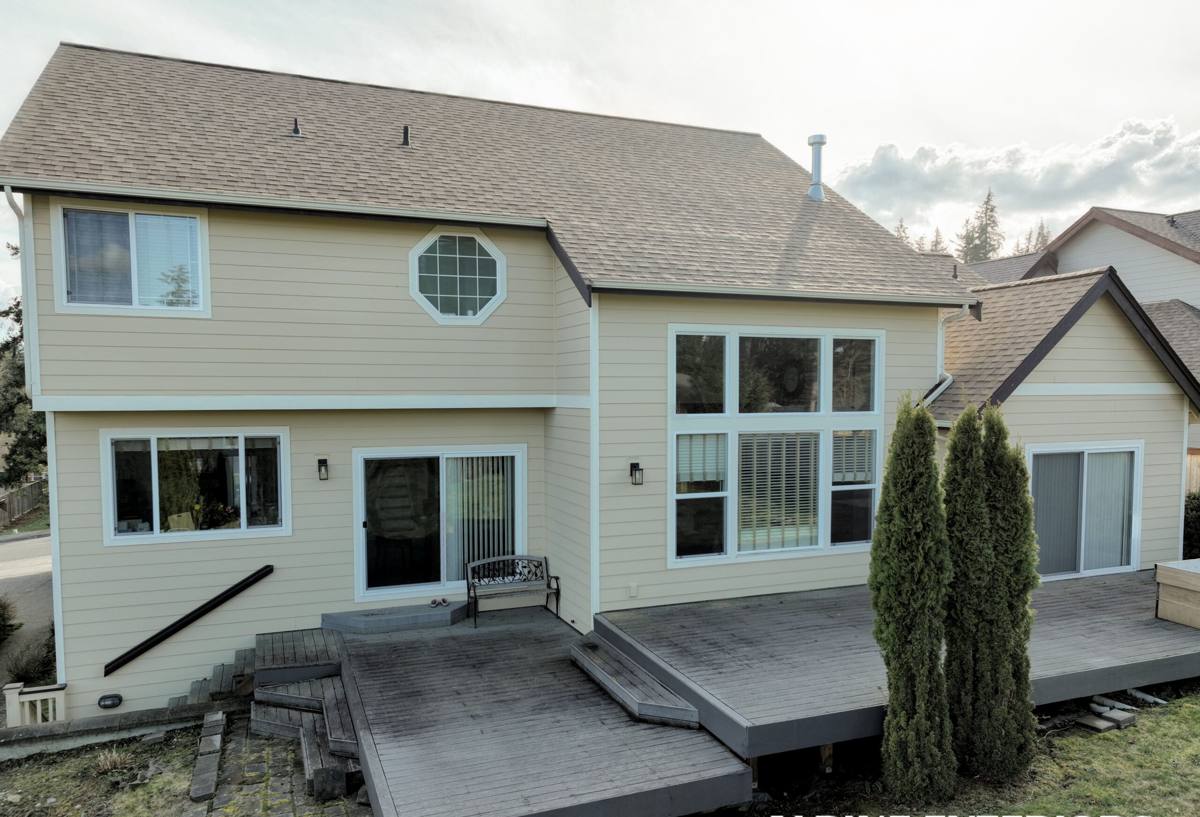
What Salt Air, Rain, and Moss Actually Do to a Deck
Each of these three conditions attacks a deck in a different way, and a deck built for this area needs to answer all three at once, not just one of them.
Salt air and corrosion
Proximity to saltwater accelerates corrosion on any exposed metal — fasteners, joist hangers, post bases, railing hardware. Standard galvanized fasteners can start showing rust bleed and pitting years before they would inland. Once a fastener corrodes, it loses holding strength long before it looks obviously failed, which is why the fastener spec matters more here than the visible finish does.
Driving rain and moisture intrusion
Wind-driven rain doesn't just fall on a deck, it gets pushed sideways into ledger connections, under railing posts, and into any gap where flashing wasn't detailed correctly. Water that gets behind a ledger board or into a post base and can't get back out is the single most common cause of hidden rot in decks in this region — the surface can look fine for years while the framing underneath is failing.
Moss and algae buildup
Long wet, shaded seasons let moss and algae take hold on horizontal wood surfaces, especially decking that doesn't get much direct sun or airflow underneath. Beyond looking bad, a mossy deck surface is a real slip hazard, and moss holds moisture against the board surface, which shortens the life of wood decking faster than rain alone would.
Decking Material Options for This Climate
There's no single "best" decking material — the right choice depends on budget, how much upkeep you're willing to do, and how exposed the deck is to weather. Here's how the common options actually perform in a wet, salt-influenced climate like this one.
| Material | Moisture behavior | Moss/algae resistance | Maintenance | Typical lifespan |
|---|---|---|---|---|
| Pressure-treated wood | Good if sealed and maintained; absorbs water if finish lapses | Low — needs regular cleaning | Annual cleaning, refinishing every 2-3 years | 15-25 years with upkeep |
| Cedar | Naturally rot-resistant but still needs sealing here | Moderate — still grows moss if shaded | Cleaning and re-oiling every 1-2 years | 15-20 years with upkeep |
| Capped composite | Excellent — won't absorb or rot | High — smooth cap sheds growth, still needs occasional wash | Occasional wash, no refinishing | 25-30+ years |
| Uncapped composite (older style) | Fair — some older products absorb moisture at the core | Moderate | Periodic cleaning | 15-20 years |
| PVC decking | Excellent — fully synthetic, no wood content | High | Occasional wash | 25-30+ years |
For most Samish homeowners we talk to, the decision comes down to upfront cost versus long-term maintenance. Wood costs less to install but asks for real annual attention if you want it to last — skip a couple of seasons of cleaning and refinishing in this climate and it shows fast. Capped composite and PVC cost more upfront but largely take moss, rot, and refinishing off your to-do list, which matters a lot if the deck gets shaded or doesn't dry out quickly after rain.
Why we don't push every product on the market
We don't install every decking product available, and that's a deliberate call rather than a limitation. Some budget composite boards on the market have had inconsistent moisture performance at the core or in the cut-end sealing, and some finishes hold moss more than others despite similar marketing. We stick to products with a proven track record in wet coastal climates and a manufacturer warranty structure that actually holds up, because we're the ones who'll hear about it if a board fails at year six instead of year twenty-five.
Structural Details That Matter More Here Than Inland
The decking surface is what you see, but the framing and connections underneath are what determine whether the deck is still solid in fifteen years. A few details get extra attention on every deck we build in this area:
- Ledger board flashing — where the deck attaches to the house, proper metal flashing and a water-resistant barrier behind it keep driving rain from working its way into the house rim joist, which is one of the most expensive kinds of hidden damage to repair.
- Fastener selection — stainless steel or high-grade coated fasteners rated for coastal/marine exposure, not generic galvanized hardware that starts corroding within a few seasons of salt air exposure.
- Joist tape or capping — sealing the tops of framing lumber so rain sitting on a joist can't soak straight into end grain, which is where rot usually starts.
- Post base connections — post bases set above the decking surface, not buried in a way that traps standing water against the post end.
- Footing depth — footings sized and set to local frost and soil requirements so the structure doesn't heave or settle unevenly over wet winters.
None of this is visible once the deck is finished, which is exactly why it's worth asking about before work starts rather than after the boards are down.
Railings, Stairs, and Code Requirements
Guardrails, stair rails, and baluster spacing on a new or rebuilt deck are governed by Washington's adopted building code, and inspectors check these details closely because they're safety items, not aesthetic ones. In general terms: guardrails are required above a certain deck height, there are minimum rail heights and maximum gaps between balusters (sized so a small child can't pass through), and stairs need consistent rise and run with a graspable handrail on longer runs. A permitted deck project in Whatcom County gets inspected against these standards, and it's worth confirming any contractor you're considering builds to code as a baseline, not as an upgrade.
Rail post attachment deserves its own mention here — it's one of the most common failure points on older decks in wet climates, because a post that's only lag-bolted through the rim joist without additional blocking or through-bolting can loosen over time as wood fibers compress and expand with repeated wet-dry cycles.
Drainage and What Happens Underneath the Deck
What happens under a deck matters almost as much as what happens on top of it. A few things worth planning for at the design stage:
Ground-level drainage
Grading and drainage under a low deck should move water away from the house foundation, not let it pool against posts or footings. In a climate with this much annual rainfall, standing water under a deck is a long-term moisture and pest problem waiting to happen.
Under-deck dry space
For taller decks, an under-deck drainage system can turn the space underneath into usable dry storage or a covered patio, by capturing water at the joist level and channeling it to a gutter before it drips through. It's an optional upgrade, but it's worth discussing if the space underneath could be useful.
Airflow
Decks built too tight to the ground or against a foundation wall without enough airflow underneath tend to stay damp longer after rain, which speeds up both wood rot and moss growth on the decking above. Proper clearance and ventilation underneath is a simple design choice that pays off every wet season.
Our Deck Building Process
Every deck we build follows the same general sequence, adjusted for the site conditions and the homeowner's goals:
- On-site assessment — we look at the house connection point, ground slope, sun and shade exposure, and how exposed the site is to wind-driven rain, since that shapes material and drainage recommendations.
- Design and material selection — we walk through decking, railing, and structural options with honest trade-offs on cost, maintenance, and lifespan, not just the upsell option.
- Permitting — we handle the permit application and coordinate required inspections so the finished deck is code-compliant and documented.
- Framing and structural work — footings, framing, ledger flashing, and fastener installation done to the coastal-exposure standards described above.
- Decking, railing, and finish work — surface installation, railing systems, stairs, and any trim or skirting.
- Final walkthrough — we go over the finished deck together, including basic care guidance specific to the material installed.
Keeping a Deck Ahead of the Moss Season
Whatever material a deck is built from, a little seasonal attention goes a long way in this climate. A simple maintenance checklist we give homeowners:
- Sweep leaves and debris off the deck regularly in fall — trapped organic matter holds moisture and feeds moss growth.
- Rinse or scrub visible moss and algae before it gets established, especially on shaded sections.
- Check railing posts and stair stringers once a year for looseness or soft spots.
- Keep gutters and downspouts near the deck clear so runoff isn't dumping extra water onto or under the structure.
- For wood decking, plan on cleaning and resealing on the schedule the finish product calls for — skipping a cycle in this climate shortens the board life noticeably.
- Trim back overhanging vegetation that keeps sections of the deck shaded and damp longer than the rest.
Why It Matters That We Already Work in This Area
A deck built by a crew that mostly works drier, calmer climates can still look good on installation day. The difference shows up two or three winters later, in the fastener choice, the flashing detail, and the decking material that was specified without really accounting for what salt air and a long moss season do over time. Working regularly in Whatcom County means we're not guessing at what this climate requires — it's the same set of conditions on every job, and the details described above are standard practice for us, not a special request.
If you're planning a new deck or replacing one that's showing its age, we're happy to take a look and talk through honest options for your site. Reach out for a free, no-pressure estimate using the form below.