 Whatcom County
 What Cordata's Climate Actually Does to Siding
Cordata sits on the north side of Bellingham, close enough to Bellingham Bay to pick up salt-laden air on top of everything else Whatcom County's marine climate throws at a house. That's a combination most siding products were never engineered to handle for the long haul: moisture that never fully lets up for months at a time, wind-driven rain that gets pushed sideways into wall assemblies rather than just falling straight down, and a shaded, damp shoulder season long enough that moss and algae get a real foothold on north- and west-facing walls.
None of that is exotic weather. It's just persistent. A siding product that's fine in a dry climate, or even in occasional heavy rain, can still fail here simply from being wet more often than it's dry. That's the lens we use on every material we're asked about, and it's the reason we standardized on one product system instead of offering a menu of options.
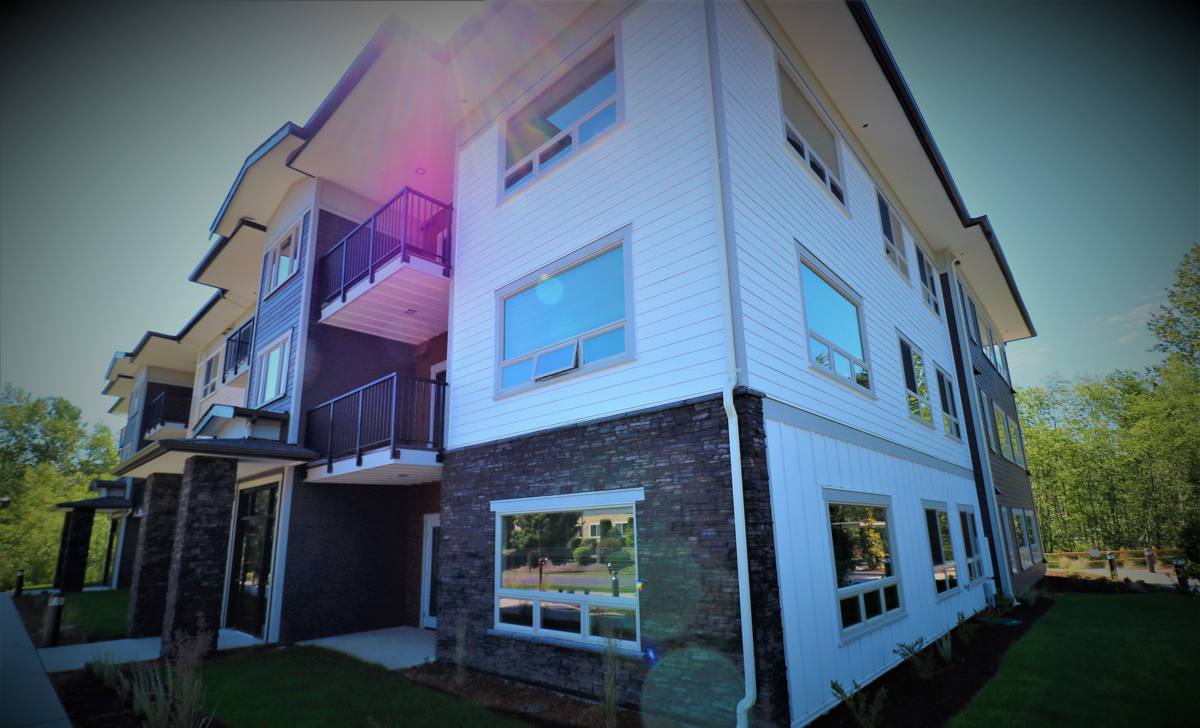
Why We Only Install James Hardie Fiber Cement Here
We install James Hardie fiber cement siding exclusively — not vinyl, not LP SmartSide, not Cemplank or Allura, not primed spruce or cedar. That's a deliberate standard, not a sales pitch, and it's worth explaining why.
Fiber cement is cement, sand, and cellulose fiber pressed and cured into a dense, stable board. It doesn't have wood fiber or OSB at its core the way engineered wood siding does, so it isn't vulnerable to the swelling, edge-softening, and fungal decay that come from repeated wetting of a wood-based substrate. It also doesn't expand and contract with temperature swings the way vinyl does, which matters less for heat here than it does for how vinyl looks and performs after a decade of damp cycling — panels can bow, gap, or rattle loose at the nail slots.
James Hardie makes the point moot for us in another way: their HZ5 product line is engineered specifically for climates like ours — the wetter, cooler Pacific Northwest zone — rather than a generic national spec. The boards, the recommended fastening, and the factory finish are all matched to marine-climate exposure rather than compromise for a national product line.
ColorPlus Factory Finish
Most Hardie siding we install comes with the ColorPlus finish — baked on at the factory in multiple coats rather than field-painted after installation. In a climate where paint has to fight constant moisture and UV cycling, a factory-cured finish holds color and resists peeling and chalking far longer than a site-applied coat, and it carries its own finish warranty separate from the substrate warranty.
What a Correct Installation Involves
Fiber cement is only as good as the installation behind it. A large share of the siding failures we get called out to inspect aren't material failures at all — they're installation shortcuts that let water get behind a perfectly good board.
Moisture Barrier and Rainscreen Gap
Every wall gets a weather-resistant barrier installed correctly — lapped shingle-style so water sheds down and out, not into seams. On most jobs we build in a rainscreen gap behind the siding using vertical furring strips. That gap lets any moisture that does get past the cladding drain and dry out instead of sitting against the back of the board or the sheathing, which matters more here than in a drier region because the wall assembly has less opportunity to fully dry between rain events.
Fastening, Clearances, and Flashing
Hardie specifies fastener type, spacing, and penetration depth, and those specs aren't optional extras — they're what keeps the warranty valid and the board performing as designed. We also hold proper clearance between the bottom of the siding and grade, decks, and roof lines, and we flash every window, door, and penetration so water is directed out and away rather than allowed to track behind the cladding. Near the bay, we lean toward corrosion-resistant fasteners and flashing metals, since salt-laden air accelerates corrosion on lower-grade hardware faster than it will further inland.
Joints and Caulking
Butt joints, corners, and trim intersections get sealed with a high-quality, flexible sealant rated for the movement and moisture exposure they'll see — and we don't rely on caulk to do a flashing detail's job. Caulk is maintenance-item insurance, not the primary water management strategy.
Comparing Siding Options for a Cordata Home
We only install one of these, but homeowners deserve an honest look at how the alternatives actually perform in this specific climate, not a generic national comparison.
| Material | Behavior in salt air & driving rain | Long-term maintenance |
|---|---|---|
| James Hardie fiber cement | Non-combustible, dimensionally stable, doesn't absorb and swell like wood-based products | Factory finish holds up for years; occasional rinsing and caulk checks |
| Vinyl | Can warp, bow, or loosen at fasteners with repeated wet/cool cycling; color fades with UV over time | Low upfront upkeep, but panels aren't repairable — they're replaced |
| LP SmartSide / engineered wood | Wood-strand substrate is more sensitive to sustained moisture exposure and edge swelling if any water reaches raw edges | Requires diligent caulk and paint maintenance to keep water out |
| Cedar / primed spruce | Natural wood movement, prone to moss and mildew growth in shaded, damp exposures | Regular refinishing, sealing, and moss treatment needed |
None of these alternatives are unusable products in the right context. But given what Cordata's exposure does to a wall assembly year over year, they all ask a homeowner to manage a maintenance schedule or a moisture risk that fiber cement, installed correctly, largely removes from the equation.
What Fiber Cement Siding Costs in Cordata: Factors That Matter
We don't publish blanket per-square-foot numbers because the honest answer always depends on the specifics of the house. What actually drives the estimate:
| Factor | Why it matters |
|---|---|
| Existing siding removal | Tear-off, disposal, and sheathing inspection add labor before new siding goes up |
| Sheathing/substrate condition | Rot or moisture damage found underneath has to be repaired before installation, not covered up |
| Home size and stories | More wall area and taller/steeper access increase labor and equipment needs |
| Trim and detail work | Corner boards, window trim, and architectural detail add time regardless of the main field siding |
| Board profile and color | Lap width, shingle-style panels, and ColorPlus color selection affect material cost |
Every quote we give is based on a walk-through of the specific house, not a phone estimate — because two Cordata homes of the same square footage can have very different scopes once you look at trim complexity and what's underneath the existing siding.
Our Process on a Cordata Job
- Assessment: We inspect the existing siding, sheathing, and any problem areas — moss buildup, soft spots, past water intrusion — before quoting anything.
- Product and color selection: We walk through Hardie's HZ5 lines, profiles, and ColorPlus color options against the home's exposure and the homeowner's preferences.
- Preparation: Removal of old siding, repair of any damaged sheathing, and installation of the weather-resistant barrier and rainscreen framework.
- Installation: Siding, trim, and flashing installed to Hardie's fastening and clearance specifications.
- Final walkthrough: We review the finished job with the homeowner and confirm caulking, trim, and flashing details before we consider the job complete.
Maintaining Fiber Cement Through Whatcom County's Moss Season
Fiber cement drastically lowers the maintenance burden compared to wood-based sidings, but "low-maintenance" isn't "no-maintenance," especially in a climate that stays damp and shaded for months at a stretch. A short seasonal routine keeps a Hardie installation looking and performing the way it should:
- Rinse siding periodically, especially on sides exposed to salt-laden air, to keep salt residue and grime from building up on the finish
- Keep gutters and downspouts clear so overflow doesn't run down the wall face and feed moss growth
- Trim back vegetation and tree cover that keeps shaded wall sections perpetually damp
- Check caulking at joints and trim intersections annually and re-caulk any cracked or shrunken sealant
- Address any moss or algae growth early with a gentle wash rather than pressure-washing directly into seams
Why Local Experience in Cordata and Whatcom County Matters
A crew that works this area regularly already knows which wall exposures in this climate take the worst of the wind-driven rain, where salt air does the most damage to fasteners and trim, and how long the moss season really runs in a given part of Whatcom County. That knowledge shows up in small decisions — fastener choice, flashing detail, where the rainscreen gap matters most — that a crew unfamiliar with this specific coastal exposure might not think twice about. It also means we're not guessing at local permitting and code requirements, and we're still around the following year if a warranty question comes up.
If you're planning a siding project in Cordata or elsewhere in Whatcom County, we're happy to walk your home, look at what's actually going on with your current siding, and give you a straightforward, no-pressure estimate for doing it right with James Hardie fiber cement.