 Whatcom County
 Why Ferndale Roofs Wear Differently Than Roofs Inland
Ferndale sits close enough to the water and the Nooksack lowlands that its roofs deal with a different combination of stress than a roof twenty miles inland. You've got salt-tinged marine air moving through most of the year, long stretches of steady driving rain rather than short hard storms, and a fall-through-spring window where shaded roof planes barely dry out between rain events. That last part is what drives Whatcom County's moss problem — it's not really about how much rain falls, it's about how long a roof surface stays damp.
None of that means Ferndale needs exotic materials or a specialty system nobody else uses. It means the installation details that get skipped on an easy job — ventilation balance, underlayment choice, flashing at every penetration, starter and edge treatment — are exactly the details that decide whether a roof here makes it to year 25 looking fine, or starts showing moss streaks and soft spots by year 10.
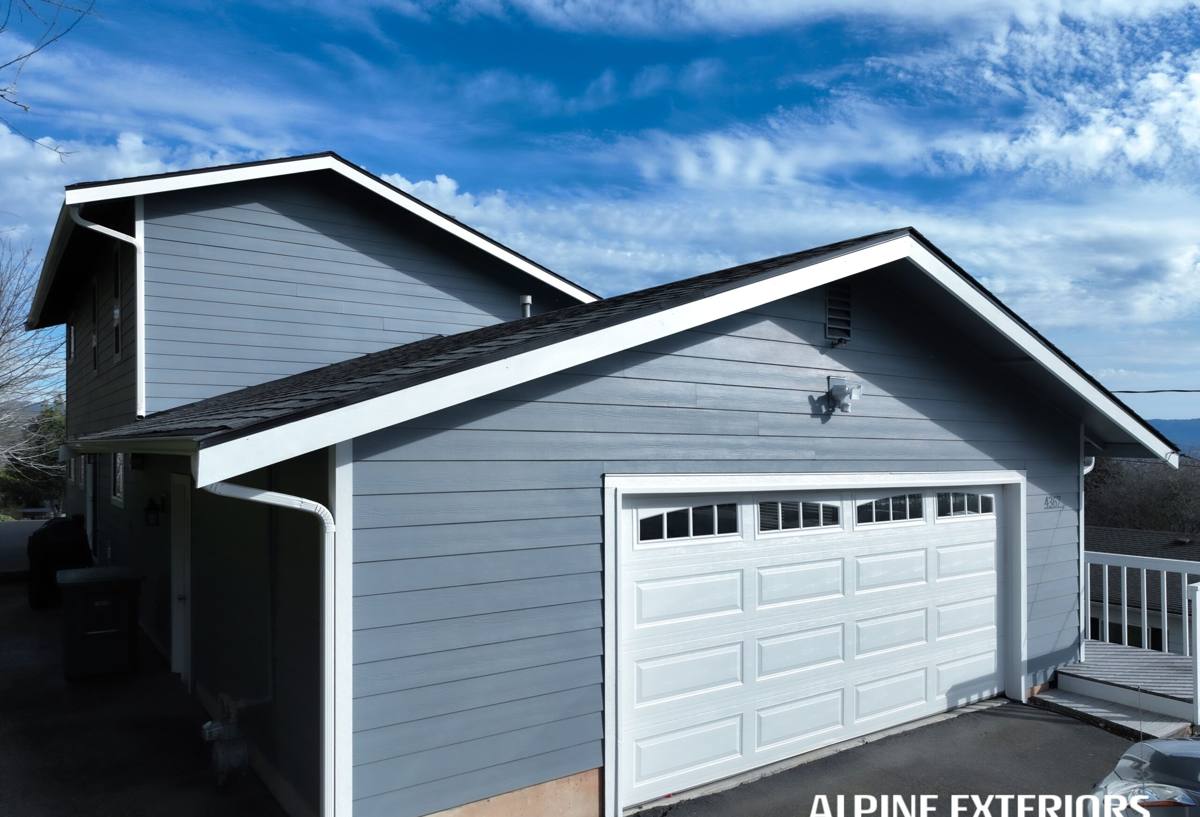
What a Correct New Roof Installation Actually Involves
A new roof is more than laying shingles or panels over the old ones. Every roof we install goes down to the deck so we can actually see what we're covering up.
Tear-Off and Deck Inspection
We remove the old roofing material completely and inspect the sheathing underneath. In this climate, deck damage usually shows up around old flashing failures, roof-to-wall transitions, and low-slope areas that held water longer than they should have. Soft or delaminated sheathing gets replaced — covering it up just hides the problem for the next owner to find.
Underlayment and Water Protection
This is the layer that actually keeps a house dry if wind-driven rain gets past the shingles or panels, and in a marine climate it matters as much as the visible roofing itself. We use synthetic underlayment across the field and self-adhered ice-and-water membrane at eaves, valleys, and any low-slope section — the places where standing water and wind-blown rain are most likely to find a way in.
Ventilation
A roof that can't breathe traps moisture in the attic, which shows up as condensation, premature deck rot, and shortened shingle life. We check intake at the soffits and exhaust at the ridge or roof vents and correct the balance where it's off — this is one of the most commonly skipped steps on older roofs we tear off.
Flashing and Penetrations
Chimneys, plumbing vents, skylights, and wall-to-roof transitions are where the large majority of roof leaks actually start — not in the open field of shingles. We install new flashing at every penetration rather than reusing old pieces, since flashing is inexpensive compared to the labor of doing it right, and reused flashing is a common source of leaks that don't show up until a year or two later.
Choosing a Roofing Material for a Ferndale Home
There's no single "correct" material for every house — it depends on your roof's slope, your budget, and how long you want to go before the next major project. Here's how the common options actually compare for a home dealing with Whatcom County's salt air and rain:
| Material | How It Handles This Climate | Typical Lifespan | Trade-Offs |
|---|---|---|---|
| Architectural asphalt shingles | Good performance when installed with proper underlayment and ventilation; algae-resistant granules help with moss/algae staining | 25–30 years | Most affordable; moss can still gain a foothold on shaded, low-slope sections without upkeep |
| Standing seam metal | Sheds water and moss very effectively due to smooth, steep panel surface; handles wind-driven rain well | 40–50+ years | Higher upfront cost; requires a crew experienced with proper panel and fastener installation |
| Synthetic/composite shingle | Resists moisture absorption better than wood alternatives; consistent appearance | 30–50 years | Cost sits between asphalt and metal; fewer installers are experienced with it |
| Cedar shake | Traditional Pacific Northwest look, but wood holds moisture and is the most moss-prone option in this climate without diligent maintenance | 20–30 years with upkeep | Highest maintenance burden; we'll walk you through the trade-offs honestly if you're set on this look |
For most Ferndale homes, we steer people toward a quality architectural asphalt shingle or standing seam metal — both give a long service life for the maintenance effort involved. If you're drawn to cedar shake for the look, we'll install it correctly, but we'll also be upfront that it asks for more from you as a homeowner in a climate this wet.
Moss, Algae, and Salt Air: What Actually Prevents Long-Term Damage
Moss doesn't just sit on top of shingles looking bad — its root structure lifts granules and holds moisture against the roofing material, which is what shortens a roof's life over time. A correct installation reduces how much moss can take hold in the first place:
- Algae-resistant shingles (copper- or zinc-infused granules) slow algae and moss growth on the field of the roof
- Proper ventilation keeps the deck and shingle underside from staying damp longer than necessary
- Correctly installed flashing and drip edge stop water from pooling at transitions where moss tends to start
- Keeping overhanging branches trimmed back reduces shade and debris — something we'll flag during your estimate if it's an issue
Salt air is a slower, quieter issue — it accelerates corrosion on exposed metal components. That's why we pay attention to fastener and flashing material selection on roofs closer to the water, rather than treating every roof in the county identically.
Our New Roof Installation Process
1. Inspection and Estimate
We look at your existing roof, attic ventilation, and any trouble spots you've noticed, then walk you through material options and a straightforward written estimate — no pressure, no inflated "act now" pricing tactics.
2. Scheduling and Material Delivery
We schedule around the weather. Rain doesn't stop every roofing project, but a full tear-off gets timed for a window where we can get your home dried in the same day.
3. Tear-Off and Installation
Most residential roof replacements in Ferndale take one to three days depending on size and complexity. We protect landscaping and gutters during tear-off and run a magnetic sweep for nails at the end of each day.
4. Final Walkthrough
We walk the finished roof with you, confirm ventilation and flashing details, and go over your warranty paperwork so you know exactly what's covered and for how long.
Signs Your Roof Needs Replacement, Not Another Repair
Not every roof problem calls for a full replacement — but there's a point where repeated patching costs more over time than doing the job right. Watch for:
- Shingles that are cupping, curling, or losing significant granule coverage
- Daylight visible through the roof deck from inside the attic
- Soft or spongy spots when walking the roof
- Persistent moss growth that returns quickly after cleaning
- Multiple past repairs in different areas of the same roof
- A roof approaching or past 20–25 years old (for asphalt shingle roofs)
- Visible sagging along the roofline or at the ridge
If you're only seeing one or two of these, a repair may still be the right call — we'll tell you honestly if that's the case rather than pushing a full replacement you don't need yet.
What Affects the Cost of a New Roof in Ferndale
| Factor | Why It Matters |
|---|---|
| Roof size and number of planes | More square footage and complexity (valleys, dormers, hips) means more material and labor time |
| Roof pitch and accessibility | Steep or hard-to-access roofs require more safety setup and slower work |
| Material choice | Asphalt shingles sit at the affordable end; metal and composite materials cost more upfront but last longer |
| Deck condition | Rotted or damaged sheathing found during tear-off adds material and labor not visible in the original estimate |
| Ventilation upgrades | Correcting inadequate intake or exhaust ventilation adds a modest cost but protects the new roof's lifespan |
| Tear-off layers | Removing multiple existing layers of roofing takes longer than a single-layer tear-off |
A straightforward asphalt shingle replacement on an average home runs into the low-to-mid five figures; metal roofing and more complex rooflines push higher. We won't quote a number without seeing your roof, but we'll always explain what's driving the price on your specific home.
Why It Matters to Hire a Crew That Already Works in Whatcom County
Roofing crews that mostly work drier, inland climates sometimes underbuild for wind-driven rain and skip ventilation details that don't matter as much where they usually work. A crew that installs roofs around Ferndale and the rest of Whatcom County year-round already knows which flashing details and underlayment choices hold up here, understands local permitting, and has likely already dealt with the deck damage patterns this climate produces. That familiarity shows up less in the sales pitch and more in the roof still performing well a decade after installation.
If you're weighing a new roof for your Ferndale home, we're happy to take a look and give you a straight answer on whether you need a full replacement or something smaller — no pressure, no obligation. Fill out the form below for a free estimate.