 Whatcom County
 Board & Batten Siding in Nooksack: Built for This Corner of Whatcom County
Nooksack sits in one of the wetter, greener pockets of Whatcom County, close enough to the water and the river valley that homes here deal with a steady combination of salt-tinged air, driving rain off the water, and a moss season that can stretch from fall clear into spring. Board and batten siding — with its bold vertical lines and deep shadow reveals — is a popular choice for homes in this area because it reads as clean and modern without losing the barn-and-farmhouse character that fits the surrounding landscape. But the look is only half the story. What actually determines whether board and batten holds up here is the material underneath it and how it's installed, and that's where a lot of board and batten jobs in this climate start to fail.
We install board and batten in one material only: James Hardie fiber cement. This page walks through why that matters specifically for Nooksack conditions, what a correctly installed board and batten job looks like, and how our process works from estimate to finished wall.
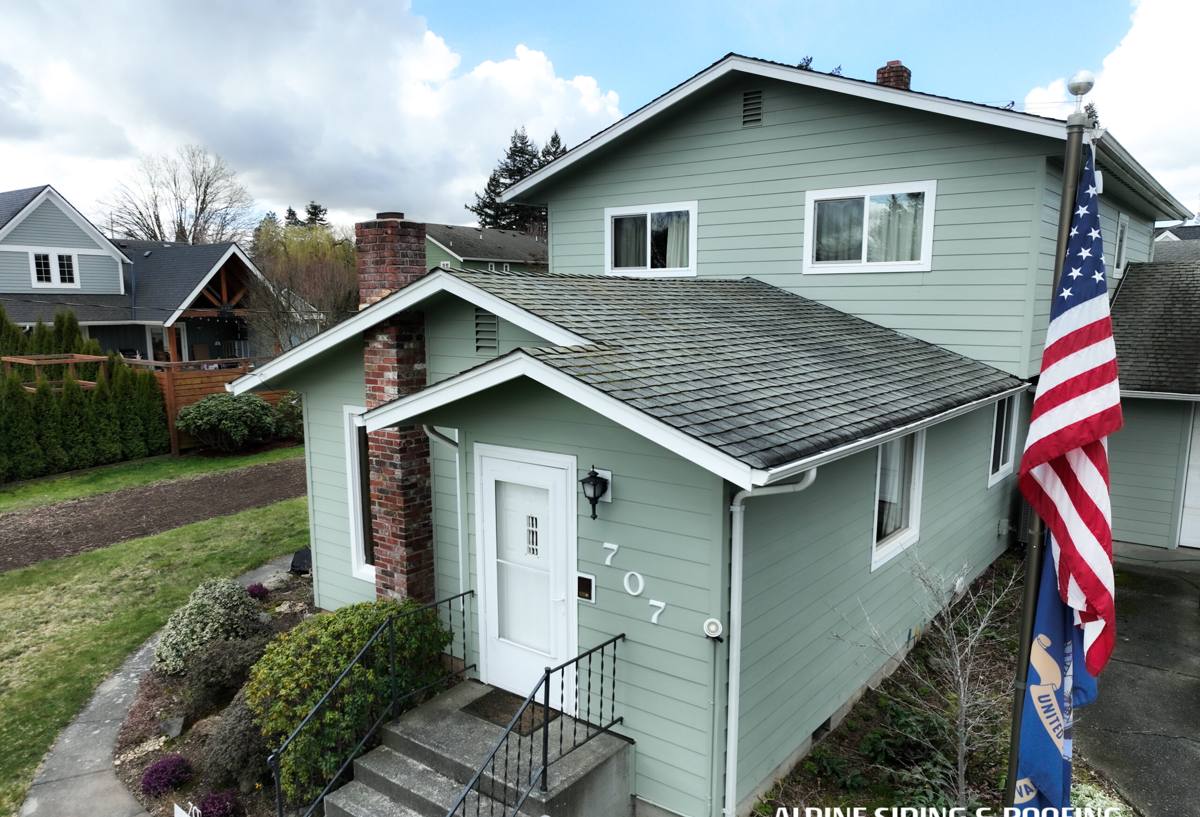
Why Board & Batten Is a Harder Test for Siding Than a Flat Lap Profile
Board and batten looks simple — wide boards, narrow battens covering the seams — but it's actually a more demanding siding profile than standard horizontal lap siding, for a few reasons that matter a lot in a climate like Whatcom County's:
- More vertical seams. Every board-to-batten joint is a potential water entry point if it's not flashed and fastened correctly.
- Vertical water paths. Rain running down a vertical panel moves faster and in higher volume at any given point than on a horizontal lap course, so gaps and caulk failures show up as active leaks sooner.
- Material movement matters more. A board and batten material that swells, shrinks, or cups with moisture will telegraph that movement as visible waviness along a long, unbroken vertical line — it's much harder to hide than on shorter lap boards.
- Battens rely on a stable substrate. If the board underneath moves, the batten fasteners loosen, and that's usually the first visible sign of a failing installation.
None of this means board and batten is a bad choice — it means the material and the installer both need to be dialed in, especially in a wet, moss-prone environment like Nooksack.
What Salt Air, Driving Rain, and Moss Season Actually Do to Siding
Salt Air
Airborne salt doesn't just affect homes right on the waterfront — it travels inland on prevailing wind and settles on exterior surfaces, accelerating corrosion of exposed fasteners and trim metal, and degrading paint and coatings faster than in a dry inland climate. Siding materials and finishes that aren't engineered for coastal-influenced exposure tend to chalk, fade, or corrode noticeably sooner in areas like Whatcom County than they would further inland.
Driving Rain
Wind-driven rain doesn't fall straight down — it's pushed sideways and upward into seams, laps, and penetrations that a calm-weather installation might get away with sloppy detailing on. Board and batten's vertical seams are directly in the path of that wind-driven water, which is why flashing details and fastening patterns matter more here than they would in a drier, calmer region.
Moss and Sustained Moisture
A long moss season means long stretches where siding surfaces, especially on shaded north- and east-facing walls, stay damp for days at a time. Materials that absorb moisture rather than shed it hold onto that dampness, which is exactly the condition that lets moss, mildew, and rot take hold at seams and fastener points.
Why We Install James Hardie Fiber Cement for Board & Batten — Not the Alternatives
Board and batten is available in several materials, and each one behaves differently once it's dealing with real Whatcom County weather year after year. Here's an honest breakdown:
| Material | How it handles moisture | Long-term concern in this climate |
|---|---|---|
| Primed spruce / cedar boards | Absorbs moisture at cut ends and seams; needs a sound paint film to stay protected | Repainting cycle, risk of cupping and rot at battens if caulk or paint fails |
| Vinyl board and batten panels | Sheds surface water but relies on gaps and channels for expansion | Can distort or rattle loose in wind-driven rain and temperature swings; seams aren't true water barriers |
| LP SmartSide (engineered wood) | Treated wood strand product; performs reasonably when sealed edges stay intact | Cut edges and any coating breach are vulnerable to swelling in sustained damp conditions |
| James Hardie fiber cement | Non-combustible, dimensionally stable; doesn't absorb and swell the way wood-based products do | Requires correct fastening and joint treatment, but the material itself doesn't rot or support moss growth the way wood substrates can |
We're not going to claim any of the alternatives above are unusable products — plenty of them are installed successfully across the region. But we've made board and batten decisions based on what holds its line, its finish, and its fastener grip through a decade of Whatcom County winters, and fiber cement has been the more consistent performer for that specific job. It's why we standardized on James Hardie and don't install the others.
What Correct Board & Batten Installation Actually Involves
The material is only part of the equation — the installation is what determines whether a board and batten wall stays tight for the long haul. A correct job in a climate like this includes:
- A drainable weather-resistive barrier behind the panels, giving any incidental moisture a path to escape rather than sitting against the wall sheathing
- Proper fastener spacing and embedment per James Hardie's published installation instructions — not "close enough" spacing
- Correct flashing and sealant at every horizontal transition, window and door opening, and roofline intersection
- Battens fastened into structural framing or furring, not just into the panel itself, so movement doesn't work fasteners loose over time
- Proper clearance at the bottom of the wall and at grade so the lowest boards aren't sitting in standing water or buried in landscaping mulch
- Factory-finished ColorPlus boards where possible, so field-painted cut edges and touch-up areas are minimized
Skip any one of these and you can end up with a wall that looks right for a year or two before the seams start telling on the installer.
A Homeowner's Quick Checklist for Reviewing a Board & Batten Bid
- Does the bid specify James Hardie (or another named fiber cement product) rather than just "board and batten siding"?
- Is a drainable house wrap or rainscreen detail included, or just siding over existing sheathing?
- Are flashing details called out at windows, doors, and roof intersections — or left vague?
- Does the crew reference manufacturer fastening specs, or just "standard nailing"?
- Is there a clear plan for grade clearance and drainage at the base of the wall?
Why Hiring a Crew That Already Works Nooksack Matters
Whatcom County isn't a uniform climate — wind exposure, rainfall patterns, and moss pressure shift noticeably depending on how close a property sits to the water, how much tree cover surrounds it, and which direction the prevailing weather comes from. A crew that's worked repeatedly in and around Nooksack has already seen how local conditions play out on real board and batten walls: which elevations take the worst of the driving rain, which shaded sides need extra attention to keep moss from getting a foothold, and where the salt-air influence shows up in fastener and trim corrosion first. That local pattern recognition doesn't replace following manufacturer specs — it adds to it, catching the details that a generic installation approach might miss.
It also means a crew that stands behind its work locally, rather than a traveling install team you can't easily reach again if a question comes up after the job is done.
Our Process, Start to Finish
- Free on-site estimate. We walk the exterior, look at existing siding condition, drainage, and any problem areas specific to your home's exposure.
- Written scope and product selection. You'll get a clear breakdown of the James Hardie board and batten profile, color, and finish options, with the installation approach spelled out — not just a lump-sum number.
- Prep and moisture management. Any compromised sheathing or existing moisture damage gets addressed before new siding goes on — covering it up doesn't fix it.
- Installation to manufacturer spec. Fastening, flashing, and joint treatment follow James Hardie's published requirements, which also keeps the manufacturer's warranty intact.
- Final walkthrough. We go over the finished job with you before calling it done.
Maintenance Once It's Installed
One of the practical advantages of fiber cement board and batten in a moss-prone area like Nooksack is that routine maintenance is limited to what you'd do for any siding: periodic gentle rinsing to keep organic growth from building up, especially on shaded elevations, and a visual check of caulking at trim and penetrations every year or two. Because the substrate itself doesn't absorb and swell, a missed maintenance cycle is far less likely to turn into structural damage than it would be with a wood-based product.
If you're weighing board and batten siding for a home in the Nooksack area, we're glad to take a look and give you a straightforward, no-pressure estimate — including an honest read on your home's specific exposure and what it actually needs. The form below gets you started.