 Whatcom County
 Why Roofs in Columbia Wear Out Faster Than the Warranty Sticker Suggests
A shingle rated for 30 years on a manufacturer's spec sheet is tested under generic conditions, not under what a roof in Columbia actually deals with year-round. Whatcom County sits close enough to the water that salt-laden air reaches roofs and speeds up corrosion on exposed metal — nail heads, flashing, vent stacks, and gutter hardware all take the hit before the shingles themselves show much wear. Add driving rain that comes in sideways during winter storms, which finds any gap in flashing or underlayment that a calmer climate would never expose, and then add a moss season that runs long — often eight or nine months out of the year with enough moisture and shade to keep spores active. The combination is why a roof that looks fine from the ground can be failing underneath well before its rated lifespan is up.
None of this means Columbia homes need exotic materials or constant babysitting. It means the installation details that get skipped on a rushed job — proper flashing laps, correct fastener choice, real ventilation — matter more here than they would in a drier, calmer part of the state. A roof replacement done right the first time is cheaper over 20 years than one that was installed to a generic standard and starts leaking in year eight.
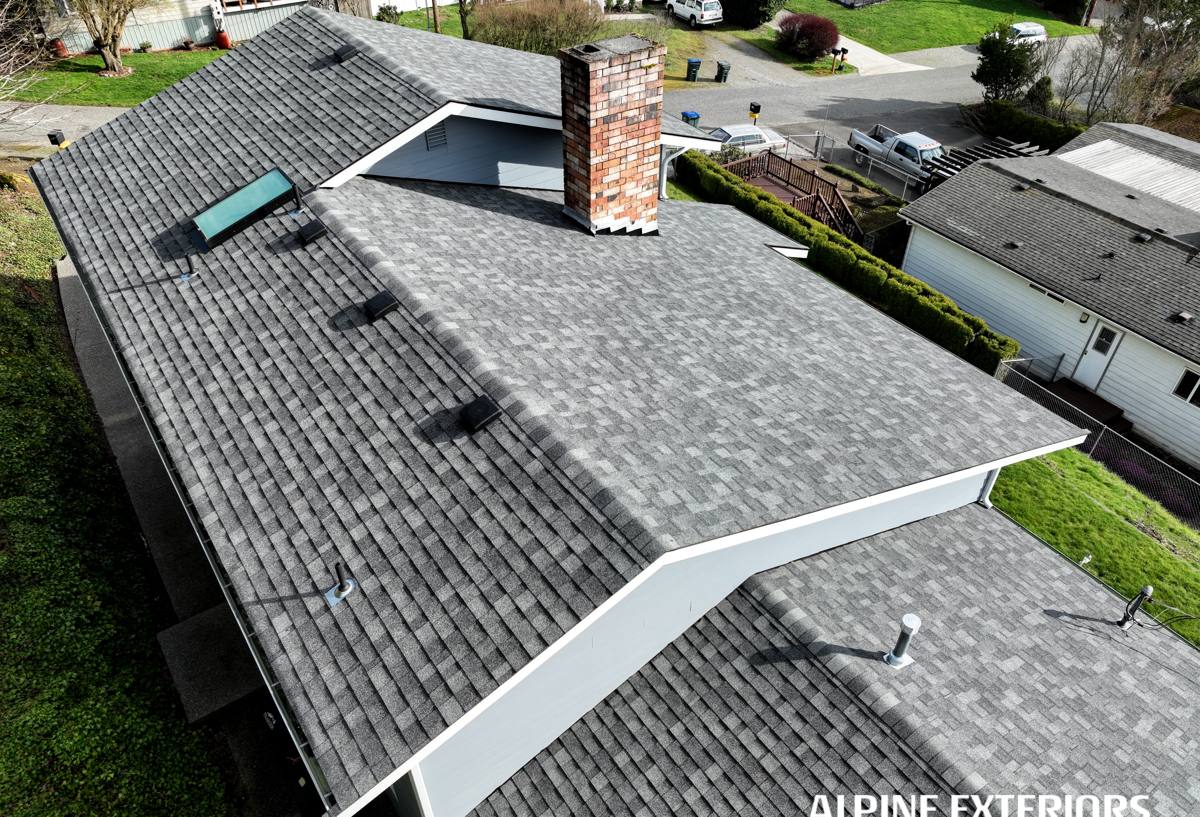
Signs Your Columbia Home Needs Replacement, Not Another Repair
Repairs make sense when the problem is isolated — one damaged section, a single flashing failure, storm damage to a limited area. Replacement becomes the honest recommendation when the roof's underlying materials are failing broadly. Here's what we look for during an inspection:
- Granule loss heavy enough that you can see bare asphalt in multiple spots, not just one worn valley
- Shingles that are cupping, curling, or cracking across large sections rather than in one localized area
- Moss or algae growth that's spread past the surface and started lifting shingle edges, which lets wind-driven rain underneath
- Soft spots or sagging when you walk the roof (or see it from a ladder) — usually a sign the decking underneath has taken on moisture
- Daylight visible through the roof deck from inside the attic, or water stains on attic sheathing after a storm
- Flashing around chimneys, skylights, or vent stacks that's rusted, separated, or was never properly stepped and counter-flashed to begin with
- A roof already carrying two layers of shingles from a prior "roof over" — code and practicality both push toward full tear-off at that point
- Interior ceiling stains that come and go with weather, which usually means water is tracking along the deck before it drips through
If you're only seeing one or two of these in a contained area, a repair may genuinely be the right call — we'll tell you that instead of upselling a full replacement you don't need yet.
What a Correct Roof Replacement Actually Involves
Full Tear-Off and Deck Inspection
We don't install new roofing over old. Every layer comes off down to the deck, because that's the only way to actually see what's underneath — soft or rotted sheathing, undersized or corroded fasteners, past leak damage that was covered up rather than fixed. Any damaged decking gets replaced before anything new goes down. Skipping this step is how a new roof ends up failing from the inside within a few years.
Underlayment and Ice-and-Water Protection
Given how much driving rain the area sees, we don't treat underlayment as an afterthought. Synthetic underlayment across the full deck, with self-adhering ice-and-water membrane at the eaves, valleys, and any roof-to-wall transitions where wind-driven rain is most likely to find a way in. This is the layer that protects the deck even if a shingle ever gets damaged or lifted — it's cheap insurance relative to the cost of a deck replacement down the road.
Flashing and Penetrations
Chimneys, skylights, vent pipes, and wall intersections are where the vast majority of roof leaks actually start — not in the open field of shingles. Correct step flashing, counter-flashing, and pipe boots, installed new rather than reused, are non-negotiable on our jobs regardless of how small that line item looks on an estimate.
Ventilation
A roof deck that can't breathe holds moisture, and trapped moisture is exactly what feeds moss, rot, and premature shingle failure. Balanced intake (soffit) and exhaust (ridge or box vents) ventilation is part of a correct replacement, not an optional upgrade — see the section below for why this matters more here than in a lot of other climates.
Choosing the Right Roofing Material for Whatcom County's Climate
There's no single "best" roofing material — there's the right material for your roof's pitch, your budget, and how much long-term maintenance you're willing to take on. Here's how the common options stack up for a coastal Whatcom County home:
| Material | Typical Lifespan | How It Handles Salt Air & Moss | Maintenance Burden |
|---|---|---|---|
| Architectural asphalt shingle | 25–30 years | Good with proper ventilation and moss-resistant granules; most common choice locally | Low — periodic moss treatment and gutter clearing |
| Standing seam metal | 40–50+ years | Very good corrosion resistance when properly coated; sheds moss and moisture fast due to steep, smooth surface | Low, but higher upfront cost |
| Synthetic/composite shingle | 30–50 years | Resists moisture absorption well; doesn't feed moss the way organic materials can | Low to moderate |
| Cedar shake | 20–30 years with upkeep | Attractive but absorbs moisture, which accelerates moss growth and rot in a wet climate; needs regular treatment | High — we're upfront that this isn't our default recommendation here for that reason |
We'll install what you want on your home, but our default recommendation for this area leans toward asphalt or metal specifically because they hold up with less maintenance against the moss and moisture cycle Columbia deals with most of the year. If you love the look of cedar, we'll walk you through the realistic upkeep schedule before you commit, not after.
Moss, Algae, and Long-Term Roof Health
Moss doesn't just look bad — it holds moisture directly against the shingle surface, works its way under shingle edges as it grows, and can lift tabs enough for wind-driven rain to get underneath. In a climate with a long wet season, moss prevention has to be built into the roof, not treated as a once-a-year cleanup chore. That means specifying algae-resistant shingles where available, keeping overhanging tree cover trimmed back where practical, and — depending on the roof — installing zinc or copper strips near the ridge, which release trace metal ions that discourage regrowth as rain washes over them. None of these steps eliminate the need for occasional moss treatment, but they meaningfully stretch the time between cleanings and protect the shingles underneath in the meantime.
Our Roof Replacement Process, Start to Finish
- On-site inspection and estimate. We walk the roof (or use a ladder/drone where pitch or access makes that safer), check the attic for ventilation and moisture issues, and give you a written estimate — no pressure, no hard sell.
- Material selection. We go over the options above in the context of your budget, your roof's pitch and exposure, and how much upkeep you actually want to do.
- Scheduling around the weather. Tear-off has to happen during a dry window since an open deck can't sit exposed to Whatcom County rain. We plan the job and stage materials so the deck is never left uncovered longer than necessary, and we tarp immediately if weather turns mid-project.
- Full tear-off and disposal. Old roofing comes off completely and is hauled away — we don't leave debris for you to deal with.
- Deck repair. Any soft, rotted, or damaged sheathing found during tear-off is replaced before installation continues.
- Underlayment, flashing, and ventilation installed correctly per the details above.
- New roofing installed to manufacturer specification, which is also what keeps the material warranty valid.
- Final walkthrough and cleanup, including a magnetic sweep for stray fasteners and a review of your warranty paperwork.
What a Roof Replacement in Columbia Typically Costs
Every roof is different, but the factors that move the price are consistent. We'd rather explain what drives your number than throw out a figure that doesn't apply to your house.
| Cost Factor | Why It Matters |
|---|---|
| Roof size and pitch | More surface area and steeper pitches both increase material and labor time; steep roofs also require more safety setup |
| Number of existing layers | Tearing off two layers of old shingles costs more in labor and disposal than tearing off one |
| Deck condition | Rotted or soft sheathing found during tear-off adds material and labor that generic online estimates never account for |
| Material choice | Asphalt is the most budget-friendly; metal and premium synthetics cost more upfront but can mean fewer maintenance dollars over the roof's life |
| Roof complexity | Valleys, dormers, chimneys, and skylights all add flashing work and labor time compared to a simple gable roof |
| Access | Tight lots, tall trees, or difficult staging areas can affect equipment and crew time |
As a broad range, most asphalt shingle replacements on an average single-family home in this area run in the mid-to-upper single-digit thousands to low five figures; metal and more complex roofs run higher. The only way to get a number that means anything for your house is a real inspection — anything quoted sight-unseen isn't a number you should plan around.
Why Hiring a Crew That Already Works in Columbia Matters
A roofing crew that only occasionally works this part of Washington doesn't have the same instinct for how much of the year is a genuine dry-work window here, or how aggressively moss establishes itself on a north-facing slope shaded by mature trees. A crew that works Columbia and the surrounding Whatcom County area regularly knows to plan tear-offs tightly around weather, to spec moss-resistant materials and ventilation as standard rather than upsells, and understands local permitting requirements without it slowing the job down. That local familiarity shows up less in the sales pitch and more in how few callbacks a roof needs five years later.
Caring for Your New Roof
A correctly installed roof still needs basic upkeep to hit its full lifespan in this climate:
- Keep gutters clear so water isn't backing up under the eaves during heavy rain
- Have moss growth treated before it spreads rather than after it's visible from the street
- Trim back tree limbs that overhang the roof and keep it shaded and damp
- Have the roof looked at after any major windstorm, even if nothing looks obviously wrong from the ground
- Schedule a professional inspection every couple of years, especially as the roof approaches the back half of its rated lifespan
If your roof in Columbia is showing any of the warning signs above, or you'd just like an honest read on how much life it has left, we're happy to take a look. Fill out the form below for a free, no-pressure estimate — we'll tell you straight whether you need a replacement, a repair, or nothing at all right now.