 Whatcom County
 Roof Repair Built Around How Samish Weather Actually Behaves
Samish sits in a part of Whatcom County where the roof rarely gets a break. Wet weather rolls through for months at a stretch, moist air off the water keeps everything from drying out fully between storms, and shaded, tree-lined lots hold onto moss longer than open, sunny sites. None of that is unusual for this part of Washington, but it does mean a roof here ages differently than one in a drier climate, and it means repairs need to account for ongoing exposure, not just patch the spot that's currently leaking.
A roof repair that only addresses the visible symptom — a stain on the ceiling, a missing shingle, a drip during a storm — often leaves the underlying cause in place. In a climate like this one, that usually means the same problem returns within a season or two, sometimes worse. Our approach is to find out why a roof is failing before we decide how to fix it.
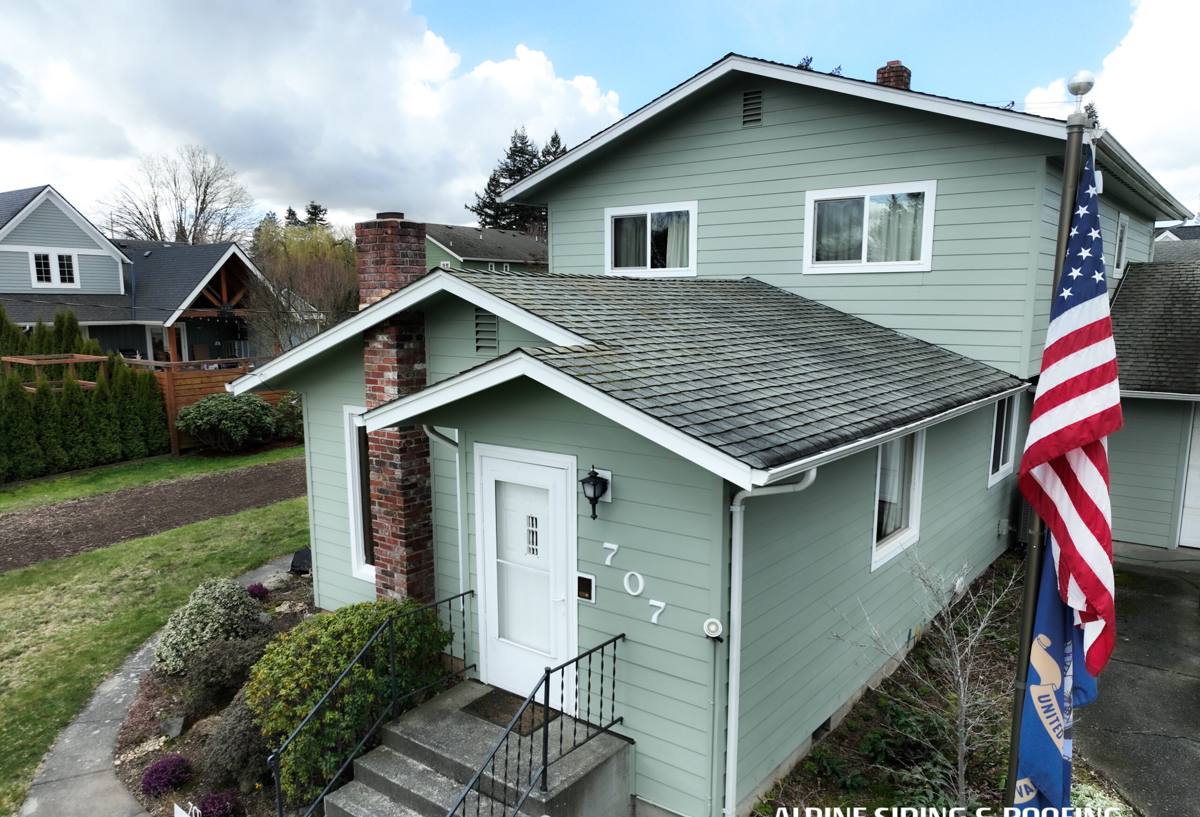
What Local Homes Need From a Roof Repair
Most of the repair calls we get in this area fall into a few categories, and each one has its own set of correct fixes:
- Moss and organic buildup holding moisture against shingles or shakes, breaking down the surface layer over time
- Flashing failures around chimneys, skylights, and roof-to-wall transitions, where driving rain finds the smallest gap
- Valley and gutter backups from debris and moss, pushing water sideways under shingles instead of down and off the roof
- Wind and storm damage — lifted or torn shingles, exposed nail heads, and cracked ridge caps
- Slow leaks with no obvious source, usually traced back to worn underlayment or aged flashing rather than a single dramatic failure
The common thread is moisture that has time and opportunity to work its way in. A repair that doesn't account for that just delays the next call.
What a Correct Roof Repair Actually Involves
Diagnosis Before Anything Else
We start on the roof itself, not just at the leak point inside the house. Water travels — a stain on a bedroom ceiling might trace back to a flashing gap several feet away. We check the roof covering, the flashing details, the ventilation, and the underlayment condition in the affected area before recommending a fix.
Matching the Repair to the Roof's Age
A five-year-old roof with an isolated flashing failure is a different job than a roof nearing the end of its service life with widespread granule loss or brittle shingles. We're honest about which situation is which. Patching a roof that's genuinely at the end of its life can be a reasonable short-term move in some cases, but we'll tell you plainly when a repair is a stopgap versus a real fix.
Doing the Detail Work
Most roof leaks in this climate come down to details: step flashing, counter-flashing, pipe boots, valley metal, and the transitions where two roof planes or a roof and a wall meet. A correct repair means re-flashing properly, not just running a bead of sealant over the gap. Sealant has its place, but it's not a substitute for flashing done right, and it fails faster in a climate this wet.
Moss, Moisture, and Salt Air: The Regional Factors We Plan Around
Whatcom County's mix of marine air, shaded lots, and a long wet season creates a specific set of conditions:
- Moss season runs long here — shaded roof sections and north-facing slopes can stay damp enough to support moss growth for much of the year, and moss holds water against the roof surface far longer than bare shingles would dry on their own.
- Salt-influenced air near the water speeds up corrosion on exposed metal — flashing, fasteners, and gutter hardware wear faster than they would further inland.
- Driving rain during winter storms tests every flashing detail and seam on a roof, finding weak points that might never show themselves in a drier, calmer climate.
None of this means a roof here is doomed to constant problems. It means the materials, fastener choices, and flashing techniques used in a repair should be chosen with these conditions in mind, not treated as an afterthought.
Our Repair Process
- Inspection. We look at the roof surface, flashing, ventilation, and any interior signs of moisture before recommending anything.
- Straight explanation. We tell you what's actually wrong, what caused it, and whether a repair is the right call or if you're better served knowing what a future replacement might look like.
- Written estimate. You get a clear scope of work and price before anything starts — no surprise add-ons once we're up there.
- The repair itself. Proper flashing, matching materials where possible, and attention to the drainage path around the repair area so water keeps moving off the roof the way it's supposed to.
- Cleanup and walk-through. We clear debris, check gutters and downspouts in the work area, and explain what we did and why.
Repair or Replace? Cost Factors to Weigh
Not every roof problem needs a full replacement, but not every problem should be patched forever either. Here's how we help homeowners think through it:
| Factor | Favors Repair | Favors Replacement |
|---|---|---|
| Age of roof covering | Under roughly half its expected service life | Near or past its expected service life |
| Extent of damage | Isolated to one section, flashing, or a few shingles | Widespread granule loss, curling, or multiple leak points |
| Underlayment condition | Sound and intact where exposed | Brittle, torn, or failing in multiple spots |
| History of repairs | First or second repair in this area | Repeated repairs to the same section over time |
| Budget timeline | Need a stable fix now, replacement planned later | Ready to address the roof once, long-term |
We'll give you our honest read on where your roof falls, but the decision — and the timeline — is yours.
A Note on Materials and Our Standards
When a repair calls for replacing shingles, flashing, or underlayment, we match materials that hold up under this region's conditions — corrosion-resistant metal for flashing, underlayment rated for extended moisture exposure, and fasteners that won't be the weak point five years down the road. We're upfront when a cheaper fix would technically hold the roof together but wouldn't meet the standard we're willing to put our name behind. That sometimes means a slightly higher-cost approach on a repair, but it's the same standard we'd want on our own roof in this climate.
Why a Crew That Already Works Samish Matters
A roof repair isn't just about technique — it's about knowing what tends to go wrong on homes built the way local homes are built, under the conditions this specific area sees. A crew that regularly works in and around Samish and the wider Whatcom County area already has a feel for which roof styles hold moss longest, which flashing details tend to fail first in driving rain off the water, and what a reasonable repair timeline looks like given how fast weather windows can close between storms. That familiarity shows up in faster, more accurate diagnosis and fewer callbacks.
It also matters for scheduling. Roof leaks rarely wait for convenient weather. A local crew can typically get eyes on a problem faster and plan the repair around the next dry stretch instead of losing weeks to logistics.
Simple Maintenance That Extends a Repair's Life
Once a repair is done right, a little upkeep keeps it that way. Homeowners in this area get the most out of a repaired roof by:
- Keeping gutters and valleys clear of needles and debris, especially heading into fall
- Having moss growth treated or removed before it spreads across a full slope
- Watching for granule buildup in gutters or downspouts, an early sign of shingle wear
- Checking attic ventilation periodically — poor airflow traps moisture and accelerates roof aging from underneath
- Getting a roof looked at after any major windstorm, even if nothing looks obviously wrong from the ground
These are small habits, but in a climate that stays wet this long, they make a real difference in how long a repair — or a full roof — actually lasts.
If you're dealing with a leak, storm damage, or a roof that just needs an honest look, we're happy to come out, walk the roof, and give you a straight answer along with a free, no-pressure estimate. Just fill out the form below to get started.