 Whatcom County
 What Makes Siding Repair Different in Barkley's Climate
Not every siding problem in Barkley calls for a full re-side, and not every homeowner who calls us actually needs one. A lot of exterior work here is repair work: a section damaged by a fallen branch, a corner that's gone soft near grade, a run of boards where moss has taken hold and started to compromise the surface underneath. Doing that kind of repair correctly in this part of Whatcom County means understanding a specific combination of conditions — salt air drifting in off the water, driving rain that gets pushed sideways into seams and laps more often than it falls straight down, and a moss season that runs longer here than in drier parts of the state.
Those three factors don't just make siding problems more likely — they change how a repair has to be done. A patch that would hold up fine in a mild, dry climate can fail here within a season or two if the flashing, clearance, or fastening isn't handled with this specific weather pattern in mind. This page covers what actually damages siding in Barkley, how we tell a cosmetic issue from a real one, and what a repair has to get right to actually last.
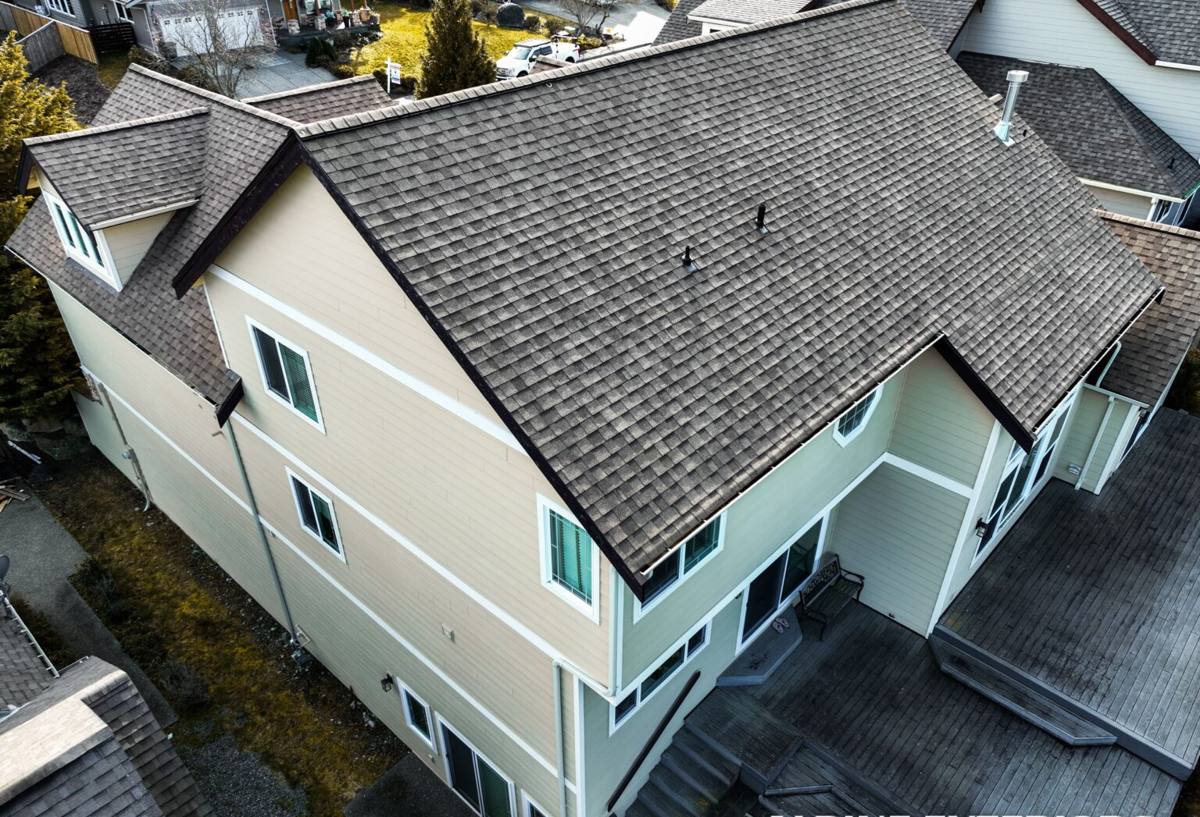
What Actually Damages Siding in Barkley
Salt Air and Fastener Corrosion
Salt-laden air doesn't just make a house feel damp — it accelerates corrosion on exposed fasteners, hardware, and any metal trim or flashing that isn't rated for coastal exposure. Corroded fasteners often show up first as a rust streak below a nail head or a board that's started to loosen slightly, well before the underlying damage becomes obvious from a distance.
Wind-Driven Rain and Flashing Failures
Rain that's pushed sideways by wind behaves differently than a calm, straight-down shower. It gets forced into laps, seams, corner boards, and anywhere flashing wasn't detailed correctly the first time, and once water gets behind siding it can travel and cause damage well away from where it actually entered. A lot of what looks like a "siding problem" on inspection is really a flashing problem that's been showing up as siding damage for months.
Moss, Mildew, and Sustained Dampness
Shaded walls, north-facing exposures, and anything under tree cover in Barkley stay damp for extended stretches through the fall, winter, and much of spring — exactly the condition moss needs to establish itself. On wood-based or wood-look siding, that ongoing dampness isn't just a staining issue; it softens the material at seams and edges over time. On fiber cement, moss is mostly a surface and finish concern rather than a structural one, but it still needs to be addressed before it works its way into a joint or a compromised fastener point.
Cosmetic Wear vs. Damage That Needs Attention Now
Not every mark on a wall is an emergency, and not every homeowner needs to hear "full replacement" the first time they call about a stain or a crack. Telling the difference correctly is the actual job of a repair estimate.
| Symptom | Usually Cosmetic | Often Needs Repair Soon |
|---|---|---|
| Surface moss or green staining on a shaded wall | Yes, if the board underneath is still solid | If the board has started to soften or discolor beneath the moss |
| Hairline caulk cracking at a seam or trim joint | Often, if caught early | Yes, once water has clearly tracked behind it |
| Rust streak below a fastener | Rarely on its own | Usually — the fastener has likely lost holding strength |
| Soft spot or slight give when pressed | No | Yes — indicates moisture damage underneath |
| Faded or chalking paint on non-Hardie siding | Cosmetic if isolated | Worth monitoring — a sign the finish is failing |
| Gap or separation at a butt joint or corner | No | Yes — a direct path for water intrusion |
Cosmetic issues can usually be monitored or handled as part of routine upkeep. Anything involving softness, separation, or a fastener that's clearly compromised shouldn't wait, because moisture-related damage in this climate compounds rather than staying static.
How We Diagnose Before Recommending Anything
A repair estimate that's actually useful starts with a real inspection, not a guess based on what's visible from the driveway. That typically includes:
- Checking whether damage is limited to the visible surface or has already reached the sheathing or weather-resistive barrier underneath
- Probing suspect boards and trim for softness rather than relying on a visual look alone
- Tracing water stains or damage back to their actual source, since the entry point is often well above or beside where the damage shows
- Inspecting flashing at windows, doors, and any wall penetrations near the affected area
- Checking fastener condition and siding clearance above grade in the section being evaluated
- Assessing how much sun and shade the affected wall gets, since that tells us how likely the same problem is to recur nearby
We'll walk through what we find honestly, including when a repair is a genuinely good option and when it's just delaying a bigger job.
Repair vs. Replace: Making That Call Honestly
Homeowners sometimes assume any visible siding damage means a full re-side is coming, and just as often assume a repair will always be the cheaper, equally good answer. Neither assumption holds up consistently. The factors that actually decide it:
- How localized the damage is. A single damaged panel, corner, or section from an isolated event is usually a strong repair candidate.
- Whether the cause has been fixed. Repairing damaged boards without correcting the flashing or clearance issue that caused it just resets the clock on the same failure.
- Age and overall condition of the siding. Siding that's otherwise near the end of its service life may only have limited value left in patching it further.
- How much of the exterior shows the same pattern. Isolated moss on one shaded corner is a repair. Moss, staining, and softening spreading across multiple walls usually points to a systemic issue worth addressing all at once.
We'll give a straight answer about which category a given repair falls into, including telling you when a repair is genuinely the right call rather than defaulting to whichever job is larger.
What a Correct James Hardie Repair Involves
Matching Profile and Finish
James Hardie's ColorPlus finish is a factory-applied, baked-on coating, which means an exact color match on a small patch can be harder to source than it looks, especially against siding that's weathered for several years since installation. We're upfront about that before starting a repair, and we match board profile and reveal as closely as the product line allows so a repaired section blends in rather than standing out.
Correct Flashing and Water Management at the Patch
Cutting into an existing wall to replace a damaged section means re-establishing the same water-shedding path the original installation relied on — house wrap lapped correctly, flashing tied back into what's already there, and seams sealed so the patch doesn't become a new entry point for wind-driven rain. A repair that looks fine on install day but skips this step tends to fail again within a season or two.
Fasteners and Clearance Done to Spec
Repairs use fasteners and spacing to Hardie's actual installation requirements, not whatever happens to match what's already in the wall if that original work was done incorrectly. We also check and correct clearance above grade, decking, and hardscape in the repaired section, since a patch installed with the same clearance mistake that caused the original damage will develop the same problem again.
Repairing Non-Hardie Siding: An Honest Conversation
We install only James Hardie fiber cement, but plenty of Barkley homes we're called out to have vinyl, LP SmartSide, primed spruce, or cedar siding already on them, and we'll take an honest look at those repairs too. On a lot of that work, a competent patch is genuinely the right answer — a cracked vinyl panel or a small section of damaged trim doesn't need to trigger a conversation about replacing the whole wall.
Where we draw a clear line is when the damage traces back to the material itself rather than a one-time event — wood that's absorbing moisture at every seam, engineered wood swelling at cut edges, or vinyl that's cracked in multiple places from age and temperature cycling. In those cases, another round of patching is a short-term answer to a problem the material is going to keep having. When that's what we find, we'll say so directly, and if replacement makes sense, fiber cement is what we'd put on the wall instead, for the same reasons it's the only product we install new.
Why a Local Crew Matters for Repair Work in Barkley
Repair work rewards familiarity even more than new installation does, because every repair has to blend into decisions someone else already made on that wall years earlier. A crew that works Whatcom County exteriors regularly has seen how this specific combination of salt air, wind-driven rain, and moss plays out on wall after wall — which corners fail first, which shaded sections need extra attention, how much clearance actually holds up given how damp the ground stays through the wet months.
That familiarity shows up in small decisions on a repair job: where to feather a patch so it doesn't create a visible seam, when a section needs new flashing versus a resealed joint, how far back to cut damaged material to make sure nothing compromised gets left behind the new piece. Those are the details that determine whether a repair actually lasts or needs to be revisited in a year or two.
Signs Your Barkley Home May Need Siding Repair
Most homeowners reach out because one specific thing caught their eye, not because they've been tracking every inch of the exterior. Worth checking for before a small issue becomes a bigger one:
- Visible moss or green staining on a shaded or north-facing wall
- Cracked, missing, or separated caulk at seams, corners, or trim joints
- A soft spot or slight give when pressing near a window, door, or low corner
- Rust streaks below fasteners or visible corroded hardware
- Siding that's cupping, buckling, or separating at a joint
- Peeling or chalking paint on wood-based or engineered wood siding
- A section that's noticeably discolored or damp-looking compared to the rest of the wall
Any one of these can be a small, contained fix if it's caught early. Left alone through another wet season, most of them get more expensive to correct rather than staying the same.
What to Expect From a Barkley Repair Estimate
We'll walk the affected area, look at what's actually causing the damage rather than just what's visible on the surface, and give a straightforward recommendation — including telling you plainly when a repair will hold and when it won't. We're not going to talk a straightforward patch into a full re-side, and we're not going to paper over a moisture problem that needs to be traced to its source.
If you're seeing moss, staining, soft spots, or damaged sections on your Barkley home's siding, we're glad to take a look and give you an honest read on what it actually needs. Reach out using the form below to schedule a free, no-pressure estimate.