 Whatcom County
 South Hill's Exposure Problem
South Hill sits up on the hillside above Bellingham, which means most homes here catch more weather than houses tucked into lower, more sheltered parts of Whatcom County. Elevation brings wind. Wind brings driving rain that hits siding at an angle instead of falling straight down, working its way into laps, seams, and butt joints that were never designed to handle water moving sideways. Add in proximity to Bellingham Bay and the Strait of Georgia, and you've got a steady dose of salt-laden air settling on exterior surfaces year-round.
Then there's the moss. Whatcom County's wet season runs long — often eight or nine months of the year with more days damp than dry — and anything on a house that stays wet longer than it should becomes a host for moss and algae. On siding, that's not just cosmetic. Moss holds moisture against the surface, and moisture held against wood-based products for months at a time is exactly how rot gets started.
None of this means South Hill homes need anything exotic. It means they need siding and an installation that were actually built to shed water fast, resist salt exposure, and not feed the moss cycle — not a product and installation crew that are just doing what works fine in a drier climate.
What Original Siding on South Hill Homes Is Up Against
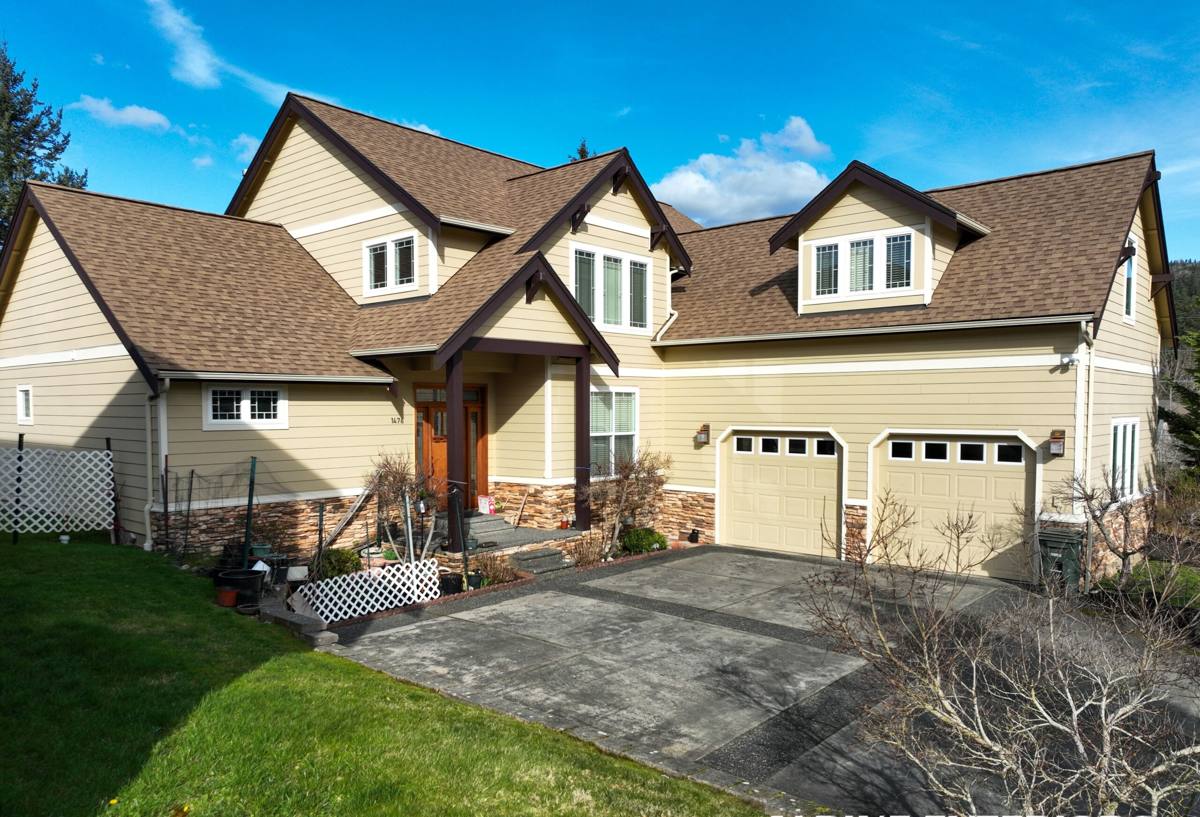
A lot of the housing stock on South Hill spans several decades, and it's common to find a mix of original wood siding, older vinyl, and in some cases a previous replacement that wasn't detailed for this kind of exposure. Wood siding that hasn't been repainted on schedule starts absorbing water at the grain and swelling. Vinyl doesn't rot, but it was never a moisture-management system — it just hangs on the wall and relies entirely on whatever's behind it (or isn't) to keep water out, and it gets brittle and prone to cracking in cold snaps and wind events.
What we see most often on hillside homes in this area isn't one dramatic failure — it's slow, compounding damage: caulk that's cracked and let water behind trim, siding that's cupped or buckled from repeated wetting and drying, and moss buildup at the lower courses and north-facing walls that never fully dry out between rain events.
Signs Your Siding Has Reached the End
- Soft or spongy spots when you press on the siding, especially near the bottom courses
- Paint that's peeling, bubbling, or needing repainting more often than every 5-7 years
- Persistent moss or dark streaking that comes back within months of cleaning
- Visible warping, cupping, or gaps opening up at seams and corners
- Interior signs — musty smell, peeling interior paint, or soft drywall near exterior walls
- Siding that's original to a home built more than 25-30 years ago and has never been replaced
What a Correct Siding Replacement Actually Involves
Replacing siding isn't just swapping old panels for new ones. On a hillside, wind-exposed property, the work that happens underneath the visible siding matters more than the siding itself.
Tear-Off and Inspection
Once the old siding comes off, that's the only point in the project where the sheathing and framing underneath are fully visible. Any soft sheathing, hidden rot around windows or corners, or previously failed flashing needs to be found and repaired here — not covered up and hoped for later.
Water-Resistive Barrier and Flashing
A correctly lapped weather-resistive barrier, properly integrated window and door flashing, and flashing at every horizontal transition (roof lines, decks, trim boards) is what actually keeps wind-driven rain out of the wall assembly. This is the step that gets rushed on cheap jobs and is the one that matters most in an exposure like South Hill's.
Fastening and Clearances
Siding needs to be fastened per the manufacturer's specified schedule — not "close enough" — and needs proper clearance from grade, roof lines, and decks so water has somewhere to go instead of sitting against the bottom edge of the siding.
Why We Install Only James Hardie Fiber Cement
We standardized on James Hardie fiber cement siding and don't install vinyl, LP SmartSide, Cemplank, Allura, primed spruce, or cedar. That's not a marketing position — it's a decision based on what actually holds up to this county's climate over decades, not just the first few years.
Fiber cement is non-combustible and dimensionally stable, meaning it doesn't expand, contract, warp, or absorb water the way wood-based and wood-composite products do. James Hardie's ColorPlus finish is baked on at the factory under controlled conditions, which gives it better fade and moisture resistance than field-applied paint — a real advantage in a climate where repainting siding every few years isn't practical or something most homeowners want to keep budgeting for. Hardie also engineers its HZ5 product line specifically for climates like the Pacific Northwest's, which deals with sustained moisture exposure differently than a dry or freeze-heavy climate does.
We're not saying every other product is unusable everywhere — cedar has real appeal, vinyl is inexpensive, and LP SmartSide has its place. But for what South Hill homes are exposed to — salt air, long wet seasons, and wind-driven rain — we'd rather install one product correctly and stand behind it than offer five options and hope the cheaper ones hold up.
| Factor | Vinyl | Cedar | LP SmartSide | James Hardie Fiber Cement |
|---|---|---|---|---|
| Moisture resistance | Good (but relies on WRB behind it) | Needs consistent maintenance | Vulnerable at cut edges/moisture intrusion | Strong — cement-based, doesn't absorb like wood |
| Salt air durability | Can become brittle over time | Weathers and grays without upkeep | Sensitive to prolonged moisture | Engineered for coastal/wet climates (HZ5) |
| Moss/algae resistance | Surface growth, cleans off | Prone to moss holding moisture in grain | Similar risk to wood if maintenance lapses | Factory finish resists staining and growth |
| Repainting needs | Never repainted, can fade | Every 3-5 years typically | Every 7-10 years typically | ColorPlus finish, much longer intervals |
| Fire resistance | Melts/deforms near heat | Combustible | Combustible (treated, but wood-based) | Non-combustible |
Our Process for a South Hill Siding Replacement
- On-site assessment: We walk the exterior, check exposure on each elevation (south and west walls typically take the worst of the weather), and look for signs of existing moisture damage.
- Scope and estimate: You get a clear, honest breakdown of what's needed — full tear-off, sheathing repair allowances if applicable, trim, and the Hardie product line that fits the home.
- Tear-off and sheathing inspection: Old siding comes off, sheathing is inspected and repaired as needed before anything new goes up.
- Weather barrier and flashing installation: Water-resistive barrier, window/door flashing, and transition flashing are installed and detailed correctly the first time.
- Hardie siding installation: Installed to manufacturer fastening and clearance specifications — not shortcuts that void the warranty.
- Final walkthrough: We go over the finished work with you before calling the job done.
Cost Factors for a South Hill Project
Every home is different, and we won't quote a number without seeing the property, but the main things that move the price on a South Hill siding replacement are worth understanding up front:
| Cost Factor | Why It Matters |
|---|---|
| Home size and wall complexity | More corners, dormers, and cutouts mean more material and labor time |
| Existing sheathing condition | Hidden rot found during tear-off requires repair before new siding goes on |
| Hardie product line chosen | Lap siding, panel systems, and shingle-style profiles vary in material cost |
| Trim and accessory work | Fascia, corner boards, and window trim replacement add to scope |
| Site access | Steep hillside lots can require more setup for scaffolding and material staging |
Why Hiring a Crew That Already Works South Hill Matters
A crew that's already worked on hillside Whatcom County homes knows to expect wind-driven rain on south and west exposures, knows what moss buildup patterns tell you about a wall's drying history, and isn't guessing at how much clearance to leave at grade or how flashing needs to be lapped for water moving in from an angle instead of straight down. That experience shows up in details — the kind that don't get noticed until they either hold up for thirty years or fail in five.
It also matters for warranty follow-through. James Hardie's product warranty is only as good as the installation behind it, and a local crew that stands behind its own work in this specific climate is a very different thing than a traveling crew that installed a job and moved on to the next state.
Get a Straight Answer for Your Home
If your South Hill home's siding is showing its age — moss that won't stay gone, paint that keeps failing, or siding that's simply reached the end of a normal lifespan — we're happy to take a look and give you a straightforward assessment. There's no pressure and no sales pitch, just an honest read on what your home actually needs. Request a free estimate using the form below.