 Whatcom County
 Why Bellingham Roofs Take a Different Kind of Beating
Roofs in Bellingham don't fail the way roofs fail in drier climates. It's rarely one dramatic storm that does the damage — it's the combination of wind off the Strait of Georgia, salt-laden air drifting in from Bellingham Bay, and a moss season that runs most of the year under our tree cover and cloud ceiling. A roof here can look fine from the ground and still be quietly losing its grip on a ridge cap, a valley, or a flashing seam. When a real windstorm or heavy rain event finally hits, it doesn't create the weak spot — it finds one that's already been forming for a year or two.
That's the mindset we bring to storm damage repair in Bellingham: the storm is usually the trigger, not the whole story. A repair that only patches what the wind obviously tore off, without checking what the salt air and moss had already softened underneath, tends to fail again at the next windstorm.
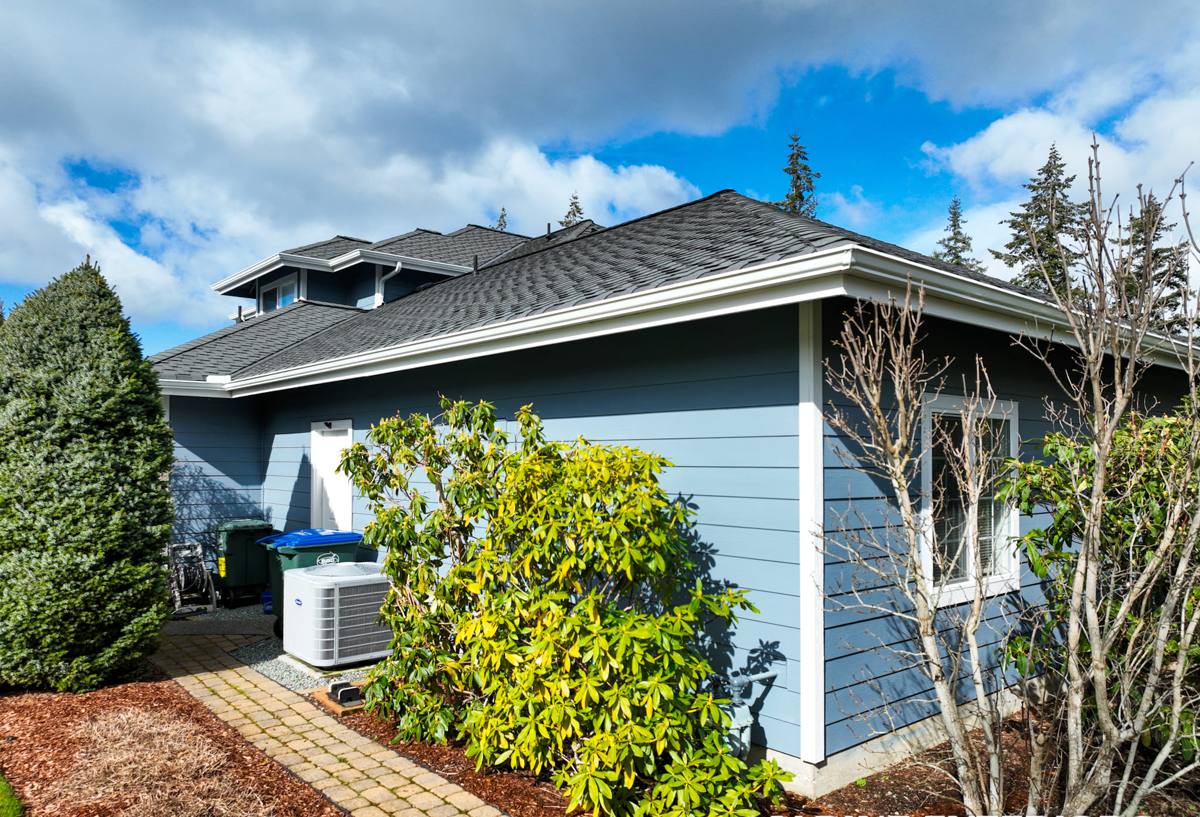
What Storm Damage Actually Looks Like on a Whatcom County Roof
Wind and Wind-Driven Rain
Whatcom County gets its share of southerly windstorms, and Bellingham's mix of open exposure near the water and tighter tree cover further inland means wind loads hit roofs unevenly. Wind rarely just lifts a shingle — it works underneath the edge, breaks the seal strip, and drives rain sideways under laps that were never designed to shed water horizontally. The result is often water staining well away from where the actual opening is, which is why a proper inspection follows the water path rather than stopping at the first visible tear.
Falling Limbs and Debris
With as much tree cover as this area has, falling limbs and small branches are a routine part of storm damage here, even without a full-on windstorm. Impact damage can crack shingles, dent metal flashing, or puncture underlayment without leaving an obvious hole from below — the ceiling stain sometimes shows up weeks later, after enough rain has worked through.
Hidden Water Intrusion
Because Bellingham gets so much sustained, low-intensity rain rather than short violent downpours, water finds its way through small openings over days, not minutes. A gap that would never leak in a quick thunderstorm can soak a deck over a long Pacific Northwest rain event. This is the single biggest reason storm repairs here need to be more thorough than a quick shingle swap.
Signs You Might Have Storm Damage
Most homeowners don't get up on the roof after a storm, and they shouldn't — but there are ground-level and attic-level signs worth checking:
- Granules collecting in gutters or at downspout outlets after a windy rain
- Shingles that look lifted, curled, or out of alignment along the roof edges or ridge
- New or spreading ceiling stains, especially near chimneys, skylights, or valleys
- Visible dents or creases in metal flashing, vents, or gutters
- Moss buildup that suddenly looks disturbed or displaced after a storm
- Daylight visible through the attic roof deck
- A musty smell in the attic that wasn't there before
- Debris — branches, needles, or torn shingle pieces — collected in one area of the roof
What a Correct Storm Damage Repair Actually Involves
Emergency Tarping and Stabilization
If a storm has opened up the roof deck, the first job is stopping active water intrusion — not scheduling the full repair three weeks out. A properly installed tarp, secured to framing rather than just weighted down or stapled through shingles, buys time without creating a second set of holes to fix later.
Deck and Structural Inspection
Once it's safe to open the area up, we check the roof deck itself, not just the shingles. Soft, delaminating, or water-stained plywood needs to be cut out and replaced — patching shingles over compromised decking just hides the problem until it reappears as a sag or a soft spot underfoot.
Underlayment and Flashing
Given how much sustained rain this area sees, underlayment matters more here than in drier regions. We use materials rated for the exposure and the pitch involved, and we pay particular attention to flashing at valleys, chimneys, and wall intersections — these are the spots that fail first in wind-driven rain and the spots most often shortcut in a rushed repair.
Matching Materials
On a partial repair, matching the existing shingle profile, color, and where possible age-weathering is part of doing the job right. It won't always be a perfect match — shingles fade over time — but a competent repair shouldn't leave an obvious patchwork square on an otherwise uniform roof.
Repair or Replace? How We Make That Call
Not every storm-damaged roof needs full replacement, and not every roof is a good candidate for another patch. We look at the extent of the damage against the condition and remaining life of the roof as a whole.
| Factor | Leans Toward Repair | Leans Toward Replacement |
|---|---|---|
| Age of roof | Under 10-12 years | Nearing or past expected lifespan |
| Extent of damage | Localized to one section or slope | Multiple sections, or scattered across the whole roof |
| Underlying deck condition | Solid, dry decking found on inspection | Soft, rotted, or repeatedly patched decking |
| Moss and moisture history | Minor, surface-level moss | Long-term moss growth with deck staining underneath |
| Shingle availability | Matching shingles still available | Discontinued profile, poor match likely |
| Insurance scope | Adjuster scopes repair only | Adjuster or contractor documents full-slope or full-roof loss |
We'll walk you through where your roof falls on this list before we recommend either path — a repair recommendation on a roof that's genuinely near the end of its life doesn't do you any favors, and neither does pushing a full replacement on a roof that just needs a competent, localized fix.
Our Process From Call to Cleanup
- Initial call and photos: We ask what you're seeing and, if it's safe, a few ground-level photos to get a sense of scope before we come out.
- On-site inspection: We check the roof surface, flashing, valleys, and — when accessible — the attic side of the deck, not just what's visible from the ground.
- Written scope and estimate: You get a clear explanation of what's damaged, what needs to be done, and a written estimate before any work starts.
- Insurance coordination (if applicable): If you're filing a claim, we can meet the adjuster on-site and provide documentation that supports an accurate scope.
- Repair work: Tarping if needed, deck repair, underlayment, flashing, and matching shingle or roofing material installation.
- Cleanup and walkthrough: Debris and old material removed, gutters checked for granule buildup from the repair, and a final walkthrough with you.
Working With Insurance on a Storm Claim
Storm damage is one of the more straightforward categories for a homeowner's insurance claim, but the scope an adjuster writes isn't always the scope the roof actually needs. Adjusters are working from a set formula and a limited on-site visit; we're looking at the same roof from a repair standpoint. When there's a gap — say, damage on an adjacent slope that wasn't part of the initial scope, or decking damage found only once the shingles come up — we document it with photos and a clear explanation so you can bring it back to the adjuster if needed. We're not a public adjuster and we don't negotiate your claim for you, but we'll give you the documentation to have that conversation from a position of facts, not guesswork.
Why Local Experience in Bellingham and Whatcom County Matters
A crew that only sees a handful of Whatcom County roofs a year is learning on your project. A crew that works this area regularly already knows which flashing details tend to fail first in our wind-driven rain, how aggressively moss establishes itself under our cloud cover, and what salt air does to exposed fasteners and metal components over time near the bay. That local pattern recognition is the difference between a repair that addresses the storm damage you called about and one that also catches the related issue that would have brought you back out here again next winter. It also means faster response — when a storm comes through Whatcom County, a local crew isn't driving in from two counties away while your roof sits under a tarp.
After the Repair: Keeping Moss and Salt Air From Undoing the Work
A good storm repair holds up longer if it's paired with basic upkeep suited to this climate:
- Keep gutters and valleys clear of needles and debris so water doesn't pool against repaired areas
- Have moss treated or removed before it re-establishes over a repair seam
- Trim back overhanging branches that contributed to the original damage
- Check exposed metal fasteners and flashing periodically for early corrosion, especially closer to the water
- Schedule a roof check after major storm events, even if nothing looks wrong from the ground
What Affects the Cost of a Storm Damage Repair
| Cost Factor | Why It Matters |
|---|---|
| Size of the damaged area | A single lifted section costs far less to fix than damage spread across multiple slopes |
| Deck condition | Rotted decking that needs to be cut out and replaced adds material and labor |
| Roof pitch and access | Steeper or harder-to-access roofs take longer and require more safety setup |
| Material match | Discontinued or specialty shingle profiles can be harder and pricier to source |
| Flashing and valley work | Detail work around chimneys, skylights, and valleys takes more time than open-field shingle replacement |
| Emergency vs. scheduled work | Active leaks needing same-day tarping are handled differently than a scheduled repair |
We don't quote broad numbers over the phone for storm damage — too much depends on what we find once we're actually on the deck. What we can promise is a written estimate before any work starts, and an honest answer if a repair isn't the right call for your roof.
If you've had storm damage to your roof anywhere in Bellingham or the surrounding Whatcom County area, we're happy to come take a look. The estimate is free, there's no pressure to move forward, and you'll walk away with a clear picture of what your roof actually needs — just fill out the form below to get started.