 Whatcom County
 Board & Batten in a Neighborhood Built for It
Walk through Barkley and you'll notice the mix — craftsman-influenced homes, modern farmhouse builds, and newer construction that leans on strong vertical lines to break up otherwise flat elevations. Board and batten siding fits that look naturally. The wide boards and narrow battens create shadow lines and texture that lap siding can't replicate, and it pairs well with the gable accents and covered porches common in this part of Whatcom County.
But board and batten isn't just a style choice here — it's a system that has to perform against a specific set of conditions. Homes in and around Barkley deal with salt-laden air moving in off the water, driving rain that hits walls at an angle instead of falling straight down, and a moss season that can run most of the year on shaded or north-facing walls. A board and batten job that looks right on installation day but wasn't built for those conditions will show problems within a few winters — usually as staining, soft spots at the battens, or paint failure along the board edges.
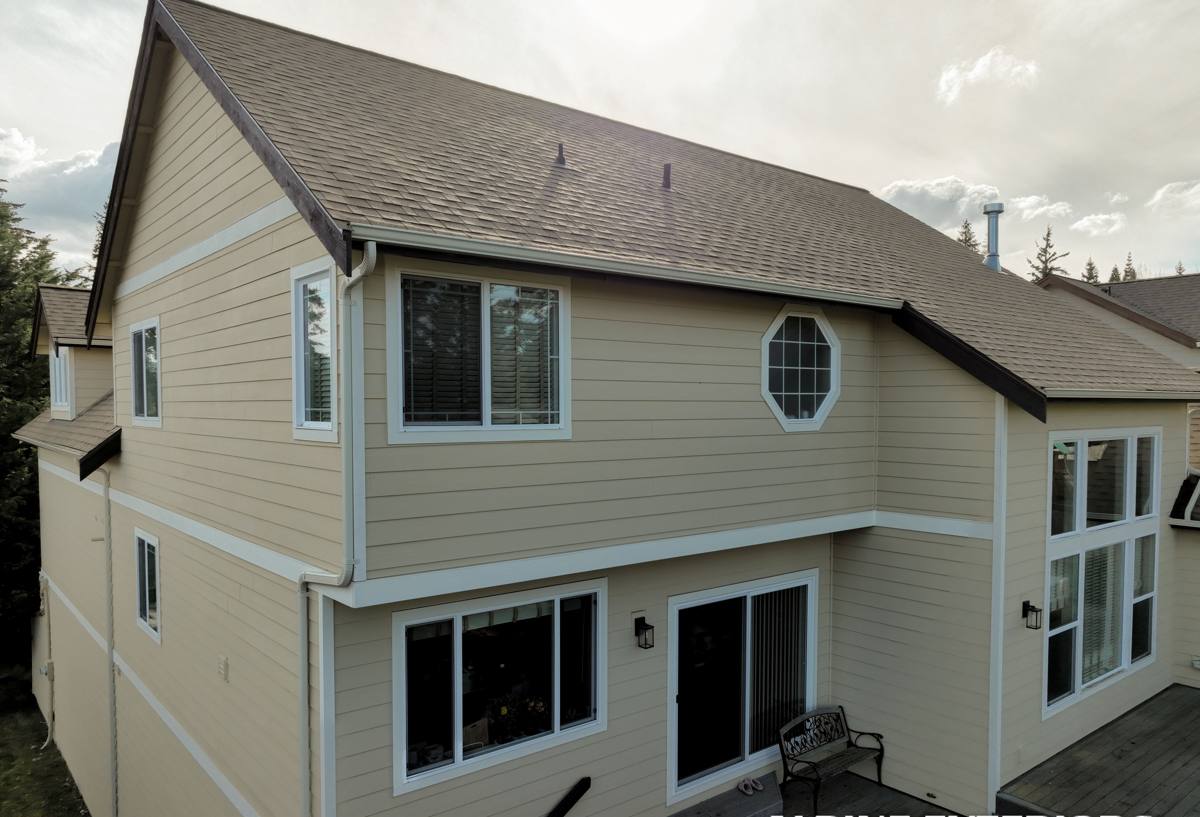
What Whatcom County's Climate Actually Does to Vertical Siding
Salt Air
Homes closer to the water pick up airborne salt that settles on siding, trim, and fasteners. Over time this accelerates corrosion on anything that isn't rated for it — cheap fastener heads rust and bleed, and some coatings chalk or degrade faster than they would inland. It's a slow process, which is exactly why it gets missed: nothing looks wrong the first year or two.
Driving Rain
Whatcom County rain rarely falls straight down. Wind pushes it sideways into wall assemblies, and vertical siding profiles — because of their seams and the batten-over-board construction — have more places for water to find a way in if the assembly wasn't detailed correctly. This is the single biggest factor separating a board and batten job that lasts decades from one that fails early.
Moss and Sustained Moisture
Tree cover and shaded elevations around Barkley keep some wall sections damp for long stretches, especially through fall and winter. Moss and algae need that sustained moisture to take hold, and once they're established on a wall they hold even more water against the siding surface. Material that can't shed water quickly, or that traps it behind the batten, will show green and black staining years before the rest of the house does.
How Board and Batten Siding Is Actually Built
"Board and batten" describes the look, not a single product. There are a few ways to build it, and the method matters as much as the material:
- Board-on-board: wide vertical panels installed with narrow battens covering the seams between them
- Batten-over-panel: a single continuous vertical panel with battens applied over it purely for the reveal look
- Reverse board and batten: recessed battens with the boards proud of the surface, less common but used for a specific architectural effect
We install James Hardie's vertical siding systems — HardiePanel used with Hardie fiber cement battens — because fiber cement holds its dimension in wet climates the way wood-based and polymer alternatives don't. Wood battens swell, cup, and eventually split at the fastener line. Fiber cement battens don't move with moisture the same way, which matters enormously on a wall assembly with this many seams.
Why the Rain Screen Detail Matters More on Vertical Siding
Behind the boards and battens, there needs to be a drainage gap — a rain screen — that lets any water that gets past the surface drain and dry out instead of sitting against the wall sheathing. On a house in Barkley taking regular wind-driven rain, skipping or shortcutting this detail is the most common reason a board and batten job fails early. It's also the detail that's easiest for a crew unfamiliar with vertical siding to get wrong, because it doesn't show on the surface once the job is finished.
What a Correct Installation Involves
A board and batten job that's going to hold up through Whatcom County winters needs every one of these done right — not just some of them:
- A drainage gap behind the siding, not battens fastened flat against the sheathing
- Corrosion-resistant fasteners rated for the coastal air, driven to Hardie's specified pattern and depth
- Flashing at every window head, sill, and any horizontal transition — the points where driving rain finds gaps
- Battens spaced and fastened so boards can expand and contract without cracking the caulk joint
- Factory-finished ColorPlus panels where possible, so field-cut edges are the only places needing touch-up paint
- Careful sealing at the bottom termination, where moss and standing moisture do the most damage
Skip any one of these and the siding might look fine for a year or two — the problems that show up later are hidden until they're expensive.
Mistakes We See on Vertical Siding Jobs
Board and batten gets botched more often than standard lap siding, mostly because it looks simple and isn't. The recurring issues we run into on homes we're asked to fix or re-side:
| Mistake | Why It Fails Here |
|---|---|
| No rain screen / battens fastened flat | Traps wind-driven rain against sheathing, leads to rot behind the siding |
| Standard fasteners instead of corrosion-resistant | Salt air corrodes fastener heads, causing rust streaks and eventual failure |
| Missing or undersized flashing at window heads | Driving rain gets behind trim, shows up as staining and interior moisture issues |
| Battens caulked solid on all sides | Traps moisture in the joint instead of letting it drain, accelerates paint failure |
| Wood or composite battens instead of fiber cement | Swells and splits with repeated wet-dry cycles common in this climate |
Our Process for a Barkley Job
Assessment
We start by looking at the existing wall assembly, not just the visible siding. Exposure matters — a wall that faces prevailing weather or sits under tree cover gets treated differently than a sheltered south wall, even on the same house.
Tear-Off vs. Overlay
Board and batten almost always calls for a full tear-off to the sheathing rather than installing over existing siding. That's the only way to correctly build in the rain screen gap and check the condition of the wall underneath before it's covered back up. If there's hidden moisture damage from a prior installation, this is when we find it — not after the new siding is up.
Installation
Boards and battens go up to Hardie's fastening and spacing specifications, with flashing integrated at every penetration and transition as the work proceeds, not patched in afterward.
Finish and Walkthrough
We walk the finished job with the homeowner, cover care and maintenance specific to a vertical profile, and make sure any field-cut edges are properly sealed.
What to Ask Before Hiring for a Board and Batten Job
Because this profile is easy to get wrong and hard to inspect once it's finished, it's worth being specific with any contractor bidding the work:
- Will the wall get a drainage gap behind the battens, or are they going on flat?
- What fastener type is specified, and is it rated for coastal/salt-air exposure?
- Is this a full tear-off, and will the sheathing be inspected before new siding goes on?
- What material are the battens — fiber cement, wood, or composite?
- How is flashing handled at window heads and horizontal transitions?
- Is the crew installing to the manufacturer's written specifications, or their own shortcuts?
A contractor who can answer these without hesitation has done this profile enough times to know where it goes wrong.
Why Local Experience Matters for This Profile
Board and batten isn't forgiving of guesswork, and Whatcom County's combination of salt air, driving rain, and long moss seasons punishes shortcuts faster than a drier inland climate would. A crew that's installed this profile on other homes in and around Barkley already knows which elevations take the worst weather, how local moss growth behaves on shaded walls, and where prior installations in this area tend to fail. That's the difference between a board and batten job that still looks sharp in fifteen years and one that's showing streaks and soft spots in five.
If you're considering board and batten siding for a home in Barkley, we're happy to take a look, walk the exterior with you, and talk through what a correct installation involves for your specific walls and exposure. Reach out for a free, no-pressure estimate using the form below.