 Whatcom County
 Why Barkley Homes Need Siding Built for This Climate
Barkley sits inside Whatcom County's marine climate zone, which means siding here deals with a different set of stresses than siding two hundred miles inland. Homes take on salt-laden air off the Sound, long stretches of driving rain that comes in sideways more often than straight down, and a moss and algae season that can run eight or nine months out of the year in shaded, north-facing exposures. None of that is dramatic on any single day. It's the accumulation — years of moisture cycling in and out of a wall assembly, years of organic growth sitting against a surface — that separates siding materials that hold up from siding that doesn't.
James Hardie fiber cement is the product we install on every Barkley home we work on, and it's the only siding brand we install anywhere. This page focuses specifically on what that looks like in Barkley: what the climate actually does to siding here, what a correct James Hardie installation involves, and how our process is built around local conditions rather than a generic national spec sheet.
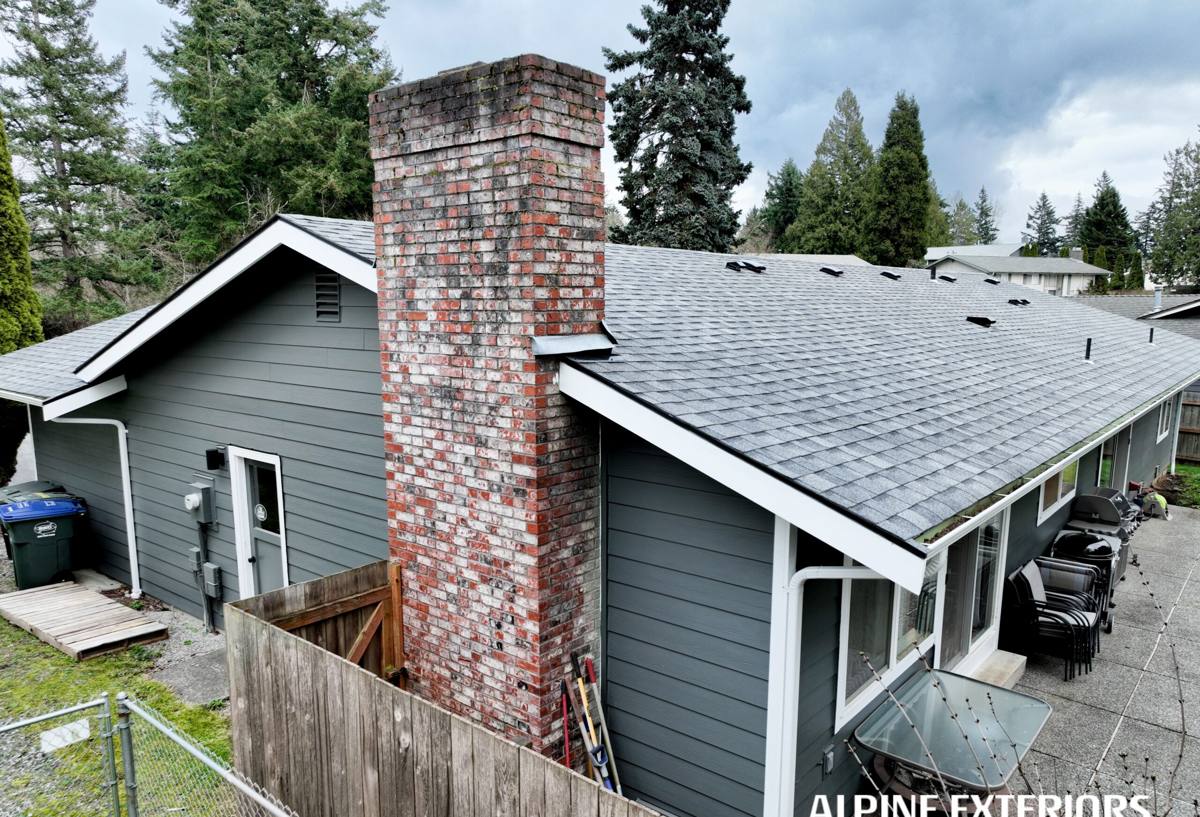
What Salt Air and Driving Rain Do to Siding Over Time
Two mechanisms do most of the damage to exterior siding in this part of Whatcom County:
Moisture Intrusion from Wind-Driven Rain
Barkley's exposure to weather moving in off the water means rain doesn't just fall on siding, it gets pushed into it — into seams, laps, butt joints, and any gap around trim or penetrations. Siding materials that swell, wick, or delaminate when repeatedly saturated lose their shape and their paint bond faster in this kind of exposure than they would in a drier inland climate. Fiber cement doesn't swell or wick the way wood-based products can, which is a big part of why it holds a factory finish longer here.
Salt Air and Coastal Corrosion
Salt in the air accelerates the breakdown of some paints and finishes, and it's tough on fasteners and metal trim that aren't rated for coastal exposure. It also settles into porous surfaces and holds moisture there, which feeds the next problem.
Moss, Algae, and Prolonged Dampness
Whatcom County's tree cover and cloud cover mean a lot of exterior walls stay in shade or damp shadow for large parts of the year. Moss and algae need exactly that — shade, moisture, and time — and once organic growth establishes on a wall, it holds even more moisture against the surface underneath it. Over years, that cycle is what causes rot in wood-based siding and paint failure in lower-grade products.
Why We Standardized on James Hardie for This Region
We don't install LP SmartSide, vinyl, Cemplank, Allura, primed spruce, or cedar. That's a deliberate standard, not a lack of options. For a climate like Barkley's, the trade-offs on those alternatives matter more than they would somewhere drier:
- Fiber cement doesn't rot. It's made from cement, sand, and cellulose fiber — there's no wood substrate for moisture to break down over time.
- It's non-combustible. That matters for insurance considerations and for peace of mind, independent of the moisture question.
- ColorPlus factory finish is baked on, not field-applied. That finish is engineered to resist fading and hold up to UV and moisture cycling better than a site-applied coat, which matters when a wall spends most of the year damp.
- Hardie's HZ5 product line is engineered for climates with freeze-thaw and moisture exposure — it's not a one-size-fits-all national product, it's built with regional weather in mind.
- The warranty is transferable and backed by a large, established manufacturer — worth something concretely if the home sells.
We've been honest with homeowners who ask about cedar or vinyl: cedar can look beautiful and vinyl can be cheap up front, but in a climate that stays wet this long, the maintenance burden and moisture risk on those products is real, and it's why we don't put our name behind installing them here.
What a Correct James Hardie Install Actually Involves
The material is only part of the equation. A huge amount of how well siding performs in Barkley's climate comes down to installation detail — the parts of the job that aren't visible once it's done.
Proper Water-Resistive Barrier and Flashing
Behind every piece of Hardie siding, there needs to be a correctly lapped weather-resistive barrier, properly integrated flashing at windows, doors, and any roof-to-wall intersections, and a drainage plane that lets any moisture that does get behind the siding find its way back out instead of sitting there.
Correct Fastening and Clearances
Hardie specifies exact nailing patterns, minimum clearances from grade, decks, and roof lines, and gapping at butt joints and trim. Skipping these specs is the single most common cause of premature failure we see on fiber cement jobs that weren't installed to manufacturer standard — it's rarely the material's fault, it's the installation.
Caulking and Sealant Choices Rated for Marine Exposure
Not every sealant holds up the same way in a salt-air, high-moisture environment. We use products rated for this kind of exposure at every joint and penetration.
Ventilation Behind the Cladding
A rainscreen or properly vented assembly gives moisture that gets past the outer layer a way to dry out instead of staying trapped. In a climate where walls can stay damp for weeks at a time, this detail matters more than it would somewhere drier.
Comparing Siding Options for a Coastal Whatcom County Home
| Factor | James Hardie Fiber Cement | Cedar | Vinyl |
|---|---|---|---|
| Moisture/rot resistance | Not wood-based, does not rot | Requires ongoing sealing and maintenance to resist rot | Won't rot, but can warp and trap moisture behind it |
| Moss/algae resistance | ColorPlus finish resists organic growth better than raw or painted wood | Prone to moss and staining in shaded, damp areas | Can host algae, especially in shaded exposures |
| Finish longevity | Factory-baked finish, long fade resistance | Needs refinishing every few years | Color is through-body but can chalk and fade over time |
| Fire resistance | Non-combustible | Combustible | Can melt/deform under heat exposure |
| Long-term maintenance | Low — periodic wash and caulk check | High — regular sealing, staining, spot repairs | Low, but damage often means full-panel replacement |
Our Process for a Barkley Job
Every job follows the same core steps, adjusted for the specific house:
- On-site assessment — we look at current siding condition, moisture damage, trim and flashing state, and shaded/exposed wall orientations before quoting anything.
- Tear-off and substrate check — once old siding is off, we inspect sheathing for hidden rot or moisture damage, which is common on homes that have had wood siding or under-flashed trim for years.
- Weather barrier and flashing correction — any gaps or aging flashing details get corrected before new siding goes up, not covered over.
- Hardie installation to manufacturer spec — correct nailing, clearances, and joint treatment, using the HZ5 product line appropriate to this climate zone.
- Trim, caulk, and final detailing — sealant rated for marine/coastal exposure at every joint.
- Walkthrough — we go over the finished work and what maintenance (if any) to expect going forward.
Signs a Barkley Home May Need Siding Attention Soon
- Persistent moss or algae staining that comes back shortly after cleaning
- Soft or spongy spots, especially near the base of walls or under windows
- Paint that's peeling, bubbling, or chalking unevenly across a wall
- Visible gaps or separation at trim boards and butt joints
- A noticeable musty smell near exterior walls, which can indicate trapped moisture
Why Hiring a Crew That Already Works Barkley Matters
Manufacturer installation specs are written nationally, but the judgment calls on a given house — how much clearance to leave near a shaded north wall, where extra flashing attention is worth it, which sealant holds up best given local salt exposure — come from having actually installed and later serviced Hardie siding on homes in this specific part of Whatcom County. A crew that's only worked drier inland climates may follow the spec sheet correctly and still miss the details that matter most here, because those details aren't universal — they're regional.
We install James Hardie exclusively, which means every job we do reinforces the same product knowledge, the same supplier relationships, and the same installation habits. There's no switching between five different siding systems and hoping the crew remembers which spec applies to which product.
What to Expect Cost-Wise
Costs vary based on square footage, tear-off complexity, trim detail, and how much substrate repair is needed once old siding comes off — a home with hidden moisture damage will cost more to do right than one with sound sheathing underneath. We don't publish blanket pricing because it depends on the specifics of the house, but we're upfront about the cost drivers during the estimate so there are no surprises once work starts.
If you're weighing a siding replacement or repair for a home in Barkley, we're happy to take a look and give you a straightforward, no-pressure estimate — including an honest read on whether repair, partial replacement, or a full re-side makes the most sense for your situation.