 Whatcom County
 Building New in Barkley? The Windows Are Where Most Problems Start
Barkley sits close enough to the water and the marine weather patterns that move through Whatcom County that new-construction windows need to be treated as a system, not just a product you bolt into a rough opening. A window itself rarely fails first. What fails is the interface around it — the flashing, the weather-resistant barrier lap, the sill pan, the sealant joint — and on a new build, that interface is being created for the first time, with no old work to hide behind and no old mistakes to blame. Get it right during framing and rough-in, and the windows will outlast the paint job on the siding. Get it wrong, and you're chasing a leak inside a finished wall in five to ten years, usually right after the warranty conversation gets awkward.
We install new-construction windows for builders and owner-builders working in and around Barkley, and our approach is built around one fact: this area gets a lot of driving rain, a long stretch of moss-and-moisture season, and enough salt-laden air off the Sound to accelerate corrosion on the wrong hardware. New construction is the one chance to build the water management right the first time.
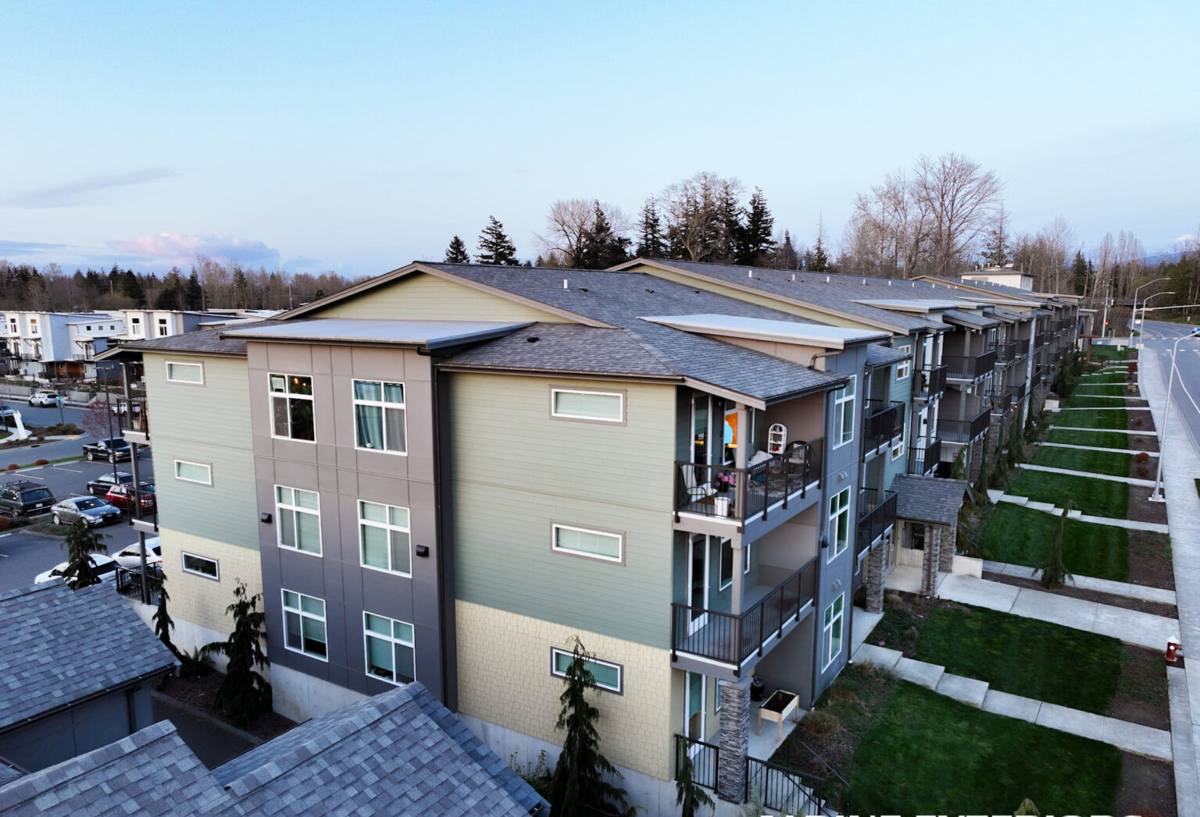
What Whatcom County's Climate Actually Does to a Window Opening
Driving Rain, Not Just Rain
Wind-driven rain off the water doesn't just fall on a wall, it gets pushed sideways into every seam, lap, and fastener penetration. A window opening that's only sealed against vertical rain will leak the first time weather comes in at an angle — which, in this region, is often.
A Long Moss and Mildew Season
Extended damp periods mean any water that gets behind the cladding has months to sit before a dry stretch lets it evaporate out. That's why sill pan drainage and a clear path for incidental moisture to escape matter more here than in drier climates — trapped water doesn't dry up, it works on the framing.
Salt Air and Hardware
Proximity to marine air accelerates corrosion on unprotected steel fasteners, cheap flashing tape adhesives, and lower-grade window hardware. It doesn't ruin everything overnight, but it shortens the life of anything that wasn't specified with coastal exposure in mind.
What a Correct New-Construction Window Installation Involves
New-construction windows have a nailing fin (or flange) that gets integrated into the wall's water-resistive barrier before siding goes on. That integration, done in the right order, is what actually keeps water out — the window unit is only one part of the assembly.
- Rough opening prep — squaring, leveling, and checking dimensions against the actual window unit before it arrives, not after.
- Sill pan flashing — a sloped, back-dammed pan so any water that gets past the window has a built-in path back outside instead of soaking into the sill framing.
- Jamb and head flashing — installed in the correct shingle-lap order (sides before top, top over the WRB) so water sheds outward at every layer.
- Window set and shim — plumb, level, square, and fastened per the manufacturer's schedule, not "close enough."
- Fin integration with the WRB — housewrap or building paper lapped correctly over the flanges, never taped in a way that traps water behind the fin.
- Interior and exterior sealant — a proper backer rod and sealant joint where required, sized for the gap rather than smeared over it.
Skip or reorder any one of those steps and the window can still look fine at final walkthrough. The failure shows up later, inside the wall, which is exactly why new-construction work has to be done right the first time rather than "fixed if it leaks."
Choosing Window Products for a Barkley Build
We don't push one brand as the only acceptable option — we push a standard: the window has to be rated for the exposure it's actually going to see, and the installation hardware has to hold up to salt air and sustained moisture. That usually means:
| Factor | What We Look For | Why It Matters Here |
|---|---|---|
| Frame material | Vinyl, fiberglass, or clad-wood rated for coastal/marine exposure | Resists the corrosion and UV load that comes with salt air and long damp seasons |
| Fastener hardware | Stainless or coated corrosion-resistant fasteners at the flange | Standard carbon-steel fasteners degrade faster this close to the water |
| Glazing package | Dual or triple pane with a solid low-E and gas-fill spec | Cuts condensation risk during the long cool, humid stretches |
| Flashing tape | Butyl or acrylic-adhesive tape rated for the temperature range and UV exposure during construction | Cheap adhesives fail under sustained damp before the siding even goes on |
| Warranty structure | Manufacturer warranty that explicitly covers the installed assembly, not just the glass unit | Protects you if a failure traces back to seal or frame, not just breakage |
We'll walk through the actual product options with you once we know the build's orientation, wall assembly, and budget — this table is meant to show what to weigh, not to tell you there's only one right answer.
Our Process on a New-Construction Job
Because we're brought in during the framing stage on new builds, our process is coordinated with the general contractor's schedule rather than run independently:
1. Rough Opening Review
We check openings against the actual window schedule and unit dimensions before ordering, so nothing gets forced into an opening that's slightly off.
2. Flashing and Sill Pan Installation
Done before the window is set, using materials rated for this climate — this is the step that determines whether the assembly manages water correctly for the life of the building.
3. Window Set
Plumb, level, square, shimmed and fastened to the manufacturer's schedule — an over-driven or under-driven fastener at the flange is a common, avoidable leak point we specifically check for.
4. WRB Integration and Sealant
Housewrap laps and sealant joints completed in the correct order so water sheds outward at every layer, not just at the window itself.
5. Documentation
We note flashing details and product specs for the file, useful if the builder needs it for warranty registration or a future inspection.
Why Hire a Crew That Already Works Barkley
New-construction window work isn't complicated in theory, but it's unforgiving of shortcuts, and a crew that only occasionally works this area can miss details that matter specifically here — how much wind-driven rain exposure a given orientation actually gets, how long moisture sits before a dry stretch, which fastener grades hold up to the salt air rather than just meeting a generic code minimum. A crew that regularly works Barkley and the surrounding Whatcom County area has already seen what goes wrong when those details get skipped, and builds the sequence around avoiding it rather than learning it on your project.
It also matters for scheduling. New-construction windows have to go in at a specific point in the framing sequence — too early and the opening isn't ready, too late and it holds up the siding crew. A local crew that's used to coordinating with Whatcom County builders keeps that sequence tight instead of leaving your build waiting on a flashing detail.
What to Confirm Before Your Windows Go In
Whether you're a builder, an owner-builder, or a homeowner overseeing a build in Barkley, here's what's worth confirming before the window crew shows up:
- Rough openings have been checked against actual window unit dimensions, not just plan dimensions
- Sill pan flashing is specified and sloped to drain outward, with a back dam
- Flashing tape and sealant products are rated for the temperature range you'll actually be installing in
- Fastener hardware at the flange is corrosion-resistant, not standard carbon steel
- The WRB lap sequence is planned (sides, then sill, then head) before the crew starts
- Warranty paperwork specifies the installed assembly, not just the glass unit
- Someone is documenting flashing details with photos before they're covered by siding
Most of these take no extra time to confirm if they're planned before the windows arrive — they only become expensive if they're discovered missing after the wall is closed up.
A Straightforward Estimate for Your Build
If you're framing a new build in Barkley or elsewhere in Whatcom County and want a crew that treats window installation as a full water-management system rather than a one-afternoon task, we're glad to walk the plans or the framed openings with you. There's no pressure and no obligation — just a straight look at what your build needs and an honest number. Use the form below to request a free estimate.