 Whatcom County
 Building a Deck That Actually Holds Up in Birchwood
Birchwood sits in one of the wetter, saltier corners of Washington State, and a deck built here works harder than a deck built almost anywhere east of the Cascades. Between the salt-laden air drifting in off the water, the long stretches of driving rain, and a moss season that can run most of the year, Whatcom County decks are under near-constant pressure from moisture and organic growth. A deck that would be perfectly fine in a drier climate can start showing rot, corroded hardware, or slick, moss-covered boards within just a few seasons here if it wasn't built with this climate in mind.
This page is about what we've learned building and repairing decks in this specific environment — the material choices, structural details, and maintenance habits that separate a deck that lasts twenty-plus years from one that needs major repair by year eight.
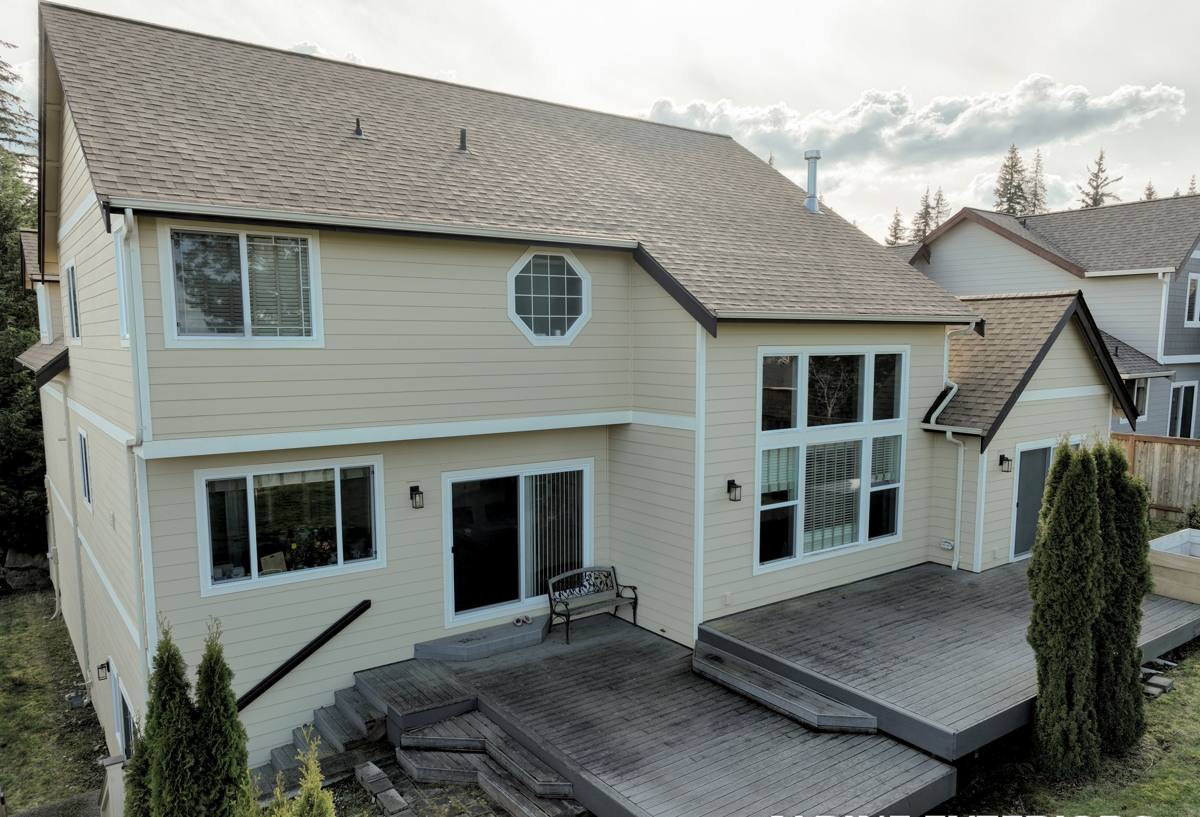
What Whatcom County's Climate Does to a Deck Over Time
Salt Air and Metal Corrosion
Homes closer to the water pick up salt-bearing moisture in the air, and that salt settles on every exposed metal surface — joist hangers, screws, bolts, post bases, and railing hardware. Over time it accelerates corrosion, especially on fasteners that weren't rated for a marine or coastal environment to begin with. A deck can look structurally fine on the surface while the hardware holding it together is quietly rusting away underneath.
Driving Rain and Wind-Driven Moisture
Whatcom County doesn't just get a lot of rain — a good share of it comes in sideways during winter storms. That matters for a deck because wind-driven rain gets pushed into places vertical rain never would: under ledger boards, behind rim joists, into end grain, and around post connections. If flashing and gaps weren't detailed correctly at those points, water finds its way in and stays there.
Moss, Algae, and a Long Growing Season
Mild, wet winters here mean moss and algae have almost year-round conditions to establish themselves on horizontal wood and composite surfaces. Beyond being unsightly, a mossy deck surface holds moisture against the boards far longer than a clean one, and it becomes genuinely slippery — a real fall hazard on stairs and near door thresholds.
Choosing the Right Decking Material for This Climate
There's no single "best" decking material — the right choice depends on your budget, how much upkeep you're willing to do, and how the deck will be used. Here's how the common options actually perform in a Whatcom County setting:
| Material | Upfront Cost | Moisture & Moss Behavior Here | Maintenance Reality |
|---|---|---|---|
| Pressure-treated lumber | Lowest | Handles moisture well if sealed and re-sealed; moss still grows on the surface film | Annual cleaning, re-staining/sealing every 2-3 years |
| Cedar | Moderate | Naturally rot-resistant but the surface still needs upkeep to fight graying and moss | Regular cleaning, oil or stain every 1-3 years |
| Composite decking | Higher | Doesn't absorb water or rot, but moss and algae can still grow on the surface film | Periodic washing; no staining or sealing needed |
| PVC decking | Highest | Fully moisture-resistant board; surface growth is the main concern, not decay | Lowest ongoing maintenance of the group |
Our general standard: whatever material a homeowner chooses, we won't cut corners on the structure underneath it. A composite deck built over an under-flashed, undersized frame will fail the same way a wood deck would — the surface material only matters as much as what's holding it up.
The Structural Details That Actually Matter
Ledger Board Flashing
The ledger board — where the deck attaches to the house — is the single most common failure point on decks in wet climates. It needs proper flashing that directs water away from the house sheathing and ledger connection, not just caulk or paint. This is the detail that's easiest to rush and hardest to fix later without tearing the deck apart.
Joist Spacing and Board Support
Joist spacing needs to account for the decking material you're using — composite and PVC boards often require tighter spacing than solid wood to avoid sagging over time, especially once they're carrying wet snow load or standing water from a clogged gutter overhead.
Footings and Post Bases
Footings need to be sized and set to local frost and soil conditions, and post bases should keep the post end grain off the concrete so it isn't sitting in trapped moisture. A post base that lets water pool at the base of the post is one of the more common causes of hidden rot we find when repairing older decks.
Fasteners and Hardware: Where Salt Air Does the Most Damage
This is a detail a lot of homeowners never think about until hardware starts failing, but in a coastal-influenced climate like Whatcom County's, it's one of the more important decisions on the whole project.
- Hot-dip galvanized hardware — a reasonable baseline for structural connectors in most inland applications, but it can wear thin faster in salt-air exposure closer to the water
- Stainless steel fasteners and hardware — our standard recommendation for decks in salt-exposed areas; higher upfront cost, but it holds up far longer against corrosion
- Matching fastener material to decking material — some composite and PVC manufacturers specify certain fastener types to avoid staining or reacting with the board material, which affects both appearance and warranty coverage
- Hidden fastener systems — keep the deck surface clean-looking but still need to be rated for the exposure level of the site
We size hardware to the site, not just to code minimums — a deck twenty feet from open water gets treated differently than one tucked well back from the shoreline, even within the same neighborhood.
Drainage, Slope, and Moss Prevention Built Into the Design
A lot of moss and rot problems on Whatcom County decks aren't a materials failure — they're a design failure. A deck surface needs a slight slope away from the house so water sheets off instead of pooling. Gaps between boards need to be sized correctly for drainage without becoming a hazard for narrow heels or small items. Skirting and under-deck areas need enough airflow that the space beneath the deck can actually dry out between storms instead of staying damp all winter.
Where a deck sits under trees or in a shaded, low-airflow spot — common in wooded parts of Whatcom County — we'll sometimes recommend design adjustments, like wider board spacing or a lighter surface color, specifically to reduce how long moss has to establish itself.
Our Deck-Building Process
- On-site visit and assessment — we look at sun exposure, drainage patterns, proximity to water or heavy tree cover, and how the deck will attach to your home before recommending materials.
- Design and material selection — we walk through the cost and maintenance trade-offs in the table above so you're choosing with full information, not guessing.
- Permitting — we handle the permit application and coordinate any required inspections with the local building department.
- Structural build — footings, framing, ledger flashing, and hardware selection done to the standard this climate actually requires, not just code minimums.
- Decking, railing, and finish work — surface installation, railing systems, stairs, and any lighting or finish details.
- Final walkthrough — we go over basic care for whatever material you chose so you know what upkeep to expect.
Permits and Local Considerations in Whatcom County
Most new decks and significant deck rebuilds in Whatcom County require a building permit, and requirements can vary depending on the deck's height, size, and whether it's attached to the house. Guardrail height, stair geometry, and footing depth are all things an inspector will check. Rather than guessing at your specific situation, we confirm current requirements with the relevant building department for your property and fold that into the project timeline — it's a normal part of the process, not an extra hurdle.
Maintenance That Actually Extends the Life of Your Deck
Whatever material you choose, a small amount of seasonal maintenance goes a long way in this climate. This is the same basic checklist we leave with homeowners after a build:
- Sweep debris off the deck surface regularly, especially in fall — trapped leaves hold moisture and feed moss growth
- Clean the deck surface at least once a year with a deck-safe cleaner to remove early moss and algae before it takes hold
- Check and clear gaps between boards so water can still drain freely
- Inspect railing connections and any visible hardware once a year for early rust or looseness
- Re-seal or re-stain wood decking on the schedule appropriate to the product — don't wait until it's visibly gray and dry
- Keep gutters and downspouts near the deck clear so overflow isn't dumping extra water onto the deck surface
Why a Crew That Already Works in Birchwood Matters
Deck-building fundamentals are the same everywhere, but the details that make a deck last in Birchwood — flashing choices, hardware grade, drainage design, material selection — are shaped by conditions that are specific to Whatcom County's coastal, wet climate. A crew that builds decks regularly in this area has already seen which shortcuts fail here and which details are worth the extra cost, because they've gone back to repair the decks where those shortcuts were taken. That local experience shows up less in the sales pitch and more in the parts of the deck you never see once it's finished — the flashing behind the ledger, the fasteners inside the joists, the footing depth below grade.
If you're planning a new deck or need to replace one that's showing its age, we're happy to come take a look and walk you through your options — no pressure, no obligation. Fill out the form below to schedule a free estimate.