 Whatcom County
 Deck Repair Built for Birchwood's Climate
A deck in Birchwood works harder than it looks. Between the salt-laden air drifting in off the water, the driving rain that Whatcom County sees for a good chunk of the year, and a moss season that can stretch from fall into late spring, an outdoor structure here takes a beating that inland decks never see. Most of the repair calls we get in this neighborhood aren't cosmetic — they're the result of moisture finding its way into a joint, a fastener, or a ledger connection that was never detailed for this kind of weather in the first place.
This page is about one thing: fixing decks the right way for Birchwood homes. Not a generic "deck services" rundown, but what actually needs attention on a structure that sits under Pacific Northwest rain and coastal humidity year after year.
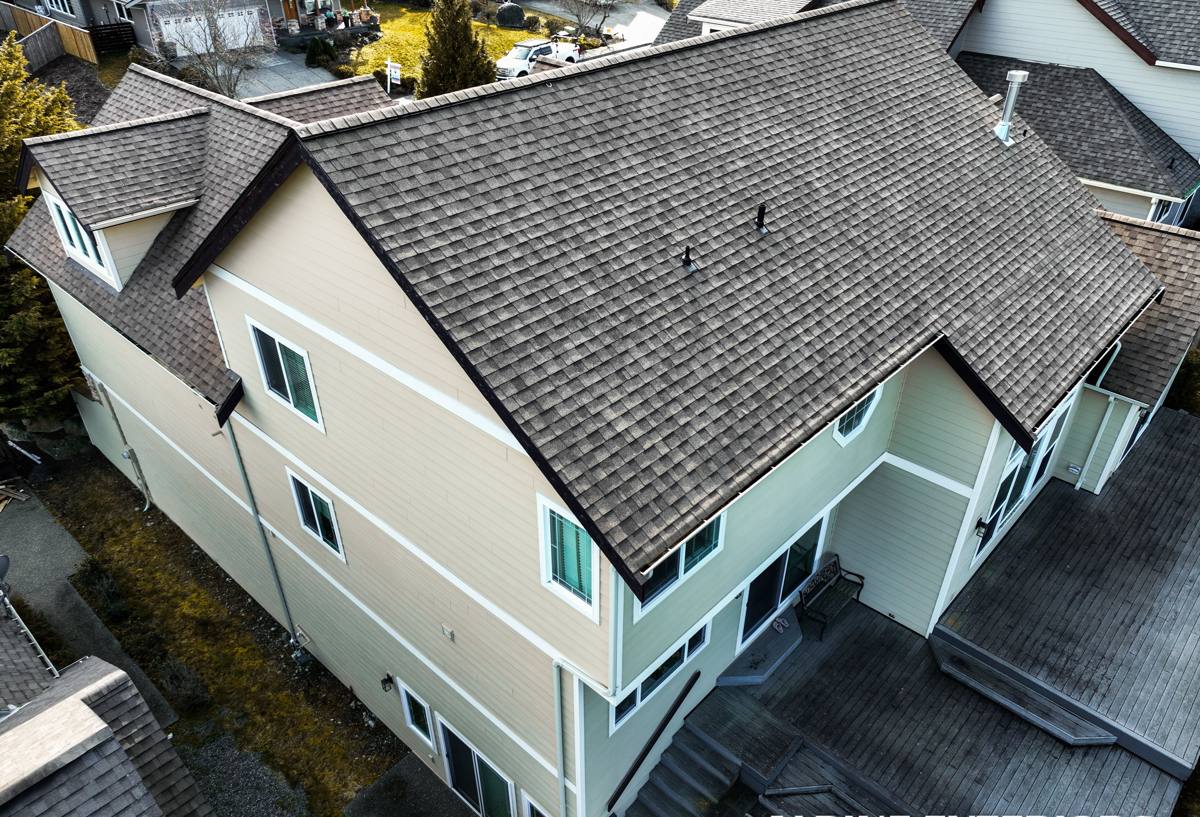
Why Whatcom County Decks Wear Differently
Three things drive almost every repair we see out here, and they compound each other.
Salt Air and Fastener Corrosion
Homes closer to the water pick up airborne salt that settles on exposed metal. Standard coated deck screws and joist hangers that would last decades in a drier, inland climate can start showing rust streaks and pitting in a fraction of that time here. Once a fastener corrodes, it loses holding strength long before it looks obviously "bad," which is why a rusty screw head is worth investigating even if the board around it still feels solid.
Driving Rain and Water Intrusion
Whatcom County rain doesn't always fall straight down — wind-driven rain gets pushed sideways into gaps, under flashing, and behind ledger boards. The ledger connection (where the deck attaches to the house) is the single most common point of hidden rot we find, because water can work its way behind the flashing for months before any sign shows up on the surface.
The Long Moss Season
Moss and algae need shade and moisture to establish, and a lot of Birchwood's tree cover provides exactly that. Moss on decking isn't just a slip hazard — it holds water against the wood surface, keeps boards from drying out between rain events, and accelerates rot in a way that a sun-exposed deck in a drier climate simply doesn't experience.
Signs Your Birchwood Deck Needs Repair
Some deck problems announce themselves. Others hide until they become expensive. A quick self-check between professional inspections is worth doing every season:
- Soft, spongy, or bouncy spots when you walk across the decking
- Any wobble in the guardrail or stair railing when you push on it
- Visible gap, dark staining, or a crack where the deck meets the house (ledger board)
- Moss, algae, or persistent green-black staining on boards, especially in shaded corners
- Rust streaks below screw heads, joist hangers, or post brackets
- Nail heads that have popped up above the board surface
- Visible sagging along a joist line or noticeable unevenness underfoot
- Wood that feels soft or crumbly when probed with a screwdriver, particularly near ground contact
Any one of these is worth a look. Several at once usually means the underlying structure needs attention, not just the visible surface.
What a Correct Deck Repair Actually Involves
A repair that only replaces what's visible from above often leaves the actual problem in place. We start below the decking, not on top of it.
Structural Inspection
This means checking the ledger board attachment and its flashing, the condition of joists and beams, post bases and footings, and every connection point where metal meets wood. In a climate like ours, the framing underneath a perfectly good-looking deck board can be more compromised than the board itself.
Ledger and Flashing Repair
If the ledger connection is where water has been getting in, that's the priority fix. Correct flashing detail — proper overlap, a drip edge that actually sheds water away from the house, and fasteners rated for the exposure — matters more here than almost anywhere else on the structure.
Framing and Fastener Replacement
Rotted joists get sistered or replaced, not just patched. Corroded hardware gets swapped for fasteners and connectors rated for the exposure level the deck actually sees, not the minimum the original build used.
Surface and Railing Work
Once the structure underneath is sound, decking boards, stair treads, and railings get repaired or replaced, and everything gets checked against basic safety expectations — railing height, baluster spacing, and stair stringer condition.
Repair vs. Replace: Making the Right Call
Not every deck problem calls for a full rebuild, and not every deck is worth patching. The honest answer usually comes down to how much of the structure — versus just the surface — is affected.
| Situation | What's Typically Involved | Broad Cost Factor |
|---|---|---|
| A few soft or damaged boards, sound frame underneath | Spot replacement of decking boards, fastener check | Lower — a few hundred dollars |
| Wobbly railing or loose stair stringer | Hardware upgrade, bracing, possible post replacement | Low to moderate |
| Rotted ledger board or failed flashing | Ledger removal, structural repair, new flashing detail | Moderate to significant — this is structural work |
| Multiple rotted joists or failing footings | Partial reframe, footing inspection/repair | Significant — approaching partial rebuild territory |
| Widespread rot, undersized original framing, or repeated past failures | Full deck replacement | Highest — but often more cost-effective long-term than repeated repairs |
We'll always tell you plainly which category your deck falls into and why, including when a repair is the smarter money even if a full rebuild sounds more "thorough."
Material and Hardware Choices for Coastal Conditions
Decking Material
Pressure-treated lumber remains the most common and most budget-friendly repair material, and it performs well here when it's properly maintained — cleaned of moss regularly and resealed on a normal schedule. Cedar offers natural rot resistance and a look many Birchwood homeowners prefer, but it needs more consistent upkeep in a climate this wet. Composite decking trades a higher upfront cost for lower ongoing maintenance and better resistance to moss staining, which is worth weighing seriously given how long our moss season runs. There's no universally "right" choice — it depends on your budget, how much upkeep you want to do, and how the deck is exposed to shade and moisture.
Fasteners and Hardware
Given the salt air exposure common across Whatcom County, we default to hot-dip galvanized or stainless steel fasteners and connectors for repair work rather than standard coated hardware — it's a small cost difference upfront that avoids replacing corroded fasteners again in a few years. Mixing metals (for example, the wrong screw in treated lumber, which is chemically corrosive to some hardware) is a common mistake we correct on older decks.
Our Deck Repair Process in Birchwood
- On-site inspection. We check the deck from the framing up, not just the surface, and point out exactly what we find — including anything that's fine and doesn't need work.
- Honest scope and estimate. You get a clear breakdown of what's structural, what's cosmetic, and what the repair-versus-replace tradeoffs actually are for your deck specifically.
- Scheduling around the weather. Deck repair involves open framing time, so we plan the work around Whatcom County's rain patterns to protect the structure during the job, not just after it.
- Structural repairs first. Ledger, framing, and hardware issues get addressed before any surface work begins.
- Surface finish and cleanup. Decking, railings, and stairs are finished out, and the site is left clean.
- Walkthrough. We go over the completed work and basic maintenance so the repair actually lasts through the next moss season.
Why a Crew That Already Works Birchwood Matters
A contractor who works Birchwood regularly already knows what this neighborhood's decks tend to fight — where moss builds up fastest, which ledger and flashing setups tend to fail first in older homes, and how to schedule structural work around Whatcom County's rain rather than getting caught mid-repair by it. That's not something you get from a crew that mostly works drier, inland areas and treats every coastal job as a one-off. It also means we're around after the job is done — if a repair needs a follow-up look next season, we're not driving in from somewhere else to do it.
Maintenance That Extends a Repair's Life
A good repair lasts a lot longer with basic upkeep between visits:
- Sweep debris and standing moss off decking regularly, especially in shaded areas
- Keep gutters and downspouts clear so runoff isn't dumping extra water onto or near the deck
- Reseal or restain wood decking on the schedule appropriate to the product — don't wait until it's visibly weathered
- Check railings and stair connections for looseness once or twice a year
- Trim back overhanging vegetation that's keeping sections of the deck shaded and damp
If you're seeing soft spots, moss buildup, rust at the fasteners, or a deck that just doesn't feel as solid as it used to, we're happy to take a look. Reach out for a free, no-pressure estimate using the form below — we'll tell you honestly what your deck needs and what it doesn't.