 Whatcom County
 Why Blaine's Coastal Climate Is Tough on Asphalt Shingle Roofs
Blaine sits right where Whatcom County meets the water, and that location shapes what a roof has to put up with year after year. Salt air off the coast, wind-driven rain that comes in sideways instead of straight down, and a moss season that can run most of the year all work against a shingle roof in different ways. None of it is dramatic on its own, but stacked together over a decade or two, it's why roofs in this part of the county age differently than roofs fifty miles inland.
Salt Air and Metal Components
Asphalt shingles themselves handle salt air reasonably well, but the metal parts of a roofing system — flashing, drip edge, nail heads, vent housings — are more exposed to it. Lower-grade or improperly coated metal can start showing corrosion years before it should. This is one reason material choice at the flashing and fastener level matters as much as the shingle brand.
Driving Rain and Wind Off the Water
Rain that comes in at an angle finds every weak point in a roofing system: under-lapped shingles, short nails, gaps in flashing around penetrations. A roof that would hold up fine under straight-down rainfall in a drier climate can leak in Blaine if it wasn't installed with wind-driven rain in mind.
A Long, Wet Moss Season
Shade, moisture, and mild temperatures are exactly what moss and algae need to thrive, and Whatcom County gives them all three for a good part of the year. Moss holds moisture against the shingle surface, lifts shingle edges as it grows, and shortens the life of a roof that would otherwise last its full rated lifespan.
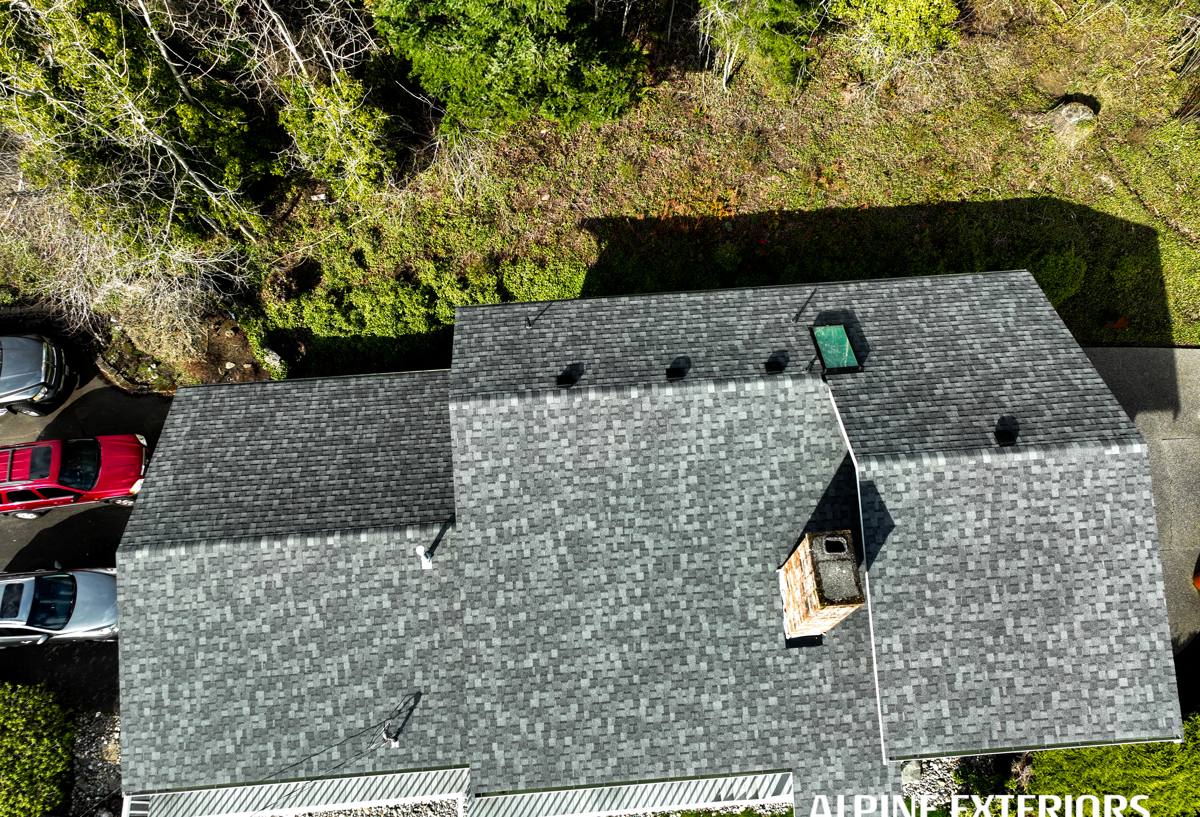
What a Correct Asphalt Shingle Roofing Job Involves
A roof that's going to hold up to this climate isn't just about which shingle you pick. The install details underneath the shingles do most of the work. A correct job for a Blaine home includes:
- A full tear-off to bare deck (never installing over old shingles) so the roofing crew can actually inspect and repair the sheathing underneath.
- Ice-and-water shield or a comparable self-adhering membrane at eaves, valleys, and around penetrations, where wind-driven rain is most likely to force its way under the shingle line.
- A synthetic or felt underlayment across the full roof deck as a secondary water barrier.
- Corrosion-resistant flashing and fasteners suited to a coastal environment, not the minimum-grade hardware that's fine in a drier inland climate.
- Correct nailing patterns and shingle exposure for the wind zone, not just whatever's fastest to install.
- Balanced intake and exhaust ventilation, so moisture from inside the attic isn't adding to what the roof already has to shed from outside.
Skip any one of these steps and the shingles on top can look fine for a year or two while the roof underneath is already compromised.
Choosing the Right Shingle for a Blaine Home
Not every asphalt shingle is built the same way, and the differences matter more in a coastal climate than they do somewhere drier. The table below is a general comparison to help frame the conversation — actual product lines and warranties vary by manufacturer.
| Shingle Type | Typical Lifespan | Wind Rating | Fit for Blaine's Climate |
|---|---|---|---|
| 3-tab (standard) | 15–20 years | Lower | Budget option; less margin against driving rain and wind |
| Architectural / dimensional | 25–30 years | Higher | Better wind and rain performance; most common choice locally |
| Impact-resistant / algae-resistant | 25–30+ years | Higher | Added protection against moss and algae growth over time |
For most Blaine homes, an architectural shingle with algae-resistant granules is the practical middle ground — it costs more upfront than a basic 3-tab but holds up noticeably better against the moss and streaking that show up on north-facing and shaded slopes in this climate. We'll walk through the trade-offs for your specific roof rather than defaulting to one product.
Our Installation Process
Tear-Off and Deck Inspection
We remove the existing roofing down to the deck and check the sheathing for soft spots, water staining, or rot before anything new goes down. Any damaged decking gets replaced — this step is where hidden problems from years of moisture exposure usually surface.
Underlayment and Water-Resistant Barrier
Self-adhering membrane goes down first at eaves, valleys, and penetrations, followed by underlayment across the rest of the deck. This layered approach gives the roof a backup line of defense if wind-driven rain ever gets past the shingles themselves.
Flashing and Ventilation
New flashing is installed at chimneys, walls, and roof-to-wall transitions using corrosion-resistant material appropriate for a coastal environment. We also check and correct attic ventilation as part of the job, since poor airflow shortens shingle life from underneath just as fast as weather does from outside.
Cleanup and Final Inspection
Once shingles are installed, we do a full walk of the roof to check nailing, sealing, and flashing details, then clear the property of debris and stray nails before calling the job done.
Moss, Algae, and Long-Term Maintenance in Whatcom County
Even a well-installed roof needs some upkeep in a climate like this. Moss and algae aren't a sign of a bad install — they're a normal part of owning a home under tree cover in western Washington — but leaving them unaddressed shortens the roof's life. Soft-washing (not pressure washing, which can strip granules) and clearing debris from valleys and gutters once or twice a year go a long way. Zinc or copper strips near the ridge can help slow regrowth on shaded slopes as well.
We're upfront that no shingle roof is maintenance-free in this part of Whatcom County. The goal is to reduce how much maintenance it needs and make sure moss doesn't get a foothold that ages the roof faster than it should.
Signs Your Blaine Roof Needs Attention
Most shingle roof problems give some warning before they turn into a leak. Worth checking for:
- Granules collecting in gutters or at downspouts
- Shingle edges that are curling, cupping, or lifting
- Visible moss or algae buildup, especially on shaded or north-facing slopes
- Cracked, missing, or displaced shingles after a windstorm
- Rust streaking or gaps around flashing at chimneys and vents
- Daylight visible through the attic roof deck, or damp insulation below it
- Sagging sections along the roofline
Catching these early is usually the difference between a repair and a full replacement.
What Affects the Cost of Asphalt Shingle Roofing in Blaine
Every roof is priced individually, but the same handful of factors drive most of the variation we see on Whatcom County homes.
| Factor | Why It Matters |
|---|---|
| Roof size and number of planes | More square footage and complexity means more material and labor |
| Roof pitch and access | Steeper or harder-to-access roofs take longer and require more safety setup |
| Existing layers to remove | Tear-off of multiple old layers adds disposal and labor time |
| Decking condition | Rotted or soft sheathing found during tear-off needs replacement before shingles go on |
| Shingle class chosen | 3-tab, architectural, and algae-resistant products carry different material costs |
| Flashing and ventilation work | Upgrading flashing or correcting ventilation adds scope beyond a straight shingle swap |
Broadly, homeowners in this area should expect asphalt shingle roofing to run from the lower five figures for a smaller, simpler roof up into the higher five figures for a larger or more complex one. The only way to get a real number is a walk of your specific roof — we're happy to give you a straightforward estimate rather than a rough range.
Why Hire a Crew That Already Works in Blaine
A roofing crew that works Whatcom County regularly already knows what this climate does to a roof over time, which means fewer surprises during the job and fewer callbacks after it. That familiarity shows up in small decisions — where to add extra ice-and-water membrane, which flashing details need reinforcing near the water, how much ventilation a given attic actually needs — that a crew unfamiliar with coastal Pacific Northwest conditions might not think to prioritize. It also means a shorter drive for warranty visits or storm-related checks, which matters more here than it does in a drier climate where roofs need less follow-up.
Warranty Coverage and What to Expect After Installation
Asphalt shingle roofs typically carry two layers of warranty: a manufacturer's warranty on the shingle material itself, and a workmanship warranty from the installing contractor covering the labor and install quality. The two aren't the same thing — a manufacturer's warranty doesn't cover a leak caused by installation error, and a workmanship warranty doesn't cover a defective shingle. We'll go over exactly what's covered, for how long, and what voids it (like pressure-washing a roof or a homeowner walking on it improperly) before any work starts, so there are no surprises later.
After installation, a quick annual check — especially heading into the wetter months — is the simplest way to catch small issues before they become expensive ones.
If you're weighing a shingle roof replacement or want a second opinion on a roof that's showing its age, we're glad to take a look and give you a free, no-pressure estimate. Fill out the form below and we'll get back to you with straight answers, not a sales pitch.