 Whatcom County
 Roof Replacement in Blaine: Built for the Coast, Not Just the Rain
Blaine sits right where Whatcom County meets Boundary Bay and the Strait of Georgia, and that location shapes what a roof has to survive here. It isn't just Pacific Northwest rain — it's salt-laden air blowing off the water, wind-driven moisture that finds its way under poorly lapped flashing, and long stretches of gray, damp weather that keep roof surfaces wet for days at a time. A roof replacement in Blaine has to account for all three, not just the rainfall totals you'd plan for anywhere else in Whatcom County.
We've replaced roofs on homes close to the water and further inland toward the county line, and the difference in wear patterns is real. Homes nearer the shoreline see faster corrosion on exposed fasteners and metal flashing, more aggressive moss and algae growth on north-facing slopes, and gutter systems that clog faster because damp debris breaks down slower in our climate. None of this means a roof is doomed — it means the materials and details matter more here than they would in a drier inland market.
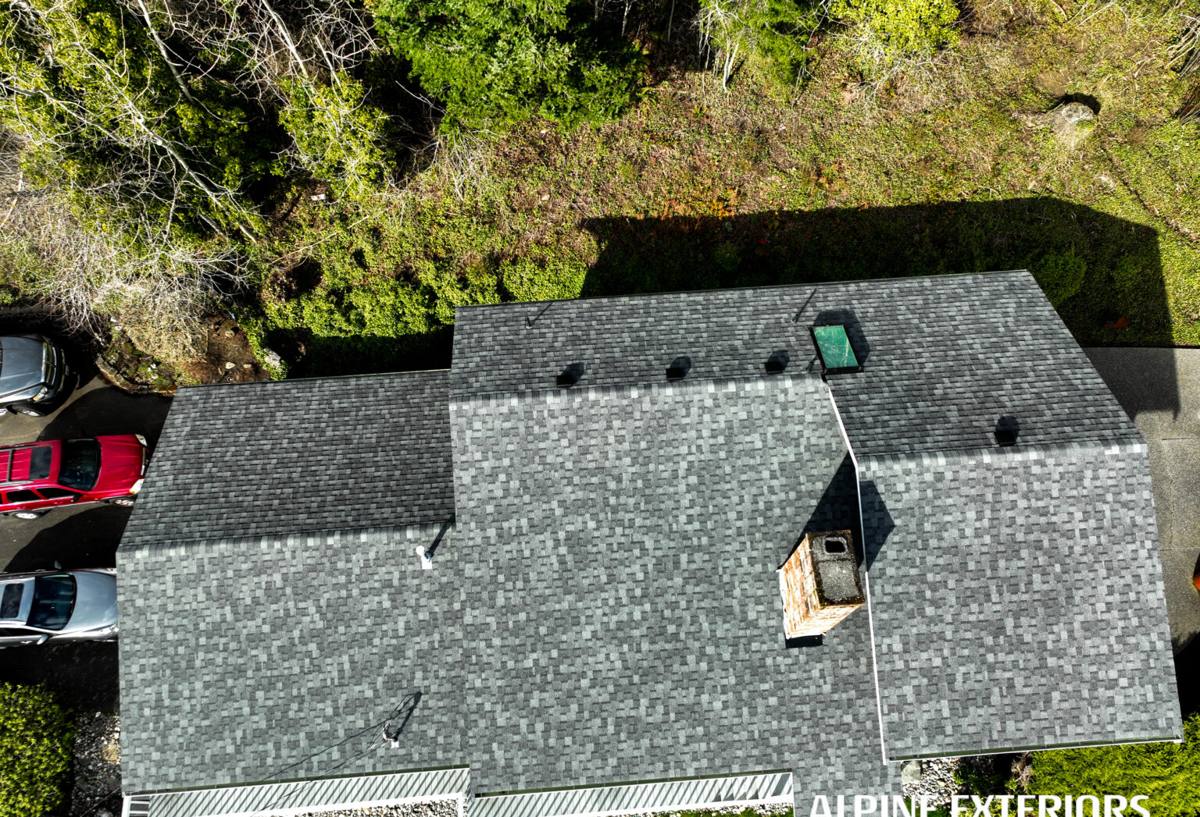
What Blaine's Climate Actually Does to a Roof
Salt Air and Corrosion
Salt in the air accelerates the breakdown of unprotected or poorly coated metal — nails, flashing, vent caps, and gutter hardware. Over years, this shows up as rust streaking, weakened fastener holds, and pitted metal that no longer sheds water cleanly. It's a slow process, which is exactly why it gets missed until a leak forces the issue.
Driving Rain
Wind off the water doesn't just drop rain straight down — it pushes it sideways and up under shingle edges, ridge caps, and flashing laps that were installed loose or under-lapped. A roof that would perform fine in a calmer inland setting can leak in Blaine if the underlayment, flashing overlap, and fastening pattern weren't built for wind-driven moisture specifically.
Moss and Algae Season
Whatcom County's moss season runs long — realistically most of the year on shaded or north-facing roof planes. Moss holds moisture against the roof surface, works into shingle edges, and lifts granules over time. Left unaddressed, it shortens the life of an otherwise sound roof by years.
Signs a Blaine Home Needs Roof Replacement, Not Another Repair
- Granule loss heavy enough that you're finding grit in gutters every season, not just after a storm
- Soft or spongy spots on the roof deck, especially near valleys or chimney flashing
- Moss that keeps returning within months of cleaning, even after treatment
- Daylight visible through the roof deck from inside the attic
- Multiple past repairs in different areas rather than one contained problem
- Shingles curling, cupping, or cracking, particularly on the sides facing prevailing wind and rain
- Rust staining around metal flashing, vents, or gutter attachment points
- Interior ceiling stains that reappear after rain even following a "fixed" leak
If your roof shows one or two of these, a targeted repair may still make sense. If you're seeing several at once, or the roof is past 20-25 years old (depending on the original material), full replacement is usually the more honest recommendation — and the more cost-effective one over time.
What a Correct Roof Replacement Involves Here
A roof replacement done right in Blaine isn't just stripping old shingles and nailing down new ones. The details that don't show up in a photo are the ones that determine whether the roof lasts.
Tear-Off and Deck Inspection
We remove the old roofing down to the deck so we can actually see the plywood or plank sheathing underneath. Any soft, delaminated, or water-damaged decking gets replaced before anything new goes down — covering over a compromised deck just hides the problem for the next owner to find.
Underlayment Built for Wet Climates
Given how much of the year Blaine roofs stay damp, we use synthetic or ice-and-water underlayment in the areas most prone to wind-driven moisture — eaves, valleys, and around penetrations — not just a basic felt layer across the whole deck.
Flashing That's Actually Lapped for Wind
Chimney, wall, and valley flashing get installed with overlap and sealing appropriate for sideways rain, not just straight-down rain. This is one of the most common places we find shortcuts on older roofs, and it's usually where leaks originate.
Ventilation
Proper intake and exhaust ventilation keeps the attic dry and temperature-balanced, which reduces condensation buildup on the underside of the deck — a real issue in our humidity — and helps prevent ice damming in the rare hard freeze.
Fastener and Hardware Choice
In a salt-air environment, we pay attention to fastener and flashing material quality specifically to resist corrosion faster than standard hardware would. It costs a little more up front and pays for itself by not being the reason for a leak five years down the road.
Roofing Material Options for Blaine Homes
| Material | How It Handles Blaine's Climate | Maintenance Reality |
|---|---|---|
| Architectural asphalt shingle | Good performance for the cost; needs proper underlayment and ventilation to manage our moisture and moss exposure | Periodic moss treatment on shaded slopes; typical 25-30 year lifespan when installed correctly |
| Metal roofing (standing seam) | Sheds rain and moss buildup well; needs quality coatings and fasteners near the coast to resist salt corrosion | Low ongoing maintenance; longer lifespan, higher upfront cost |
| Composite/synthetic shingle | Resists moisture absorption and moss better than older wood-look products; consistent performance in wet climates | Moderate maintenance; good middle-ground option |
| Cedar shake | Traditional look, but our sustained dampness and moss pressure demand disciplined maintenance to avoid premature rot | Highest maintenance burden; we're upfront that this is a real ongoing commitment in this climate |
We don't push one material on every home. A lot of it comes down to how exposed the roof is to prevailing wind and salt, how much shade it gets, and what the homeowner wants to be doing (or not doing) for maintenance five and ten years out.
Cost Factors for Roof Replacement in Blaine
- Roof size and pitch — steeper roofs and larger square footage mean more material and labor time
- Number of penetrations — chimneys, skylights, and vents each need individual flashing work
- Deck condition — hidden rot found during tear-off adds material and labor that couldn't be quoted sight-unseen
- Material choice — asphalt, metal, and composite options span a wide cost range
- Ventilation upgrades — adding proper intake/exhaust venting where none existed
- Access and site conditions — tree cover, waterfront exposure, and how close the home sits to property lines can affect setup and disposal logistics
We give straightforward ranges during the estimate based on what we can see, and we flag likely wildcards (like probable deck damage on an older roof) before work starts, not after.
Our Process for a Blaine Roof Replacement
- On-site inspection — we walk the roof and attic, not just look from the ground, to assess deck condition, ventilation, and flashing details
- Written estimate — clear scope, material options, and pricing before any commitment
- Scheduling around weather — we plan tear-off in windows that minimize the home's exposure to open sky, which matters more here than in drier climates
- Tear-off and deck repair — full removal, deck inspection, and replacement of any compromised sheathing
- Underlayment, flashing, and roofing installation — built to the wind and moisture conditions specific to this area
- Final walkthrough — we review the completed work with you and confirm ventilation, flashing, and cleanup before calling the job done
Why Hiring a Crew That Already Works Blaine Matters
Roofing crews that mostly work drier, inland markets sometimes under-detail flashing and underlayment because it's never been tested by real wind-driven rain. In Blaine, those shortcuts show up as leaks within a few wet seasons, not decades. A crew that already works Whatcom County's coastal communities knows which slopes will hold moss longest, where salt exposure will eat through cheap hardware fastest, and how to sequence a tear-off around our weather instead of getting caught mid-project by an incoming system off the strait.
That local experience also means faster, more accurate estimates — we're not guessing at how this climate behaves, we're accounting for it because we've already seen what happens when it isn't.
Ready to Talk About Your Roof?
If your Blaine home's roof is showing its age or you just want an honest read on how much life it has left, we're happy to take a look. Fill out the form below for a free, no-pressure estimate — we'll tell you straight what we see and what your real options are.