 Whatcom County
 Composite Decking for Columbia Homes
Columbia sits in the part of Whatcom County where weather off the water shapes just about every outdoor building decision, and decking is no exception. Homeowners here aren't choosing composite decking because it's trendy — they're choosing it because wood decking in this climate needs constant attention, and most people would rather spend weekends doing something other than sanding, staining, and chasing moss off their deck boards every spring. We install composite decking specifically with Columbia's conditions in mind: salt-laden air, long stretches of driving rain, and a moss season that can run half the year if a deck isn't built to shed water and dry out properly.
This page covers what composite decking actually involves for a home in this area — the material choices, the parts of the job that matter most in our climate, and what to expect if you're planning a new deck or replacing one that's failing.
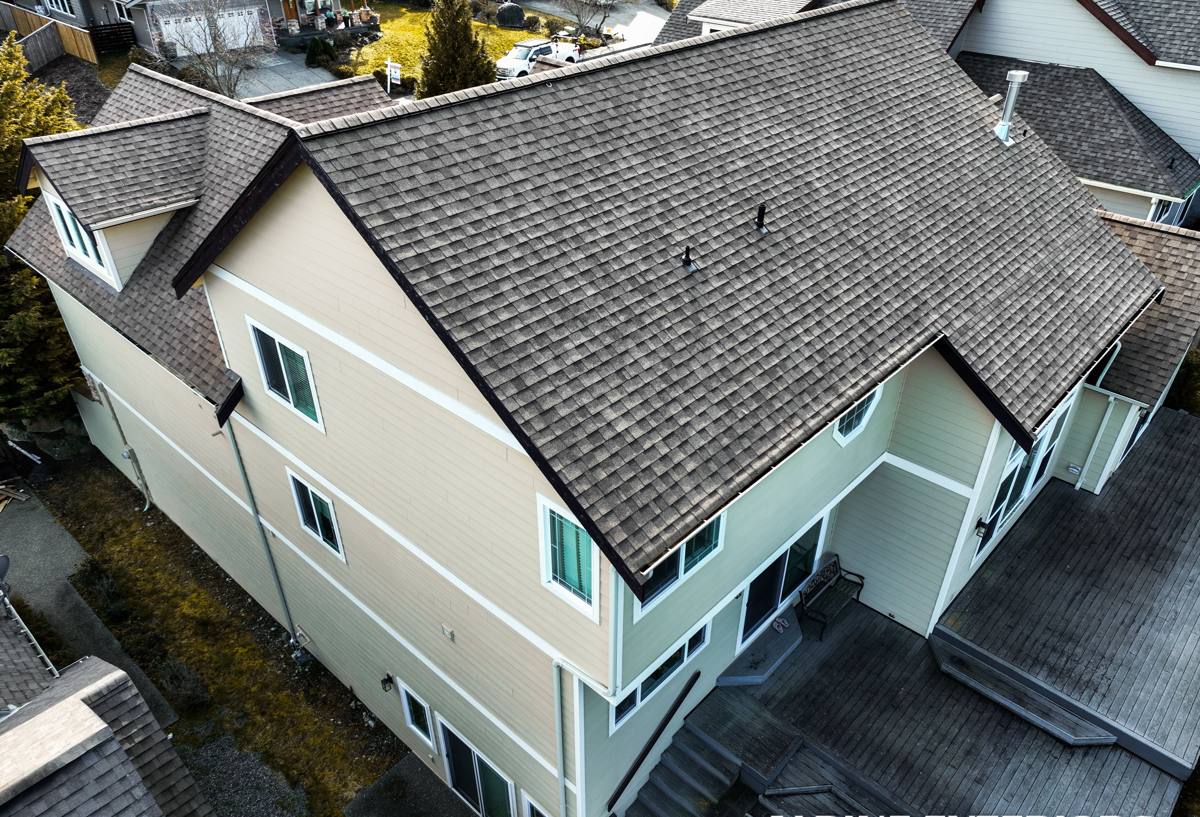
What Whatcom County Weather Does to a Deck Over Time
A deck in Columbia deals with a different set of stresses than a deck inland or in a drier climate. Understanding these is the difference between a deck that looks good for 20 years and one that starts causing problems in five.
Salt Air
Proximity to Puget Sound and the Salish Sea means airborne salt is a real factor here, even a few miles from the water. Salt accelerates corrosion on fasteners, joist hangers, and any exposed metal hardware. It also breaks down cheaper finishes and coatings faster than they'd wear in a landlocked climate.
Driving Rain
Whatcom County doesn't just get a lot of rain — a good portion of it comes in sideways during winter storms. That matters for decking because driving rain gets up under railings, into end grain, and into any gap where water can collect instead of running off. A deck built without deliberate drainage in mind will hold water in places you can't see.
Moss and Mildew Season
Between the moisture and the shade many Columbia properties have from surrounding trees, moss and mildew growth on horizontal surfaces can start early in fall and persist well into late spring. On wood decking, that means algae staining, slick spots, and surface degradation. On lower-quality composite, it can mean surface mold that's hard to fully remove without damaging the board's finish.
Composite Decking Materials We Install
Not all composite decking is built the same, and in a climate like this, the differences matter more than they would somewhere drier. We work with capped composite boards — meaning the board core (a wood-fiber and polymer blend) is fully wrapped in a protective polymer shell on all four sides.
- Capped composite (our standard recommendation): The polymer cap resists moisture absorption, staining, and mold growth far better than uncapped composite or wood. This matters directly for moss season — the cap gives algae and mildew less to grip onto, and it wipes clean instead of needing to be pressure-washed aggressively.
- Uncapped composite: Cheaper up front, but the exposed wood-fiber core can absorb moisture at the edges and is more prone to surface mold in a wet, shaded climate. We don't recommend it for most Columbia properties, particularly anything close to tree cover or with limited sun exposure.
- PVC (cellular vinyl) decking: A step beyond composite — no wood fiber at all, so there's nothing organic for moisture or mold to interact with. It costs more but performs extremely well in wet, shaded settings. We'll walk through whether it's worth the upgrade for your specific site.
We also pay attention to color choice here. Darker composite boards handle UV fading differently than lighter ones, but in our cloudier climate, fading is generally a smaller concern than it would be in a sunnier region — so color choice can lean more toward what looks right with your home than worrying about heat or fade performance.
What a Correct Installation Involves
Composite boards are only as good as what's underneath them. Most deck failures we get called out to inspect aren't a problem with the decking material itself — they're a problem with the substructure, drainage, or fastening that was done wrong the first time.
Framing and Ledger Attachment
The ledger board — where the deck attaches to the house — needs proper flashing to keep water from working its way behind it and into the wall framing. This is one of the most common failure points on older decks in wet climates, and it's not something you can inspect just by looking at the finished deck.
Joist Spacing
Composite decking has different span and spacing requirements than wood, and manufacturer specs vary by brand and board profile. Installing composite on joist spacing meant for wood can lead to bounce, sag, or long-term deflection.
Ventilation and Drainage Underneath
This is the piece most DIY and budget installs skip. In a climate with this much rain, the space under a deck needs to be able to dry out. Low decks built tight to grade, or decks without any thought given to water runoff, trap moisture underneath — which shows up later as rot in the framing even if the composite boards on top look fine.
Fasteners and Hardware
Given the salt air here, we use corrosion-resistant, coated fasteners and hardware rated for coastal or high-moisture environments — not standard interior-grade hardware. Hidden fastener systems are also worth using with composite decking, both for appearance and because they reduce the number of penetration points where water could otherwise find a way in.
Board Gapping
Composite boards need correct end-gap and edge-gap spacing to handle expansion and contraction. Get this wrong and boards can buckle or develop stress points — get it right, and it also improves drainage between boards, which matters when you're dealing with driving rain instead of light, straight-down rain.
Our Process, Start to Finish
- On-site evaluation: We look at your existing deck or planned deck location, sun/shade exposure, drainage slope, and how close you are to tree cover or standing moisture.
- Material walkthrough: We go over composite vs. PVC options and board profiles based on what your specific site needs, not a one-size-fits-all recommendation.
- Written estimate: Clear scope, materials, and price — no surprise add-ons once work starts.
- Demo (if replacing an existing deck): Removal of old decking and inspection of the substructure underneath, since that's often where the real issues are hiding.
- Framing and flashing correction: We fix or upgrade anything in the substructure that doesn't meet current standards for this climate before a single composite board goes down.
- Installation: Proper spacing, hidden fastening where applicable, and attention to drainage throughout.
- Final walkthrough: We go over care and maintenance specific to the board you chose.
Composite vs. Wood vs. PVC: How They Compare in This Climate
| Factor | Wood | Capped Composite | PVC |
|---|---|---|---|
| Moisture resistance | Poor without constant sealing | Good | Excellent |
| Moss/mildew resistance | Low — needs regular treatment | Good with routine cleaning | Very good |
| Maintenance | Annual sanding, staining, sealing | Periodic cleaning | Minimal cleaning |
| Upfront cost | Lowest | Mid-range | Highest |
| Long-term cost | Highest (labor and materials over time) | Lower over the deck's life | Lowest over the deck's life |
| Typical lifespan | 10-15 years with upkeep | 25-30+ years | 30+ years |
Maintenance: What Composite Actually Needs Here
One of the biggest reasons Columbia homeowners move to composite is lower maintenance — but "low maintenance" doesn't mean "no maintenance," especially in a climate with a real moss season.
- Sweep off debris and standing leaves regularly, especially in fall — trapped organic material under leaves is what gives moss and mildew a foothold.
- Rinse or lightly wash the deck a few times a year with a soft brush and a composite-safe cleaner; avoid pressure washing at close range, which can damage the cap on some boards.
- Check railings and stair connections for looseness once a year — hardware can shift slightly with seasonal temperature swings.
- Keep gutters and downspouts near the deck clear so runoff isn't dumping extra water directly onto or under the decking.
- Trim back overhanging branches where practical to reduce shade and speed up drying time after rain.
Problems We Commonly See on Older or DIY Decks in the Area
When we're called out to look at an existing deck in Columbia or nearby parts of Whatcom County, a handful of issues come up repeatedly:
- Rotted ledger boards from missing or failed flashing at the house connection.
- Rusted or corroded fasteners from using standard hardware instead of coastal-rated hardware.
- Moss buildup between boards spaced too tightly or laid without adequate slope for drainage.
- Soft or spongy framing underneath decking that still looks fine on the surface.
- Uncapped composite boards showing mold staining that won't fully clean off.
Most of these trace back to the substructure and installation details, not the decking material itself — which is exactly why we treat the framing, flashing, and drainage work as just as important as the visible decking.
Why Hire a Crew That Already Works in Columbia
A lot of decking problems in this region come from installers applying general best practices instead of ones suited to local conditions — flashing details that work fine in a drier climate but fail here, or hardware specs that don't account for salt air. Working regularly in Whatcom County means we're not guessing at how a deck needs to be built to hold up against this specific mix of rain, salt exposure, and moss pressure. We've seen what fails here and why, and we build accordingly from the framing up, not just the surface material.
If you're weighing a new deck or wondering whether an existing one needs to be rebuilt rather than patched, we're happy to take a look and give you a straight answer — including telling you if a repair makes more sense than a full replacement. Reach out for a free, no-pressure estimate using the form below, and we'll walk your property with your specific site conditions in mind.