 Whatcom County
 Why South Hill Windows Wear Out Faster Than the Brochure Says
South Hill sits close enough to the water and the weather patterns that move through Whatcom County that windows here take a different kind of beating than windows fifty miles inland. It's not one dramatic storm that does the damage — it's the accumulation. Salt-laden air off the water works into aluminum and steel hardware over years, driving rain gets pushed sideways into every gap in a poor seal, and the long stretch of wet, low-sun months lets moss and algae get a foothold on anything that stays damp. A window that would last two decades in a drier climate can start failing in half that time here if it wasn't installed with this exposure in mind.
Most of the window problems we see in South Hill aren't glass problems at all. They're installation and flashing problems that only show up after a few wet seasons — which is exactly why the install matters more than the window itself in a climate like this.
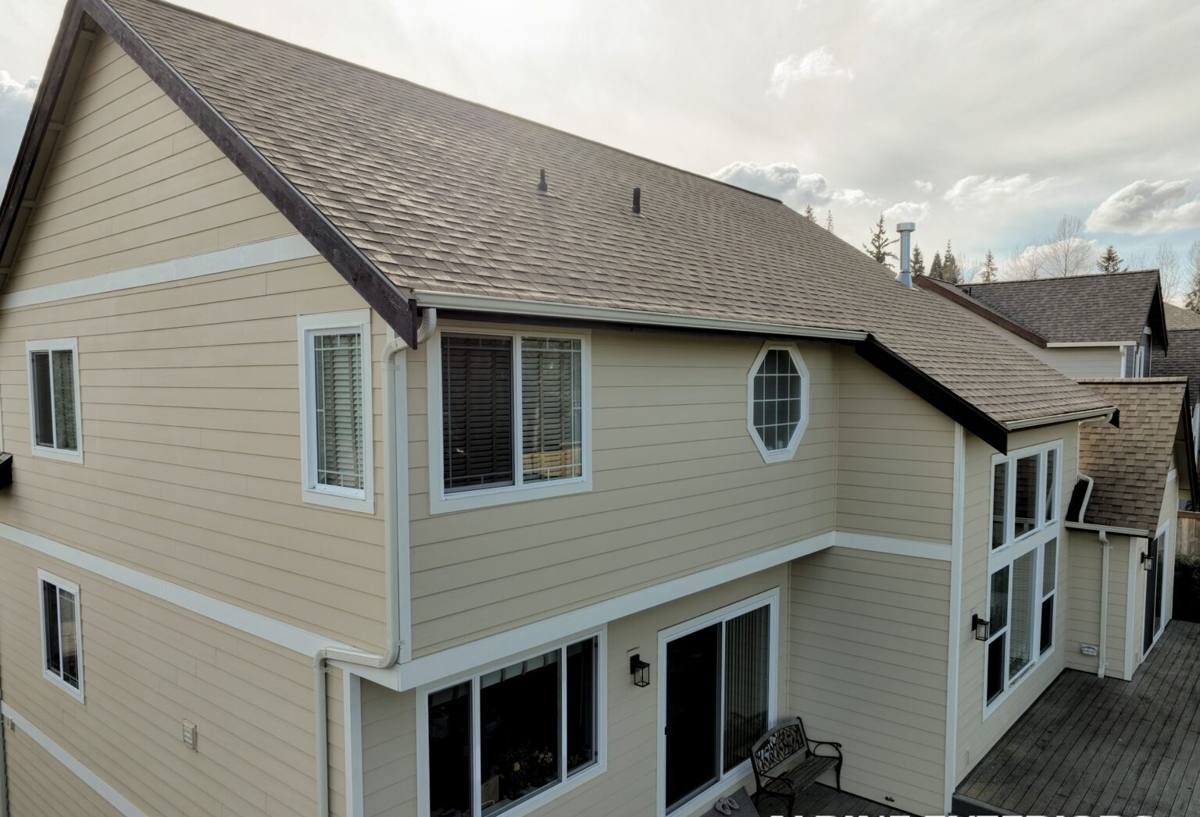
How to Tell a Window Is Losing the Fight
Homeowners usually notice the small stuff first and assume it's cosmetic. It rarely is. Some signs are worth taking seriously before they turn into a bigger repair:
- Fogging or a milky haze between panes — the seal has failed and moisture is trapped in the glass unit
- Drafts you can feel even with the window fully latched, especially during driving rain or wind off the water
- Soft or discolored wood, or a slightly spongy feel, on the interior trim or sill
- Difficulty opening, closing, or locking — frames swelling from moisture intake
- Visible moss, algae, or black streaking building up on the exterior trim or below the sill
- A noticeable jump in heating costs with no other explanation
Any one of these on its own isn't an emergency. Several together, especially on the sides of the house that face prevailing wind and rain, usually mean the window and its flashing are due for a proper look.
What a Correct Window Installation Actually Involves
A window installation is not just "remove old window, set new window, caulk the edges." Done right, it's a weatherproofing job first and a window job second. The parts that actually determine whether a window survives a Whatcom County winter are mostly invisible once the trim goes back on:
Flashing and Water Management
Every opening needs a flashing system that sheds water down and out, not into the wall cavity. That means sill pan flashing under the rough opening, properly lapped house wrap or building paper around the jambs and head, and a drip cap or head flashing that actually directs water away from the top of the window rather than just decorating it. This is the single most common shortcut we find when we pull out a failing window — someone caulked the perimeter and called it weatherproofing.
Air Sealing Without Trapping Moisture
The gap between the window frame and the rough opening needs to be sealed for air infiltration, but not packed solid with the wrong material. Backer rod and quality sealant at the exterior, low-expansion foam or fiberglass insulation in the cavity, and an interior air seal all work together. Overfilling that gap with the wrong expanding foam can actually bow the frame and cause the window to bind.
Level, Plumb, and Square — Actually Checked
A window that's out of square by even a small amount will bind, won't latch tight, and will wear its weatherstripping unevenly. Shimming correctly at the right points (not just the corners) is what keeps the frame true for the life of the window.
Choosing the Right Window for South Hill's Exposure
There isn't one "best" window for every home — it depends on which direction the house faces, how exposed it is, and what the homeowner wants to maintain. Here's how the common frame materials actually perform in this climate, based on what we see holding up over time:
| Frame Material | How It Handles Salt Air & Moisture | Maintenance Burden |
|---|---|---|
| Vinyl | Doesn't corrode from salt air; performs well if the corners are properly welded | Low — occasional cleaning, no painting |
| Fiberglass | Very stable in moisture and temperature swings, holds paint well if a color change is wanted later | Low to moderate |
| Wood (unclad) | Handsome, but needs consistent upkeep to keep moisture from finding bare wood in a wet climate | High — regular repainting/sealing |
| Aluminum-clad wood | Exterior holds up well; the wood interior still needs the same care as unclad wood over time | Moderate |
| Bare aluminum frame | Prone to corrosion and pitting from salt air over years; conducts cold and can condensate heavily | Moderate, but corrosion isn't reversible |
We don't push one material on every job. We'll walk a homeowner through what their specific exposure and budget call for, and we're upfront when a product isn't a good match for a coastal-influenced site — that's a maintenance conversation, not a brand argument.
Full-Frame Replacement vs. Insert Replacement
This is one of the first decisions on almost every job, and it depends on the condition of what's already in the wall.
| Approach | Best For | Trade-offs |
|---|---|---|
| Insert (pocket) replacement | Existing frame and flashing are still sound and dry | Faster and less invasive, but any hidden rot or old flashing problems stay hidden |
| Full-frame replacement | Frames show rot, soft wood, or you're already seeing water intrusion | More labor and cost, but it's the only way to fully redo the flashing and confirm what's behind the wall |
We won't recommend a full-frame job on a house that doesn't need it, and we won't recommend an insert on a house where we can already see or suspect moisture damage behind the old frame. That call gets made after we actually look, not before.
Our Installation Process, Step by Step
- On-site assessment — we look at existing frames, flashing, and any visible water staining or soft wood before quoting anything
- Product selection — matched to the home's exposure, the homeowner's budget, and maintenance preferences
- Careful removal — old window and any damaged flashing or sheathing removed without tearing up more of the wall than necessary
- Inspection of the rough opening — this is where hidden rot or old moisture damage actually gets found and addressed
- Flashing and sill pan installation — done to shed water outward, not just sealed over
- Setting the window — shimmed level, plumb, and square, fastened per manufacturer spec
- Air sealing and insulation — interior and exterior, sized correctly for the gap
- Exterior trim and caulking — finished to shed water and match the home
- Final function check — every window opens, closes, locks, and seals correctly before we call it done
Timeline and What to Expect
A straightforward insert replacement on a handful of windows is often a one-day job. Full-frame replacements, or jobs where we find rot behind the old window, take longer because that hidden repair work has to happen before the new window goes in — there's no shortcut around fixing what's actually wrong once it's exposed. We'll tell you honestly, at the time we find it, if the scope has changed and why, rather than surprising you at the invoice.
Keeping New Windows Performing Through Whatcom County Winters
A correct installation is most of the battle, but a little homeowner upkeep goes a long way in this climate:
- Rinse exterior frames and sills periodically to clear salt residue and slow moss growth
- Keep gutters and downspouts clear so runoff isn't sheeting down across window heads
- Check exterior caulking annually, especially after the first winter, and touch up any cracking
- Operate locking hardware occasionally in the off-season so mechanisms don't seize
- Watch for condensation between panes — it's the earliest sign of a failing seal
- Trim back vegetation that keeps a window shaded and damp longer than the rest of the house
Why It Matters That the Crew Already Works South Hill
Window installation isn't a one-size-fits-all trade. A crew that regularly works homes in South Hill and elsewhere in Whatcom County already knows which sides of a house typically take the worst of the driving rain, what kind of flashing failures show up most often in this specific climate, and how much moss and algae exposure to expect on a north-facing wall near the water. That's the difference between a window that's installed to a generic spec sheet and one that's installed for the actual conditions it has to survive. We stand behind the work because we're not driving off after one job — we're in this area regularly, and a callback is a short trip, not a hardship we'd rather avoid.
If you're weighing whether your current windows need attention, or you're ready to plan a replacement, we're happy to come take an honest look. There's no pressure and no obligation — just a straight assessment of what your home actually needs. Use the form below to request a free estimate.