 Whatcom County
 Windows Built for Cordata's Weather, Not Just the Catalog
Cordata sits close enough to Bellingham Bay and the Puget Sound air mass that homes here take on a specific mix of weather stress: salt-tinged marine air, long stretches of driving rain off the water, and a moss season that can run from October clear through April. None of that is dramatic on any given day, but it's relentless, and windows are one of the first places it shows up — fogged glass, swollen sashes, soft trim, and heating bills that creep up every winter as old seals give out. A window built for a dry inland climate is not the same product a Whatcom County home actually needs.
When we talk about "energy-efficient windows" for a Cordata home, we mean two things at once: glass and frame performance that actually cuts heat loss in our mild-but-damp winters, and a window system that resists moisture intrusion at the seams, sills, and flashing details where our climate does the most damage. Get either one wrong and the other doesn't matter much — a high-performance window installed with sloppy flashing will leak before it ever pays for itself in energy savings.
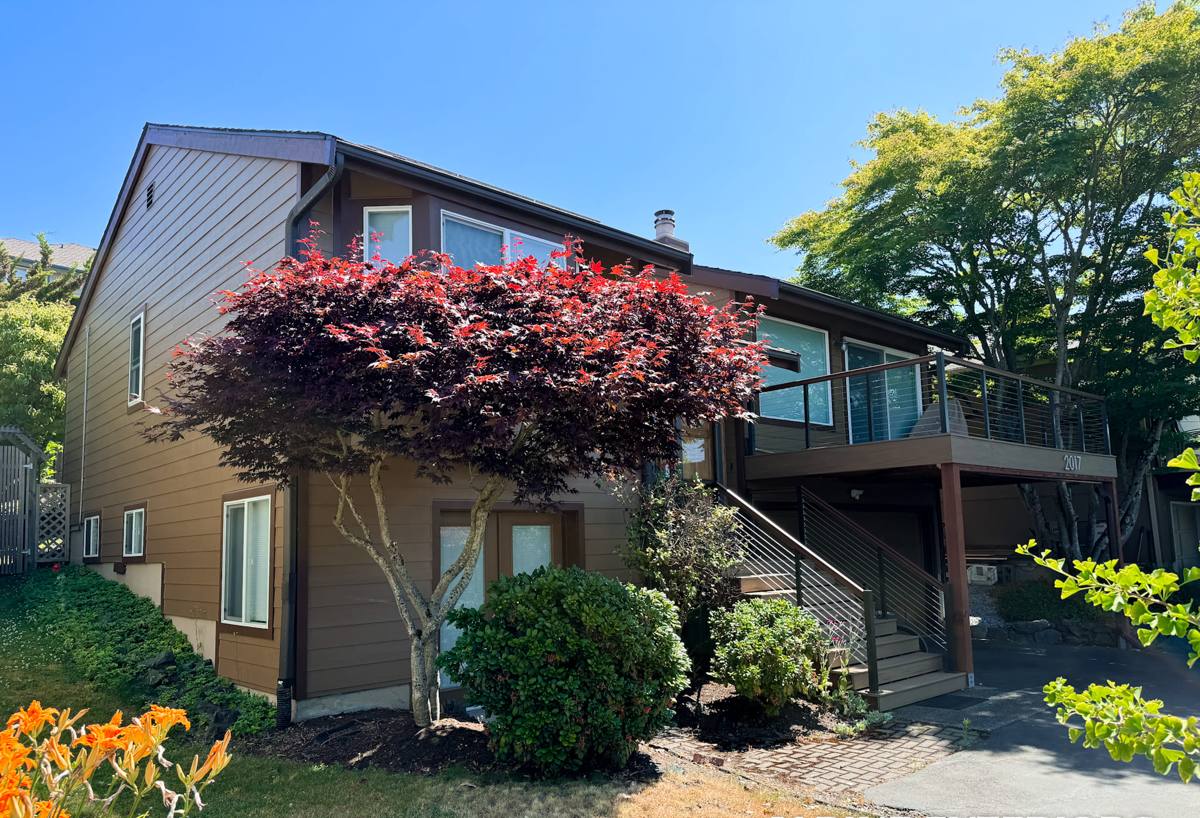
What Whatcom County's Climate Actually Does to Windows
Salt Air and Marine Moisture
Homes in and around Cordata aren't oceanfront, but the marine air off Bellingham Bay still carries salt and moisture inland further than most homeowners expect. Over years, that air accelerates corrosion on lower-grade window hardware — hinges, cranks, and locking mechanisms — and it keeps wood and lower-quality vinyl surfaces damp longer after every rain, which speeds up rot and warping.
Driving, Wind-Driven Rain
Our rain rarely falls straight down. Wind off the Sound pushes it sideways into west- and south-facing walls, which means window flashing and drainage details matter as much as the window unit itself. A perfectly good window installed without a proper sill pan or correctly lapped flashing will still let water track behind the trim and into the wall cavity.
Long Moss and Mildew Season
Extended damp, shaded conditions common in Cordata's tree-lined lots create ideal conditions for moss, algae, and mildew to take hold on window sills, tracks, and exterior trim. Beyond the cosmetic issue, trapped organic growth holds moisture against the frame, which shortens the life of wood components and can stain vinyl and fiber cement over time.
What a Correct Energy-Efficient Window Job Involves
Replacing windows in a Whatcom County home is not just swapping one unit for another. A job done right addresses the whole opening, not just the glass.
- Removal of the old window without damaging surrounding sheathing, framing, or siding
- Inspection of the rough opening for hidden rot, soft framing, or prior water damage before anything new goes in
- Installation of a proper sill pan flashing to direct any intruding water back outside the wall
- Correct shingle-style lapping of flashing tape and building wrap so water always sheds downward and outward
- Level, plumb, and square setting of the window unit with appropriate shimming — not just "close enough"
- Low-expansion foam and/or backer rod and sealant at the frame perimeter for both air sealing and drainage
- Exterior trim and caulking detailed to shed wind-driven rain, not just look finished
- Interior air sealing and insulation at the jamb so the energy performance of the glass isn't undercut by air leaks around it
Skip any one of those steps and you can end up with a window that performs well on paper but still leaks, fogs, or drafts within a few years — especially in a climate that gives water this many chances to find a way in.
Choosing Glass and Frame Performance for This Climate
"Energy-efficient" covers a range of products, and the right choice depends on the home's exposure, budget, and existing construction. For most Cordata homes, the baseline worth insisting on is dual-pane glass with a low-E coating and an argon gas fill, paired with a frame material that won't degrade in sustained damp conditions.
| Feature | What It Does | Why It Matters Here |
|---|---|---|
| Low-E coating | Reflects radiant heat while letting visible light through | Keeps winter heat inside during our long heating season |
| Argon gas fill | Insulating gas between panes, denser than air | Reduces heat transfer through the glass unit |
| Vinyl or fiberglass frames | Won't rot, corrode, or absorb moisture like untreated wood | Stands up to salt air and prolonged damp exposure |
| Multi-point locking hardware | Compresses the sash tightly against weatherstripping | Better air seal and rain resistance under wind pressure |
| Warm-edge spacer bar | Reduces heat loss and condensation at the glass edge | Cuts down fogging and edge condensation in cold, damp mornings |
We steer most Cordata homeowners away from bare aluminum frames and unclad wood exteriors. Both can look sharp initially, but aluminum conducts heat and cold straight through the frame, and exposed wood exteriors demand ongoing maintenance to keep ahead of our rain and moss season. That's not a knock on the materials in general — it's a matter of matching the product to what this specific climate will put it through over the next 15-20 years.
Our Process for a Cordata Window Replacement
- On-site assessment. We look at each opening individually — sun exposure, wind exposure, existing water damage, and how the current windows are performing.
- Straightforward product recommendation. We'll tell you honestly which glass and frame combination fits the home and the budget, without upselling features that won't earn their keep.
- Written estimate. Clear scope, clear pricing, no surprise add-ons once work starts.
- Careful removal and opening inspection. If we find rot or damage behind the old window, we'll show you before covering it back up.
- Installation to the flashing and sealing standard described above. This is where most of the long-term performance difference actually comes from.
- Final walkthrough. We check operation, seals, and finish work with you before we consider the job done.
Cost Factors for Energy-Efficient Windows
Exact pricing depends on the number of openings, sizes, glass package, and how much flashing or trim repair is needed once the old windows come out. In general terms, homeowners should expect the total cost to be shaped by a handful of factors:
| Factor | How It Affects Cost |
|---|---|
| Number and size of windows | More openings and larger units mean more material and labor |
| Glass package | Upgraded low-E coatings or triple-pane glass add cost but improve performance |
| Frame material | Vinyl is typically the most budget-friendly; fiberglass costs more but resists flexing and wear longer |
| Condition of the existing opening | Hidden rot or water damage found during removal adds repair time before the new window goes in |
| Trim and siding work | Full trim replacement or siding tie-in costs more than a straightforward swap |
We'd rather walk your specific home and give you real numbers than quote a price range that doesn't mean much until we see the openings.
Why Hiring a Crew That Already Works Cordata Matters
A window installer who mostly works dry inland climates can still do competent work on the window itself and still miss what Whatcom County weather requires around it. Flashing details that are "good enough" in a low-rain region aren't good enough here. A crew that regularly works Cordata and the surrounding Whatcom County neighborhoods already knows which wall orientations take the worst of the wind-driven rain, how moss and moisture tend to collect around common local trim details, and what it takes to keep salt-air corrosion from creeping into hardware over time. That local pattern recognition is hard to replace with a generic installation checklist.
It also matters for troubleshooting existing problems. If a homeowner is dealing with condensation, drafts, or soft trim around current windows, a locally experienced crew can usually tell early on whether the issue is the window itself, the flashing behind it, or a broader moisture problem in the wall — rather than defaulting to "replace it and see."
Signs Your Current Windows Are Underperforming
- Condensation or fog trapped between the glass panes (a sign the seal has failed)
- Visible drafts or cold spots near the window frame in winter
- Sashes that stick, sag, or won't stay open on their own
- Soft, spongy, or discolored trim and sill areas
- Moss or persistent green staining building up on sills or tracks
- A noticeable jump in heating costs without another clear cause
Any one of these on its own isn't necessarily an emergency, but a few of them together usually mean the windows are past the point where caulking and weatherstripping will fix the underlying problem.
Get a Straightforward Look at Your Windows
If you're weighing whether your Cordata home's windows need attention, we're happy to take a look and give you an honest read — no pressure, no hard sell. Use the form below to request a free estimate, and we'll walk the openings with you and talk through what actually makes sense for your home and budget.