 Whatcom County
 Why Cordata Siding Wears the Way It Does
Cordata sits inland from Bellingham Bay, but that doesn't mean the neighborhood is sheltered from what makes Whatcom County siding fail early. Marine air moves inland on the prevailing weather, carrying salt and moisture that settle into seams, nail holes, and butt joints long before a homeowner notices anything wrong. Add driving rain that comes sideways off Pacific storms most of the fall and winter, and siding here takes on water from angles that manufacturers rarely test for.
Then there's the moss. Whatcom County's growing season for moss and algae runs long — shaded north and west-facing walls in Cordata can stay damp for weeks at a stretch, especially where mature trees or close-set homes block sun and airflow. Moss doesn't just look bad. It holds water against the siding surface, and that constant dampness is what turns a small crack or open seam into a rot problem.
None of this means Cordata homes are unusually unlucky. It means siding here needs to be installed and repaired with this specific combination of conditions in mind — not treated the same as a repair job in a drier part of the state.
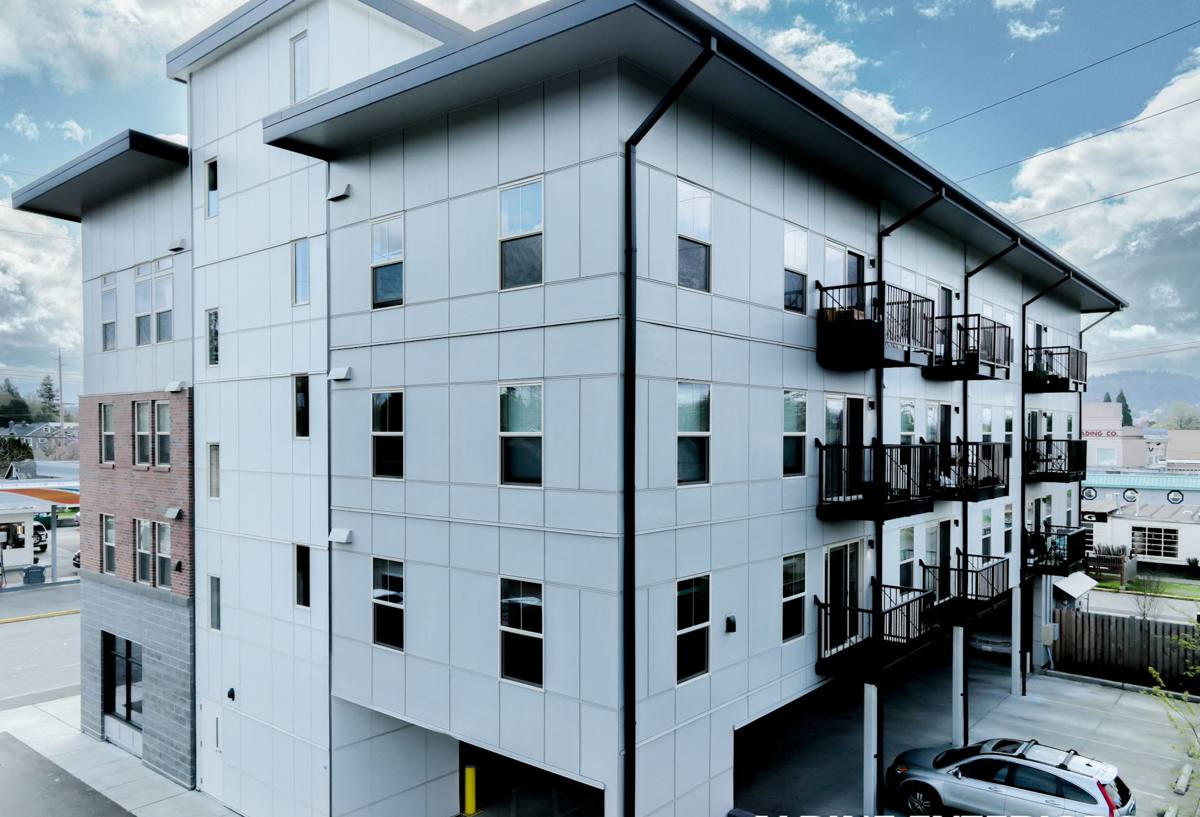
The Repairs We Actually See in This Neighborhood
Most of the repair calls we get in Cordata fall into a handful of recurring patterns:
- Rot at butt joints and corners — where two pieces of siding meet, caulking fails first, and water gets behind the material before anyone sees a visible problem.
- Moss and algae staining that hides deeper moisture — by the time green or black staining is obvious, water has often been sitting against the wall assembly for a season or more.
- Nail pops and fastener failure — freeze-thaw cycles and repeated wetting/drying swell and shrink wood-based siding, working fasteners loose over time.
- Failed caulk and sealant joints around trim, windows, and penetrations — a small gap here is often the actual water entry point, even when the damage shows up several feet away.
- Soft or delaminating panels on older wood-based or engineered wood siding that was never rated for this level of sustained moisture exposure.
The common thread: almost none of these start as a siding problem. They start as a water-management problem, and the siding is just where the damage becomes visible.
What a Correct Repair Actually Involves
Find the Water Source First
Patching visible damage without finding how water got in is the single most common shortcut in this trade — and it's why the same spot fails again twelve months later. A proper repair starts with tracing the moisture path: flashing, kick-out diverters, window and door trim, caulk joints, and the condition of the water-resistive barrier behind the siding itself.
Assess the Substrate, Not Just the Surface
Once siding is pulled back, we check the sheathing and framing underneath for soft spots, staining, or active rot. Replacing siding over damaged sheathing is a temporary fix at best — it looks fine for a season and fails again once moisture that was never dried out starts working from the inside.
Match the Material and the Method
Repairs need to tie into the existing siding cleanly — same reveal, same fastening pattern, same flashing detail — or the patch becomes its own weak point. This is where a lot of repair work goes wrong: a mismatched patch that looks close enough from the ground but doesn't actually shed water the way the surrounding wall does.
Repair or Replace? How We Help You Decide
Not every damaged section needs a full re-side, and not every repair is worth doing in isolation. The right call depends on how localized the damage is and what condition the rest of the wall is in.
| Factor | Favors Repair | Favors Replacement |
|---|---|---|
| Extent of damage | Isolated to one wall or a few panels | Spread across multiple elevations |
| Sheathing condition | Dry, solid where exposed | Soft, stained, or rotted in multiple spots |
| Siding material | Hardie fiber cement, otherwise sound | Wood-based or engineered wood showing widespread delamination |
| Age of existing siding | Relatively recent, still under warranty | Original siding is decades old or already patched before |
| Color match | ColorPlus finish still available or close match acceptable | Discontinued color or heavy fading makes patches visibly obvious |
We'll give you a straight answer on which side of that line your home falls on — we don't have a financial reason to push a full replacement when a repair will genuinely hold up, and we won't recommend a patch job on a wall that's structurally compromised.
Why We Repair and Rebuild With James Hardie — and Nothing Else
This company installs James Hardie fiber cement siding exclusively. We don't install vinyl, LP SmartSide, Cemplank, Allura, or primed wood siding, and that standard applies to repair work too. When a section of siding needs to be cut out and replaced, we use Hardie product to do it — not because it's the only option on the market, but because it's the only one we're willing to stand behind on a wall in this climate.
Fiber cement doesn't absorb water the way wood-based siding does, so it doesn't swell, delaminate, or feed rot the way the products we see failing in Cordata often do. Hardie's ColorPlus factory finish also holds color and resists the kind of fading and moss-friendly surface texture that plain primed products develop faster. If your home already has Hardie siding, we can typically match reveal and profile cleanly since it's a consistent, engineered product line. If your home has a different siding material and needs a significant repair, we'll walk you through what a Hardie-based fix or partial re-side would look like — including cases where patching a failing wood or composite product just isn't a good long-term use of the repair budget.
We're not going to tell you a competing product is garbage. We'll tell you honestly what we've seen it do in this climate over time, and why we decided years ago to stop installing anything else.
How We Approach a Cordata Repair Job
- On-site inspection — we look at the damaged area and the surrounding wall, not just the spot you called about.
- Moisture check — probing the sheathing where siding is removed, checking for hidden damage beyond the visible problem.
- Honest scope — a clear explanation of what's actually needed: a targeted patch, a section replacement, or a broader conversation about the wall's condition.
- Correct flashing and sealing — every repair gets proper water-shedding detail, not just a caulk gun and new boards.
- Material match — Hardie product installed to the reveal, fastening pattern, and finish that ties into the rest of the home as closely as possible.
- Cleanup and walkthrough — we show you what was found and what was done before we call the job finished.
Signs Your Cordata Home Needs a Siding Repair Now
- Soft or spongy spots when you press on siding, especially near the bottom courses or corners
- Visible gaps or cracked caulk at joints, trim, and window edges
- Persistent moss or dark staining on north- or west-facing walls that keeps returning after cleaning
- Paint or finish that's bubbling, peeling, or flaking in a localized area
- A musty smell near an exterior wall inside the home, which often points to moisture already past the siding
- Visible nail pops, warping, or boards that have pulled slightly away from the wall
Any one of these on its own might be minor. Two or more in the same area, especially heading into the wet months, is worth a closer look before winter rain finds the gap for you.
Why It Matters That We Already Work in This Area
A crew that works Whatcom County regularly knows how this specific climate behaves on a wall — which elevations take the worst weather, how long moss actually needs to establish itself, and what a properly flashed detail needs to hold up through a normal Pacific Northwest winter rather than a mild one. That's different from general siding experience. Local crews building a permit history, wearing familiar dumping and disposal channels, and knowing what a Cordata home's exposure typically looks like all make the estimate and the job itself more accurate the first time.
If you're seeing damage, staining, or soft spots on your siding, we're happy to take a look and give you a straightforward assessment — no pressure, no inflated scope. Reach out for a free estimate and we'll tell you plainly what your siding needs and what it doesn't.