 Whatcom County
 Cordata's Climate Puts Real Demands on Siding
Cordata sits in the part of Whatcom County that gets the full Pacific Northwest treatment: long stretches of overcast, wet weather, salt-carrying air off Bellingham Bay, and shaded, moisture-holding lots that never fully dry out between storms. None of that is dramatic on its own, but siding doesn't fail from one bad storm — it fails from years of small exposures the manufacturer's warranty never accounted for.
Three things do most of the damage locally. Salt air corrodes exposed metal fasteners, trim flashing, and cut edges faster than it would inland. Driving rain, especially in fall and winter windstorms, pushes water sideways into laps, seams, and butt joints instead of letting it run straight down. And a long moss season — shaded roof lines, damp siding faces, low winter sun angles — keeps organic growth active on siding surfaces for much of the year, which holds moisture against the material even longer. A siding system installed without those three factors in mind will show problems years before it should.
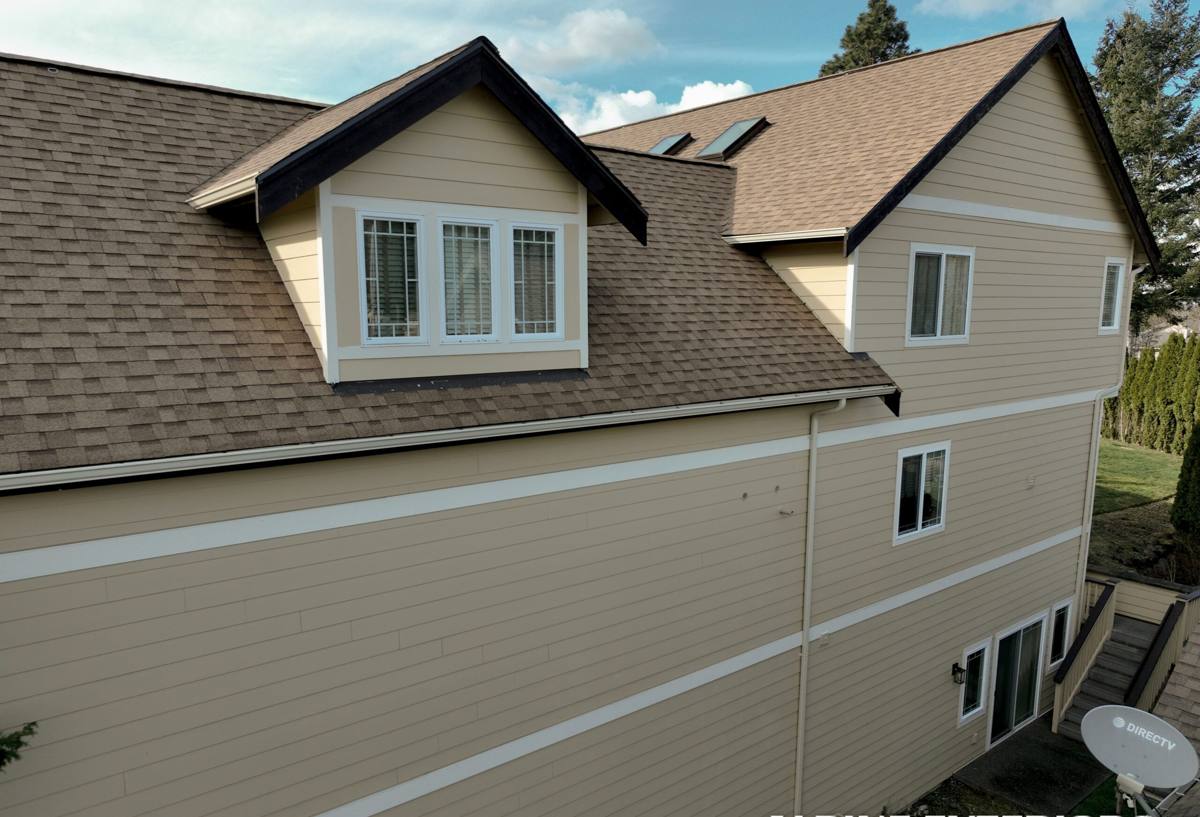
Signs a Cordata Home May Be Due for Siding Replacement
Most siding failure in this area is gradual, so homeowners often notice the cosmetic symptoms years after the underlying problem started. Before you spend money on a repaint or a patch, it's worth checking for the signs that point to a replacement conversation instead:
- Soft, spongy, or slightly bouncy spots when you press on the siding, especially near the bottom courses or under windows
- Moss or dark staining that comes back within a season or two of being cleaned
- Paint that's failing, bubbling, or peeling faster than a normal repaint cycle would explain
- Visible warping, buckling, or cupping in individual boards or panels
- Gaps opening up at trim, corners, or window and door casings
- Rot or discoloration at the bottom few inches of walls, especially on north- and west-facing sides
- A noticeable rise in heating costs with no other explanation
Any one of these can be minor. Two or three together, especially on the sides of the house that take the worst wind-driven rain, usually mean water has been getting behind the siding for a while.
What a Correct Siding Replacement Job Actually Involves
Tear-Off and Sheathing Inspection
Replacement starts with full removal of the old siding, not installation over it. That's the only way to actually see the sheathing, framing, and any hidden rot before it's covered back up. In a climate like this, skipping that inspection is how homeowners end up paying for a new siding job and a rot repair job twice, a few years apart.
Weather-Resistive Barrier and Flashing
A correctly detailed weather-resistive barrier, properly lapped and taped, along with flashing at every window, door, and horizontal trim transition, is what actually keeps driving rain out of the wall assembly. Siding is the visible layer, but the barrier and flashing behind it are what do the real work during a wind-driven storm.
Rainscreen Gap and Drainage
Building in a small gap between the barrier and the siding lets any water that does get past the surface drain and evaporate instead of sitting against the back of the boards. On a lot with heavy shade and slow drying, that detail matters more than it would on an open, sunny site.
Fastening, Gapping, and Caulking
Fastener spacing, butt-joint gapping, and caulking all have to follow the manufacturer's written installation instructions, not just "how it's always been done." Under-fastening, over-driven nails, and joints caulked instead of properly flashed are common shortcuts that cause failures within a few years — long before the material itself would have worn out.
Why We Install Only James Hardie Fiber Cement
We standardized on James Hardie fiber cement siding for every job we do, including replacements in Cordata, and we don't install vinyl, LP SmartSide, or unprimed wood siding as alternatives. That's not a marketing position — it's a decision based on what actually holds up in this climate over decades, not just the first few years.
Fiber cement doesn't have an organic wood component for moisture to feed on, which matters directly in a place with a moss season this long. It's non-combustible, which matters for insurance and safety regardless of climate. And Hardie's ColorPlus factory-applied finish is baked on and warranted separately from the substrate, which means far less repainting than a field-painted product needs in a climate that gives you a short paint-drying window most of the year. Hardie also builds region-specific product lines (their HZ5 and HZ10 engineering) rather than one generic formulation for the whole country, which is directly relevant somewhere with the moisture load Whatcom County gets.
We're not going to pretend other siding materials don't have their own advantages — lower upfront material cost is a real one. But between the maintenance burden, the moisture sensitivity, and the shorter effective lifespan we've seen from other materials in this specific climate, fiber cement is what we're willing to put our name behind and back with installation workmanship.
Our Process for a Cordata Siding Replacement
- On-site inspection — we walk the whole house, not just the obviously damaged side, and check the exposures that take the worst weather
- Sheathing and moisture check — probing suspect areas before we ever write a scope, so there are no surprise change orders mid-project
- Written scope and product selection — profile, color, and any trim or repair work spelled out before work starts
- Tear-off and repair — old siding removed, damaged sheathing and framing repaired, barrier and flashing installed correctly
- Installation to manufacturer spec — fastening, gapping, and rainscreen detail done to Hardie's written instructions, not shortcuts
- Final walkthrough — cleanup and a review of the finished work with the homeowner before we call it done
What Siding Replacement Costs Depend On
There's no single price per square foot that means much without context — the same house can cost noticeably different amounts depending on what's actually found once the old siding comes off. The factors below are what actually move the number:
| Cost Factor | Why It Matters |
|---|---|
| Home size and number of stories | More surface area and taller walls mean more material and more scaffolding/access work |
| Extent of hidden sheathing or framing damage | Rot found during tear-off has to be repaired before new siding goes on — this is the biggest source of price variation |
| Siding profile chosen | Lap siding, panel siding, and shingle-style Hardie products all have different material and labor costs |
| Trim, fascia, and accessory work | Replacing trim and corner boards alongside the siding is more efficient than doing it later, but adds to the scope |
| Site access and shading | Tight lots, heavy landscaping, and steep grades slow installation and drying time between weather windows |
| Prefinished vs. field-painted color | ColorPlus factory finish avoids a separate paint step; custom field-painted colors add labor |
The only way to get a real number is a site visit and an actual inspection — anyone quoting a firm price over the phone for a house they haven't seen is guessing.
Why Hiring a Crew That Already Works in Cordata and Whatcom County Matters
Siding installation isn't just following a manual — it's applying that manual correctly to the specific conditions of a specific lot. A crew that regularly works in Cordata and the surrounding Whatcom County area already knows which wall orientations on a given street tend to take the worst wind-driven rain, how much shade a typical lot holds through winter, and how aggressively moss comes back on north-facing walls versus south-facing ones. That's the kind of judgment that shows up in small decisions — where to add extra flashing attention, how to detail a shaded corner — that a crew unfamiliar with the area might not think to make.
Local experience also means fewer surprises with permitting and inspection expectations, and a contractor who's still going to be around locally if a warranty question comes up five or ten years down the road.
Caring for Your New Siding After Installation
Fiber cement siding installed correctly needs relatively little upkeep, but "little" isn't "none," especially here:
- Keep gutters clean and downspouts directed away from the foundation so water isn't sheeting down siding faces
- Rinse moss and algae growth off with a garden hose and soft brush before it builds up — avoid pressure washing directly into laps and seams
- Trim back landscaping and tree cover where practical to improve airflow and drying on shaded walls
- Do a quick visual check of caulking at trim and penetrations once a year, and touch up before it fails outright
- Address any impact damage or chipped finish promptly rather than letting it sit through a wet season
If your Cordata home is showing any of the signs above, or you're just planning ahead before the next stretch of fall storms, we're happy to take a look and give you a straight answer — no pressure, no obligation. A free estimate gets you a real inspection and a real number, not a guess.