 Whatcom County
 Why Decks Wear Out Faster in Fairhaven
Fairhaven sits close enough to the water that salt-laden air is a daily fact of life, not an occasional weather event. Combine that with Whatcom County's long stretch of driving rain and the moss season that follows it, and you have a climate that is genuinely tough on outdoor structures. A deck that might last two decades in a dry inland climate can start failing structurally in half that time here if it wasn't built or maintained with these specific conditions in mind.
The damage rarely starts where homeowners expect it. It's not usually the visible decking boards that fail first — it's the framing underneath, the ledger board connection to the house, and the fasteners holding it all together. Salt air accelerates corrosion in standard fasteners and hardware. Persistent moisture works its way into end grain and fastener holes. Moss and algae hold water against surfaces long after a dry spell elsewhere in the county would have let things dry out. By the time cupping, soft spots, or a spongy feel show up on the surface, the substructure has often been compromised for a while.
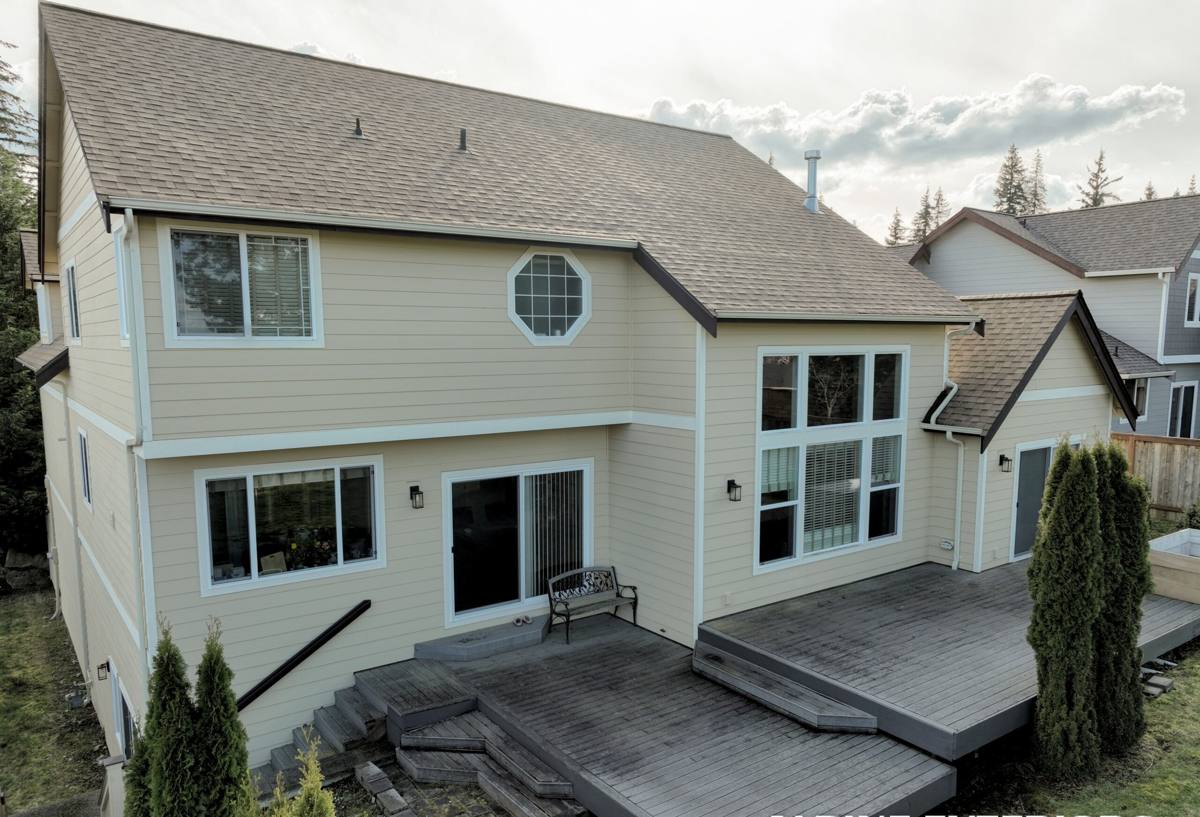
Signs a Fairhaven Deck Needs Full Replacement (Not Just Repair)
Not every aging deck needs to be torn out. But there's a point where patching becomes a waste of money, and in a marine climate that point arrives sooner than most homeowners assume. Here's what tells us a deck has crossed that line:
- Soft, spongy, or visibly sagging spots in the decking or framing when walked on
- Rust staining, crumbling, or visible corrosion at joist hangers, bolts, or ledger connections
- Persistent moss or algae growth that returns within weeks of cleaning
- Gaps, splitting, or cupping in boards that have gotten worse year over year
- A ledger board connection to the house that shows signs of moisture intrusion or separation
- Railings or posts that flex or feel loose under normal use
- A deck older than 20-25 years that has never had its structural framing inspected
If you're only seeing surface graying or minor mildew on the decking itself, that's often a cleaning and refinishing job, not a replacement. We'll always tell you honestly which category your deck falls into rather than push a bigger job than you need.
What a Correct Deck Replacement Looks Like Here
Framing and Fasteners Matched to the Climate
Given the salt air and moisture load Fairhaven properties deal with, the framing details matter more than the decking material on top of it. That means stainless steel or heavy hot-dip galvanized fasteners and hardware rated for coastal exposure — not the standard-grade hardware that's fine for drier, inland parts of the county but corrodes prematurely here. It means joist hangers and structural connectors sized and rated correctly, not just "close enough." And it means pressure-treated framing lumber rated for ground contact where it's near or touching soil, with proper flashing at every point where wood meets wood or wood meets the house.
The Ledger Connection Gets Extra Attention
The ledger board — where the deck attaches to your house — is the single most common point of both structural failure and water intrusion into the home itself. A correct replacement means proper flashing integrated with your home's existing water management (siding, house wrap, weep paths), not just a board bolted to the rim joist and caulked over. Caulk is not a substitute for flashing; it's a maintenance item that will eventually fail, and if it's the only thing keeping water out at the ledger, you're on borrowed time.
Drainage and Airflow Underneath
Standing water and trapped moisture under a deck are what feed moss and accelerate rot. Grading, gapping, and ventilation underneath the structure all factor into how long the replacement will actually last. This is especially relevant on lower decks close to grade, which are common on older Fairhaven lots and which trap moisture more than elevated decks do.
Decking Material Choices for a Marine Climate
There's no single "best" decking material for every homeowner — it depends on budget, how much maintenance you're willing to do, and how long you want the surface to last before it needs attention again. Here's how the common options actually perform under Fairhaven's conditions, in plain terms:
| Material | How it handles salt air & moisture | Maintenance burden | Typical lifespan here |
|---|---|---|---|
| Pressure-treated wood | Decent if sealed regularly; end grain and fastener holes are vulnerable points | Annual cleaning and resealing recommended | 10-15 years before major work needed |
| Cedar | Naturally rot-resistant but still needs finish maintenance in this much moisture | Regular sealing/staining | 15-20 years with upkeep |
| Composite decking | Handles moisture and salt air well; doesn't absorb water like wood | Occasional washing; no sealing/staining | 25-30 years, varies by product warranty |
| PVC/capped composite | Best moisture and algae resistance of the common options | Lowest — mostly just washing | 25-30+ years, varies by product warranty |
We don't push one material on every homeowner. If you want the traditional wood look and are willing to stay on top of sealing every year or two, cedar or treated lumber is a reasonable choice. If you'd rather not think about the deck surface again for two decades, composite or capped composite makes more sense given the moss season and rain this area sees. What we do insist on, regardless of decking material, is getting the framing, fasteners, and flashing right — that's where marine-climate failures actually originate, not in the boards themselves.
Our Deck Replacement Process
- On-site assessment — We inspect the existing deck, ledger connection, and surrounding siding for hidden moisture damage before quoting anything.
- Honest scope discussion — We tell you what actually needs replacing versus what could be repaired, and walk through material options against your budget and maintenance preferences.
- Permitting — Deck replacements of most sizes require a permit in Whatcom County; we handle that process so it's not left to you to navigate.
- Demolition and structural inspection — Once the old decking and framing are exposed, we confirm the ledger connection and any framing behind siding is sound, and address anything we find before moving forward.
- Rebuild — Framing, flashing, and fasteners specified for coastal exposure, followed by the decking, railing, and stair system you chose.
- Final walkthrough — We go over the finished deck with you, including what maintenance (if any) the material you chose will need going forward.
What Deck Replacement Typically Involves Cost-Wise
Costs vary based on deck size, height off grade, stair and railing complexity, and decking material — we're not going to quote a number here that doesn't apply to your specific deck. In general terms, pressure-treated framing with pressure-treated or cedar decking sits at the lower end of the cost range, while composite or PVC decking on the same footprint costs more upfront but less over time in maintenance and earlier replacement. The honest way to compare options is total cost over 15-20 years, not just the installation price — a cheaper deck that needs major rework in year 12 isn't necessarily the better deal.
The most reliable way to get a number you can actually use is an on-site look at your existing deck and a conversation about what you want out of the replacement. Ballpark figures without seeing the site tend to be wrong in one direction or the other.
Why Local Experience with Fairhaven Conditions Matters
A contractor who mostly works drier, inland parts of Whatcom County can build a technically fine deck that still underperforms near the water — because the fastener spec, flashing detail, and drainage planning that hold up fine inland aren't enough here. Working regularly in Fairhaven and similar close-to-water parts of the county means we've seen firsthand which details actually matter for longevity in salt air and heavy rain, and which corners get cut on decks that fail early. It also means we're familiar with Whatcom County's permitting process for deck work, so that part of the project doesn't become a delay.
Maintaining Your New Deck
Whatever material you choose, a few habits go a long way toward getting the full expected lifespan out of a Fairhaven deck:
- Clear leaves, needles, and debris from between boards regularly — trapped organic matter feeds moss and holds moisture
- Keep gutters and downspouts near the deck functioning so runoff isn't draining directly onto or under it
- Wash the surface at least once a year to knock back algae and moss before it gets established
- If you chose wood, stay on a sealing/staining schedule rather than waiting until it visibly needs it
- Have the ledger connection and framing glanced at every few years, especially after major storms
If you're weighing whether your Fairhaven deck needs repair or full replacement, or you're planning a new build and want it done right for this climate from the start, we're happy to take a look and give you a straight, no-pressure estimate — just fill out the form below.