 Whatcom County
 Building Decks for Edgemoor's Bluff and Waterfront Conditions
Edgemoor sits close to Bellingham Bay, and that proximity to open water shapes almost every decision that goes into a well-built deck here. Homes on or near the bluff get more direct exposure to wind-driven rain and salt-laden air than properties further inland in Whatcom County, and that exposure doesn't let up for months at a time. A deck built to a generic spec sheet might look fine the first year or two. What tells you whether it was actually built for this location is how it holds up through its fifth or sixth wet season.
We've built and repaired enough decks around Bellingham and the surrounding water-adjacent neighborhoods to know where the shortcuts usually show up — and where they cost homeowners the most to fix later. This page covers what a custom deck in Edgemoor actually needs, the material and structural choices that matter most, and how we approach the work from first estimate to final walkthrough.
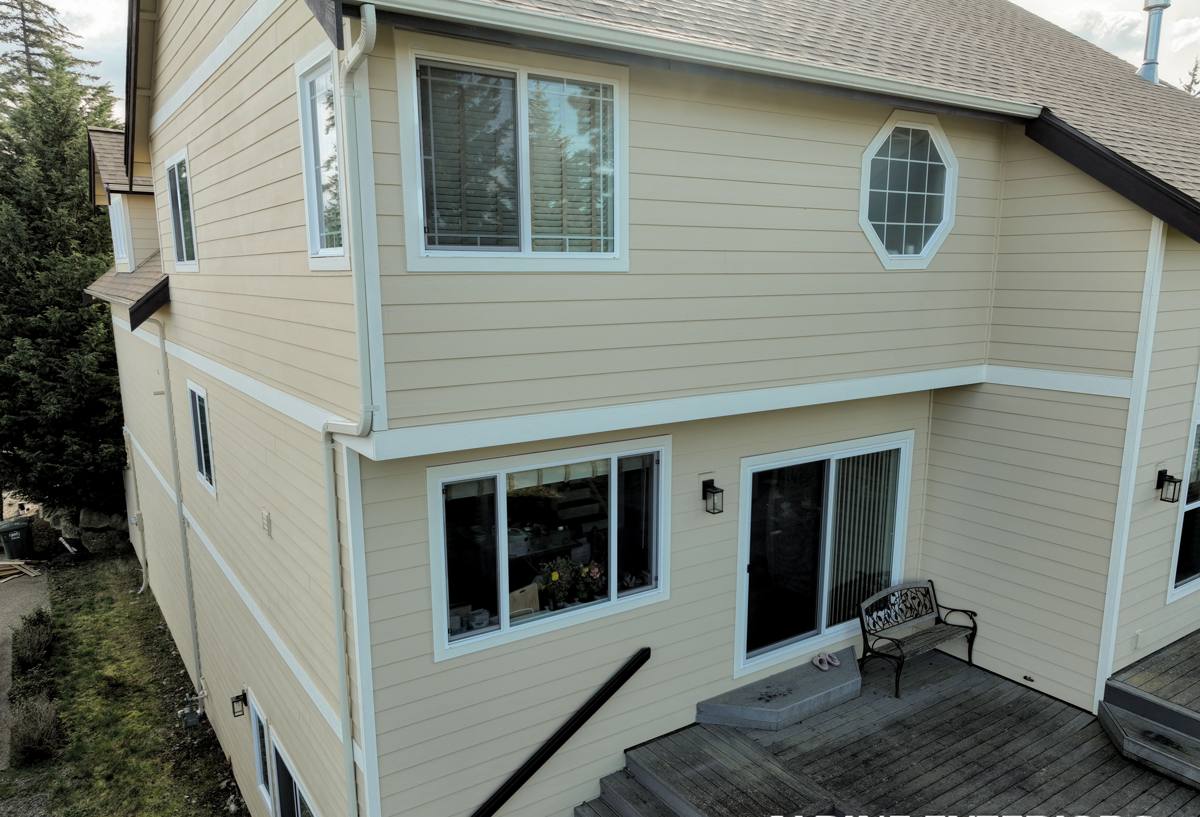
What Salt Air and a Long Moss Season Do to a Deck
Two separate forces are working against a deck here, and they attack different parts of the structure.
Salt Air and Corrosion
Airborne salt from the Bay accelerates corrosion on anything metal — fasteners, joist hangers, post bases, railing hardware. Standard galvanized coatings that hold up fine 20 miles inland can start showing rust streaks and pitting years earlier this close to the water. Once a fastener starts corroding, it loses holding strength quietly, long before it looks bad enough to notice from the surface.
Moisture and Moss
Whatcom County's wet season runs long, and Edgemoor's tree cover and bay humidity keep surfaces damp even between rain events. Moss and algae need three things to take hold on decking: moisture, shade, and something to grip onto. A deck with tight board spacing, poor airflow underneath, or a north-facing shaded run is going to grow moss faster than an open, well-ventilated one — regardless of what the boards are made of. Moss holds moisture against the wood surface, which is what actually causes rot, not the moss itself.
Neither of these problems is dramatic in year one. They're slow, and that's exactly why they get missed — by the time a homeowner notices soft boards or a wobbly rail post, the damage has usually been building for a couple of seasons.
Decking Material Options for Edgemoor Homes
There's no single "correct" material for every project — it depends on budget, how much upkeep you want to do, and how exposed the deck site is. Here's how the common options actually compare for this climate:
| Material | Upfront Cost | Moss/Mold Resistance | Maintenance Needed | Typical Lifespan Here |
|---|---|---|---|---|
| Pressure-treated wood | Lowest | Moderate — needs regular cleaning and sealing | Annual wash, re-seal every 2-3 years | 15-20 years with upkeep |
| Cedar | Mid-range | Naturally moderate rot resistance, but still grows moss if shaded | Cleaning plus periodic oiling/staining | 15-25 years with upkeep |
| Composite decking | Higher | Good — resists rot, but surface can still film with algae in shade | Periodic washing, no sealing/staining | 25-30+ years, manufacturer-dependent |
| PVC decking | Highest | Best — no organic material for rot to take hold in | Lowest — occasional washing | 25-30+ years, manufacturer-dependent |
Composite and PVC boards cost more up front but remove wood's biggest weakness in this climate: the board itself can't rot even if moss grows on the surface. Wood decking can absolutely work well in Edgemoor — we just build it with better drainage, gapping, and airflow than a stock installation, and we're honest that it asks more of the homeowner in upkeep.
The Structural Details That Actually Determine How a Deck Ages
The decking surface is what you see, but the parts underneath decide whether the deck is still solid in ten years. This is where we see the most corner-cutting on older or lower-bid decks around the county.
Ledger Board Flashing
Where a deck attaches to the house is the single most common failure point in this region — not because the connection is weak, but because water gets behind it. A correctly flashed ledger keeps rain from tracking down the house sheathing and rotting the rim joist from the inside, where you can't see it until the damage is significant. This detail matters more in a high-rainfall, coastal-exposure area than almost anywhere else in the build.
Fasteners and Hardware
Given the salt air off the Bay, we spec stainless steel or heavy-duty coated fasteners and connectors rated for coastal exposure rather than standard galvanized hardware. It costs more per piece, but replacing corroded structural hardware later means tearing into finished decking to get at it — far more expensive than building it right the first time.
Footings on Sloped and Bluff Lots
A number of Edgemoor properties have grade changes or bluff-adjacent lots, which changes footing depth, drainage planning, and sometimes requires engineering review depending on the site. We evaluate this during the site visit rather than assuming a flat-lot footing spec will work.
Joist Protection and Airflow
Wrapping joists and beams with a protective tape barrier before decking goes down keeps water from soaking into the end grain — the spot wood rots from first. Combined with proper board spacing and keeping the space underneath the deck ventilated, this does more to prevent moss and rot than any surface treatment applied after the fact.
Checklist: What a Properly Built Edgemoor Deck Should Have
- Flashed ledger connection sealed against wind-driven rain, not just fastened to the rim joist
- Stainless or coastal-rated fasteners and structural connectors throughout
- Joist and beam tape protecting all cut ends and top surfaces before decking installation
- Board spacing and under-deck airflow sized for moss and algae prevention, not just appearance
- Footings sized and set for the actual slope and soil conditions of the lot, not a generic spec
- Railing posts through-bolted into properly blocked framing, not just toe-screwed
- A drainage plan for water shed off the deck surface, especially on shaded or bluff-facing sides
Permits and Site Considerations Around the Bay
Deck projects in and around Bellingham typically require a permit once they exceed certain size or height thresholds, and properties closer to the water or on a bluff can carry additional site review depending on setbacks and grade. We handle the permit application and any required documentation as part of the project rather than leaving homeowners to sort out City of Bellingham or Whatcom County requirements on their own. If your lot has view easements, slope stability considerations, or shared access with neighbors, we flag that during the estimate walkthrough rather than after the framing is already up.
Our Process, From Estimate to Finished Deck
The process is straightforward, but we don't skip steps just to move faster:
- Site visit and measurement — we look at grade, sun/shade exposure, existing structure (for a rebuild), and how close the site is to prevailing wind and rain off the Bay.
- Material and layout discussion — we walk through the tradeoffs above in plain terms based on your budget and how much maintenance you actually want to take on.
- Permit and design finalization — drawings and permit paperwork submitted where required.
- Demo (if replacing an old deck) and framing — including ledger flashing, joist protection, and footings sized for the site.
- Decking, railing, and finish work — installed with fastener spacing and gapping set for drainage and airflow, not just a clean look.
- Final walkthrough — we go over basic care so the deck actually reaches the lifespan the materials are rated for.
Keeping a Deck Moss-Free Through Whatcom County Winters
Even a well-built deck needs some seasonal attention here — that's the reality of this climate, not a defect in the build. A simple annual wash (a stiff brush and a mild deck cleaner, or a low-pressure rinse) before moss gets established is far easier than scraping it off once it's taken hold. Trimming back overhanging branches that keep sections of the deck shaded year-round also makes a real difference in how fast algae and moss return. Wood decking needs re-sealing on a schedule; composite and PVC don't, which is the main upkeep tradeoff between them.
Why Hiring a Crew That Already Works in Edgemoor Matters
A deck built to a generic regional spec can still fail here in ways it wouldn't 50 miles inland — under-flashed ledgers, standard hardware that corrodes early, decking laid without enough airflow underneath. A crew that regularly works this specific stretch of Whatcom County has already seen which details matter on bluff and waterfront lots, what the permitting process actually requires locally, and how a deck here behaves in year three, not just on installation day. That's the difference between a deck that needs real repair work in a decade and one that just needs an occasional wash.
If you're planning a new deck or replacing one that's showing its age, we're happy to walk the site with you and put together a straightforward, no-pressure estimate — just fill out the form below.