 Whatcom County
 Edgemoor's Setting Is Beautiful — and Hard on Siding
Edgemoor sits on wooded, elevated lots above Bellingham Bay, and that setting is exactly what makes the neighborhood such a demanding place for exterior siding. Homes here get a mix of stressors that most inland Whatcom County properties never see together: salt-laden air rolling in off the water, wind-driven rain hitting walls at an angle instead of straight down, and heavy evergreen canopy that keeps north- and east-facing walls shaded and damp for months at a time. Any one of those factors will shorten the life of the wrong siding material. Together, they do it faster.
This page is specifically about siding replacement in Edgemoor — not a general overview of siding for the whole county. The recommendations, the installation details, and the material choice below are all shaped by what this particular setting does to a wall system over ten, twenty, and thirty years.
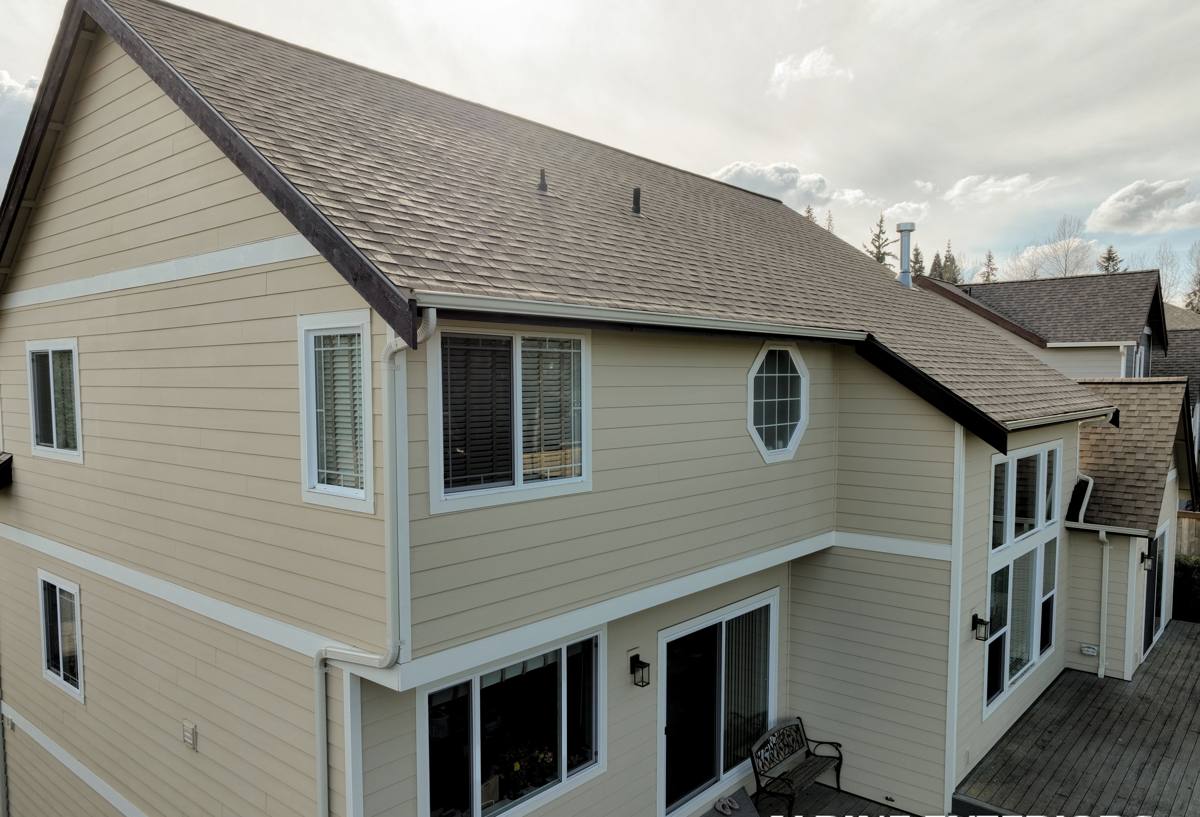
What Salt Air, Driving Rain, and Moss Season Actually Do to a Wall
Salt Air
Proximity to Bellingham Bay means airborne salt settles on exterior surfaces and works into fasteners, trim seams, and any exposed cut edge. On siding materials that aren't fully sealed on all six sides, salt-laden moisture accelerates swelling, delamination, and paint failure. Fasteners that aren't corrosion-rated will bleed rust streaks down the face of the siding within a few years.
Driving Rain
Because Edgemoor's lots face the water, wind pushes rain sideways into walls rather than letting it run straight off. That means water gets tested at every horizontal lap, every window head, and every joint — not just the roofline. A siding system with weak lap performance or gappy joints will let water behind the cladding long before a homeowner sees a stain on the outside.
Long Moss Season
Mature tree cover keeps shaded walls wet well after a storm has passed and the sun-facing side of the house has dried out. That extended damp window is exactly what moss, algae, and mildew need to establish on a wall surface, and it's exactly what softens wood-based or poorly finished siding from the surface in.
What a Correct Siding Replacement Involves Here
A siding replacement in Edgemoor isn't just swapping old boards for new ones. Given the exposure this neighborhood gets, the work underneath the visible siding matters as much as the siding itself.
- Full tear-off to bare sheathing, not an overlay — so we can actually inspect and address what's happening underneath
- Sheathing inspection and repair or replacement of any rotted or delaminated panels before new material goes up
- A correctly lapped weather-resistive barrier, installed shingle-style so water is always directed outward and down
- Properly flashed windows, doors, and any wall penetrations — the majority of hidden moisture problems we find start at a flashing detail, not the field of the wall
- Rainscreen or ventilation gap where the wall assembly calls for it, so shaded, damp-prone walls get a chance to dry
- Correct fastener type and spacing for the exposure — corrosion-resistant fasteners are non-negotiable this close to the water
- Back-primed and sealed cut edges on every field cut, since a factory-finished board with an exposed raw edge is a weak point regardless of brand
Skip any one of these steps and the new siding will look right for a few years while the underlying problem keeps developing unseen — which is often exactly how the original siding failed in the first place.
Signs an Edgemoor Home Needs Replacement, Not Just Repair
Because of the shade and moisture exposure here, siding problems often show up first on the north or east elevations, or on walls tucked under heavy tree cover. Watch for:
- Soft or spongy spots when you press on the siding, especially near the bottom courses
- Persistent moss or dark streaking that returns within weeks of being cleaned off
- Paint that's bubbling, peeling, or chalking heavily on shaded walls
- Visible gaps or separation at lap joints, corners, or trim
- Rust streaking below fasteners or trim nails
- Warping, cupping, or bowing boards, particularly on wood-based products
- Rising interior humidity, musty odor, or unexplained damage to interior wall finishes near an exterior wall
One or two of these on an isolated section can sometimes be addressed with a targeted repair. Several of them together, or damage that keeps recurring in the same shaded, salt-exposed spots, usually means the wall assembly itself has been compromised and a full section — or the whole elevation — needs to come off.
Why We Install Only James Hardie Fiber Cement
We don't offer vinyl, LP SmartSide, Cemplank, Allura, primed spruce, or cedar as options for Edgemoor homes, and that's a deliberate standard, not an oversight. Each of those products has real strengths, but none of them holds up as reliably as fiber cement under this neighborhood's specific combination of salt exposure, driving rain, and extended shade:
- Vinyl expands and contracts with temperature swings and can warp or crack under wind-driven impact; its seams are also a common entry point for driving rain
- LP SmartSide and other engineered wood products are wood-based, which means sustained moisture exposure — exactly what shaded Edgemoor walls get — is their biggest long-term risk
- Primed spruce and cedar require the homeowner to maintain the paint film indefinitely; miss a repaint cycle in a damp, shaded spot and moisture gets in fast
- Fiber cement products from other manufacturers exist, but we've standardized on James Hardie specifically for its factory-applied ColorPlus finish, its climate-engineered HZ product lines, and the strength of its transferable warranty
James Hardie fiber cement is non-combustible, dimensionally stable, and finished at the factory under controlled conditions rather than painted on-site — which matters enormously on a job where weather windows can be short. It doesn't rot, it doesn't feed moss the way wood-based products can, and it holds paint far longer than field-applied finishes on shaded, damp walls.
HZ5 vs. HZ10: Getting the Right Product for This Exposure
James Hardie engineers its siding for different climate zones. HZ5 products are formulated for regions with freeze-thaw cycling; HZ10 products are formulated for hot, humid, moisture-heavy climates. Whatcom County's marine exposure — mild temperatures but sustained dampness, salt air, and moss pressure — means getting the zone-appropriate product and finish matters more here than in a drier inland climate. Part of our estimate process is confirming the right Hardie product line and finish for an Edgemoor lot's specific sun and wind exposure.
Comparing the Options for an Edgemoor Home
| Factor | Vinyl | Wood / Engineered Wood | James Hardie Fiber Cement |
|---|---|---|---|
| Performance in driving rain | Seams can allow water intrusion | Vulnerable if finish fails at a joint | Engineered lap system built for wind-driven rain |
| Behavior in salt air | Can become brittle over time | Fasteners and cut edges corrode/rot faster | Non-combustible, dimensionally stable material |
| Resistance in shaded, damp areas | Doesn't feed moss but traps moisture behind it | Moisture is the primary failure mode | Doesn't rot; holds factory finish longer |
| Finish maintenance | Fades, doesn't repaint well | Requires ongoing repainting/sealing | Factory ColorPlus finish, longer repaint interval |
| Warranty structure | Varies by manufacturer | Often limited, especially on finish | Strong transferable warranty when installed to spec |
What Drives Cost on an Edgemoor Siding Replacement
| Cost Factor | Why It Matters Here |
|---|---|
| Sheathing condition | Shaded, damp-prone lots are more likely to have hidden rot that needs repair before new siding goes on |
| Access and tree cover | Wooded lots can mean tighter staging, ladder limitations, and extra care around root systems and landscaping |
| Wall complexity | Multiple elevations, dormers, and trim details add labor time regardless of material |
| Flashing and window details | Correcting old or missing flashing at windows and penetrations is essential given the driving-rain exposure |
| Product line and finish | HZ5 vs. HZ10 selection and ColorPlus color choice affect material pricing |
| Disposal | Full tear-off generates old material and, on older homes, sometimes requires abatement precautions |
We give a firm, itemized number after walking the property — not a phone estimate — because sheathing condition and access are the two biggest swing factors and neither can be judged accurately from the street.
How Our Process Works
- On-site walkthrough of the home, checking all elevations for the moisture and moss patterns typical of shaded, salt-exposed lots
- Written, itemized estimate covering tear-off, sheathing repair allowance, flashing details, and the specific Hardie product and color
- Scheduling that accounts for Whatcom County's wetter months, since a tear-off wall needs a reasonable dry window to close in properly
- Full tear-off and sheathing inspection, with any rot or damage addressed and documented before covering it back up
- Installation of weather-resistive barrier, flashing, and James Hardie siding to manufacturer spec, including correct fastening and gapping for this exposure
- Final walkthrough and punch list before the crew leaves the site
Why a Crew That Already Works Edgemoor Matters
Edgemoor's lots aren't uniform — some sit right along the bluff with full exposure to the water, others are tucked back under heavy tree cover with almost no direct sun on certain walls. A crew that has already worked this neighborhood knows to look for both patterns and to plan the tear-off, drying window, and product selection accordingly, rather than treating every Whatcom County job the same way. That familiarity also shows up in smaller, practical ways: knowing how to stage material and equipment on sloped, wooded lots without damaging landscaping, and understanding the realistic weather windows for closing in a wall in this specific microclimate rather than a generic county-wide forecast.
Local experience doesn't replace correct installation — the flashing, fastening, and product choice above are non-negotiable everywhere we work — but it does mean fewer surprises and a crew that isn't learning Edgemoor's quirks on your dime.
Ready to Talk About Your Siding?
If your Edgemoor home is showing moss that won't stay away, soft spots, or siding that's due for replacement, we're happy to walk the property and give you a straight, no-pressure assessment of what's actually going on and what it will take to fix it right. Use the form below to request a free estimate.