 Whatcom County
 Why Everson Homes Need a Different Approach to Windows
Everson sits in a part of Whatcom County where the weather doesn't do anything in half measures. Homes here deal with a long wet season, moisture-laden air moving in off the Salish Sea, and stretches of gray, humid weather that keep siding, trim, and window frames damp for days at a time. Add in moss and algae growth that thrives in that dampness, and you've got a climate that is genuinely harder on window assemblies than what you'd find in a drier inland region. Windows that aren't installed with this in mind don't fail because the glass is bad — they fail at the edges, at the flashing, and at the seals, usually years before they should.
When we talk about "energy-efficient windows" for a home in this area, we're not just talking about the glass package. We're talking about a complete assembly — frame, glazing, flashing, and installation detail — that's suited to a marine climate with driving rain and near-constant humidity. Get any one of those wrong and you end up with a window that looks fine for a couple of years and then starts costing you in heat loss, fogged glass, or rot in the surrounding wall.
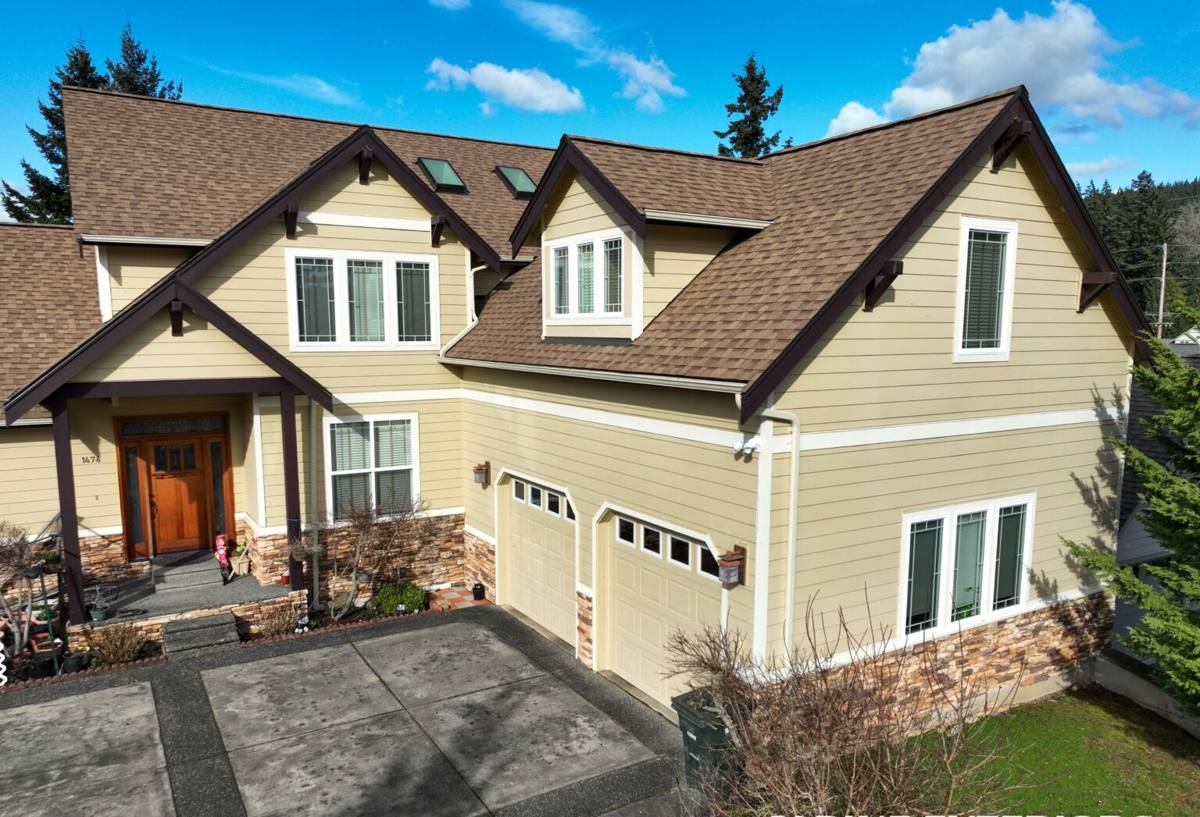
What Whatcom County's Climate Actually Does to Windows
Salt Air and Metal Fatigue
Proximity to salt water means airborne salt finds its way onto exterior surfaces, including window hardware, cladding, and fasteners. Lower-grade hardware and unprotected metal components corrode faster in this environment. It's not dramatic — it's slow, and it shows up as stiff locks, pitted hardware, and streaking on the frame finish well before the glass itself gives any trouble.
Driving Rain and Wind-Driven Water
Rain here rarely falls straight down. Wind pushes it sideways into wall assemblies, which means the flashing and sealant details around a window matter as much as the window unit itself. A window with excellent glass but a sloppy sill pan or missing head flashing will still let water into the wall cavity during a hard blow. That's a framing and rot problem, not just an energy problem — but it starts at the window.
Moss and Prolonged Dampness
Moss doesn't grow on glass, but it grows readily on wood trim, on north-facing frames that never fully dry out, and in the corners of poorly ventilated window wells. Once moss takes hold, it holds moisture against the surface underneath it, which accelerates wood decay and finish failure. Frame material and trim detailing that shed water and dry quickly matter more here than in a drier climate.
What "Correct" Looks Like on an Everson Installation
A properly done energy-efficient window job in this area covers a few things that are easy to skip if a crew is rushing or unfamiliar with local conditions:
- Sill pan flashing installed under every new window, sloped to shed water outward, not just caulk relied on as the only water barrier
- Proper head flashing integrated with the house wrap or weather-resistive barrier, lapped correctly so water sheds over it, not behind it
- Low-expansion, exterior-grade sealant at the right joints — not sealant used as a substitute for correct flashing sequence
- Frame materials and hardware finishes chosen for coastal-adjacent, high-humidity exposure
- Insulation and air-sealing of the rough opening gap, not just foam sprayed in and left
- Interior and exterior trim reinstalled or replaced with attention to drainage, not sealed in a way that traps moisture against wood
Skipping any one of these doesn't usually show up on install day. It shows up two or three winters later as a soft spot in the sill, a musty smell near the window, or a heating bill that never seems to match a "new energy-efficient window."
Choosing Glass and Frame for This Climate
Glazing
Double-pane, low-E glass with an argon or krypton gas fill is the standard baseline for this region, and it's the right call for most Everson homes — it balances heat retention with condensation resistance in a climate where indoor-outdoor temperature and humidity gaps are common. Triple-pane glass adds further insulating value and can help on homes with heating or noise concerns, but it comes at a real cost premium and added weight, which matters on older framing. We'll walk through whether that upgrade makes sense for your specific home rather than defaulting to it.
Frame Material
Vinyl, fiberglass, and wood-clad frames are the common options, and each has trade-offs worth being honest about:
| Frame Type | How It Handles This Climate | Maintenance | Typical Trade-off |
|---|---|---|---|
| Vinyl | Doesn't rot or corrode; handles damp/salt air well | Low — occasional cleaning | Less rigid over very large spans; color/finish options more limited |
| Fiberglass | Excellent stability in wet, temperature-swinging conditions; resists warping | Low | Higher upfront cost than vinyl |
| Wood-clad | Good insulating value; needs the cladding to actually seal out moisture | Moderate to high — cladding seams and any exposed wood need monitoring | More vulnerable if cladding seal fails in a high-moisture area |
We don't push one frame material as universally "best" — we size the recommendation to the home's exposure, budget, and how the existing opening is built. A window on a rain-exposed west wall may call for a different answer than one tucked under a deep eave.
Our Installation Process for Everson Homes
1. On-Site Assessment
We look at existing window condition, framing health, current flashing (or lack of it), and exposure — is this wall taking direct wind-driven rain, is there existing moss or moisture staining, how's the trim holding up. This tells us what we're actually dealing with before we quote anything.
2. Product Selection
We walk through frame and glass options against your budget and the specific wall's exposure, not a one-size-fits-all recommendation.
3. Removal and Opening Inspection
Once the old window is out, we inspect the rough opening for hidden rot or moisture damage — common in older Whatcom County homes where original flashing was minimal or has failed over time. Any damaged framing gets addressed before the new window goes in. Installing a new energy-efficient window into a compromised opening just hides a bigger problem.
4. Flashing and Air-Sealing
Sill pan, housewrap integration, head flashing, and proper air-sealing of the gap between frame and rough opening — done in the correct sequence, not shortcutted.
5. Finish and Trim
Interior and exterior trim finished with attention to drainage and moisture resistance, particularly on north- or west-facing walls where damp and moss are more persistent.
6. Walkthrough
We check operation, seal, and finish with you before considering the job done.
What This Means for Your Energy Bills
Old, single-pane or poorly sealed windows are one of the more direct paths for heat loss in this climate, especially given how many gray, damp, heating-season days Whatcom County sees each year. Replacing them with a correctly installed, well-sealed energy-efficient unit reduces drafts and heat loss at the frame edge — which is often where older windows leak the most, not just through the glass. We won't quote you an exact percentage savings, because that depends on your home's existing insulation, orientation, and how many windows you're replacing — but a properly air-sealed, well-glazed window replacing a leaky old one is one of the more noticeable comfort upgrades a homeowner in this area can make.
Signs Your Current Windows Are Underperforming
- Condensation forming between the panes (a sign the seal has failed)
- Visible drafts or cold spots near the frame in winter
- Wood trim that's soft, discolored, or growing moss near the window
- Difficulty opening or locking due to swelling or corroded hardware
- Noticeably higher heating costs compared to similarly sized homes
- Fogging or staining on the interior sill after heavy rain
Any one of these is worth a look. A couple of them together usually means the window — or the wall around it — needs attention sooner rather than later.
Why Local Installation Experience Matters
Window installation instructions in the box are written for general conditions. They don't account for wind-driven rain coming off a specific exposure, or for a climate where things rarely get a chance to fully dry out between storms. A crew that already works Everson and the surrounding Whatcom County area knows which walls take the worst weather, what kind of moisture and moss issues show up in older housing stock here, and how to detail flashing so it actually performs through a full wet season — not just how to get a window to sit square in an opening. That local pattern recognition is the difference between a window that looks right on install day and one that's still performing correctly five winters from now.
If you're weighing whether it's time to replace windows on your Everson home, we're happy to take a look and give you a straightforward assessment — no pressure, no upsell script, just an honest read on what your home actually needs. Reach out for a free estimate using the form below.