 Whatcom County
 Fairhaven sits close enough to Bellingham Bay that salt-laden air, wind-driven rain off the water, and long stretches of shaded, moss-friendly weather are just part of owning a home here. Board and batten siding — with its bold vertical lines and deep shadow reveals — is one of the most requested looks in this neighborhood, whether on a Craftsman bungalow near the historic district or a newer build up the hill. Done right, it's a great fit for Fairhaven's architecture. Done wrong, it's one of the faster ways to trap moisture against a wall and pay for it in five years instead of thirty.
This page covers what board and batten siding actually needs to hold up in this specific pocket of Whatcom County, how we install it, and why we only do it in James Hardie fiber cement.
Why Board & Batten Fits Fairhaven's Look — and Its Weather
Board and batten is popular in Fairhaven because it echoes the area's mix of historic maritime buildings and newer craftsman-style infill. The vertical board-and-strip pattern reads as substantial and traditional without looking dated, and it pairs well with the exposed rafter tails, deep porches, and mixed-material fronts common in the neighborhood.
The problem is that the same design feature that makes board and batten look good — the raised battens creating a shadow line — also creates dozens of extra seams and fastener penetrations per wall compared to lap siding. Every one of those seams is a potential entry point for water. In a neighborhood exposed to salt air and driving rain off the bay, that detail work matters more than it would twenty miles inland.
What the Local Climate Actually Does to This Siding Style
- Salt air: accelerates corrosion of exposed or undersized fasteners and speeds up the breakdown of unprotected wood substrates behind the battens.
- Driving rain: pushed sideways by wind off the water, it finds gaps at batten edges and butt joints faster than it would on a flat wall.
- Moss and shade: north- and west-facing walls under mature trees stay damp longer through the fall and winter, which is exactly where organic siding materials suffer most.
- Temperature swings: repeated wetting and drying cycles stress caulk joints and any material that expands and contracts more than the cladding around it.
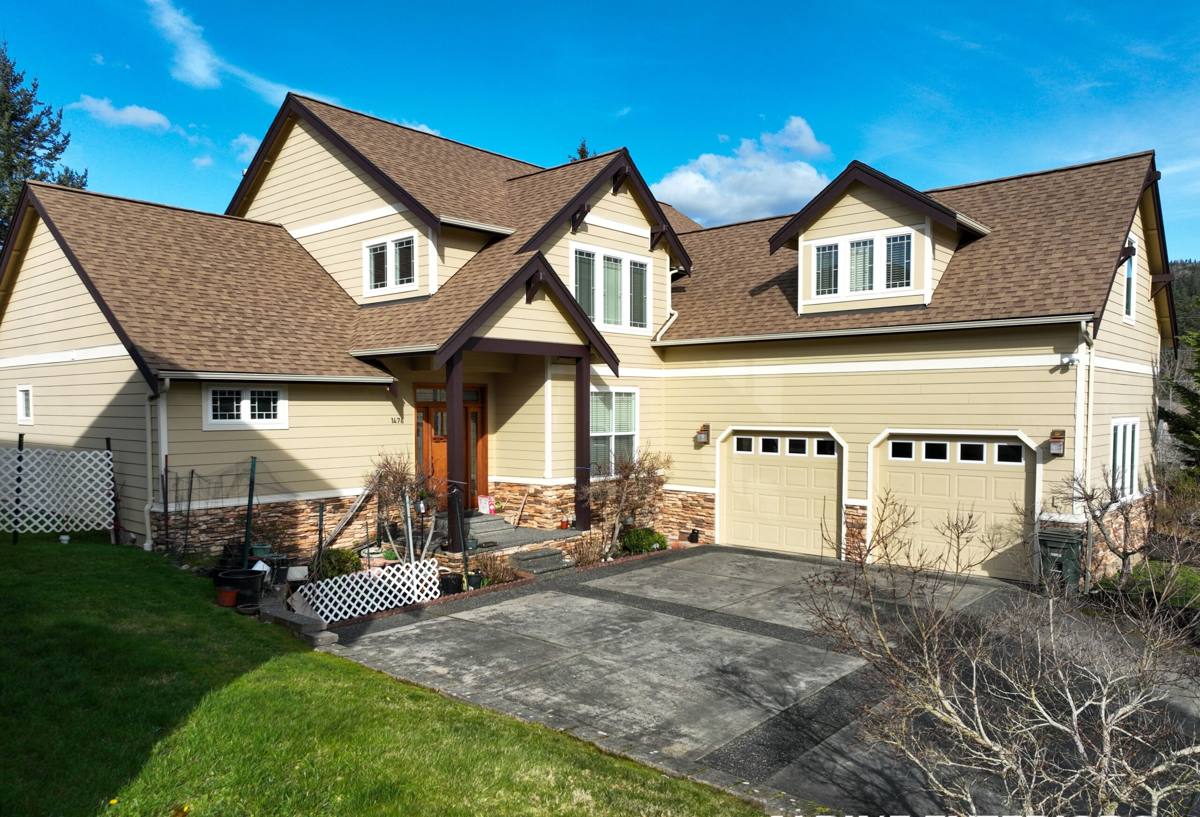
Why We Only Install This in James Hardie Fiber Cement
We don't offer board and batten in vinyl, LP SmartSide, primed spruce, cedar, or other fiber cement brands like Cemplank or Allura. That's a deliberate standard, not a sales pitch, and it's worth explaining why — especially for a siding style that lives or dies on how well the material handles moisture at its seams.
- Wood and engineered wood board and batten (cedar, primed spruce, LP SmartSide) rely on paint film and caulk to keep water out of the battens and board edges. In a marine climate with this much sustained moisture exposure, that maintenance schedule is unforgiving — miss a caulk cycle and water gets behind the boards before anyone notices.
- Vinyl board and batten is low-maintenance in the sense that it won't rot, but it's a thin, flexible material that can warp or bow with sun and temperature cycling, and the panel-and-batten look is achieved with snap-together strips rather than true dimensional depth — it doesn't hold the crisp shadow line as well over time.
- Other fiber cement brands make a reasonable product on paper, but we've standardized our crews, fasteners, and warranty process around one manufacturer so every job gets the same tested assembly, not a mix of parts from different supply chains.
James Hardie's fiber cement is non-combustible, dimensionally stable in wet climates, and factory-finished with ColorPlus so the color coat is baked on before it ever reaches a job site — no field-painting battens in damp fall weather, which is a real scheduling problem in Whatcom County. Hardie's HZ5 product line is engineered for wet, moderate-freeze climates like ours, and the transferable warranty backs the whole system when it's installed to spec.
What a Correct Board & Batten Install Involves
The finished look is simple — vertical boards with battens covering the seams — but the assembly behind it is where jobs succeed or fail. Here's what we hold every crew to on Fairhaven installs:
Water Management Before Anything Goes Up
- Inspect and repair sheathing before covering it — you cannot fix rot after the siding is on.
- Install a code-compliant weather-resistive barrier, lapped correctly with all flashing.
- Flash every window, door, and penetration so water sheds outward, not behind the barrier.
- Maintain proper rainscreen or furring where the assembly calls for it, so any moisture that does get behind the boards can drain and dry instead of sitting against the wall.
Installation Detail That Actually Matters
- Correct board and batten spacing and fastener placement per Hardie's published installation instructions — this is what the transferable warranty is contingent on.
- Stainless or coated fasteners appropriate for a marine-influenced environment, driven to the correct depth (not overdriven, which cracks the board and opens a water path).
- Proper clearance at grade, decks, and roof lines — a common failure point is siding installed too close to the ground or a lower roof, wicking moisture straight from the outset.
- Caulking only where Hardie's specs call for it, with a quality sealant rated for exterior, wet-climate use.
Our Process for a Fairhaven Board & Batten Project
- On-site assessment: we look at existing siding, sheathing condition, drainage around the foundation, and any moss or moisture staining that points to a bigger issue than cosmetic wear.
- Scope and estimate: a written plan covering tear-off (if applicable), sheathing repair allowance, water-resistive barrier and flashing plan, board and batten spacing, and Hardie color/line selection.
- Prep and repair: any soft or water-damaged sheathing gets replaced before we move forward — we won't install new siding over a compromised wall.
- Installation: crews follow Hardie's fastening and clearance specs board by board, not by eye.
- Final walkthrough: we check reveals, caulking, trim, and clearances with you before calling the job done.
Why Hiring a Crew That Already Works Fairhaven Matters
Fairhaven isn't a generic subdivision — it has a mix of older homes near the historic core with original framing quirks, newer infill with different sheathing standards, and lots with tree cover and grade changes that affect how water moves around a foundation. A crew that already works this neighborhood knows to check for those conditions before the first board goes up, rather than discovering them mid-project. We also know how Whatcom County's building department handles siding and weather barrier inspections, which keeps a project moving instead of stalling on paperwork.
Cost Factors for Board & Batten in This Area
| Factor | Why It Affects Price |
|---|---|
| Tear-off vs. install over existing siding | Removing old siding adds labor but is often necessary to inspect and repair sheathing first — non-negotiable if there's existing moisture damage. |
| Sheathing/framing repair | Salt air and shaded, damp walls in Fairhaven mean hidden rot is more common than in drier parts of the county; repair scope isn't known until old siding is off. |
| Board and batten vs. lap siding | More seams, more battens, more fastener runs than lap siding, which adds material and labor time per square foot. |
| Trim and window count | Every window, door, and corner needs individual flashing and trim work, which adds up faster on architecturally detailed homes. |
| Access and site conditions | Steep lots, mature trees, and tight setbacks common in Fairhaven can slow staging and material handling. |
| Hardie product line and finish | Standard HZ5 boards versus premium ColorPlus finishes or custom trim details shift the material cost. |
Signs Your Current Board & Batten Needs Attention
- Soft spots or visible give when you press on boards or battens, especially near the bottom courses.
- Persistent moss or algae growth that comes back within weeks of cleaning, particularly on shaded or north-facing walls.
- Peeling or bubbling paint concentrated along batten edges and butt joints.
- Visible gaps or warping where battens meet boards.
- Staining or discoloration at the base of walls near grade or below roof transitions.
Any one of these on its own might be minor. Several together, especially on a wall that gets little sun, usually means moisture has been getting behind the siding for a while.
Maintenance That's Realistic for This Neighborhood
James Hardie board and batten with a factory ColorPlus finish needs far less upkeep than wood or vinyl alternatives, but "low maintenance" isn't "no maintenance" anywhere near the bay. A yearly rinse to knock back moss and salt residue, a visual check of caulk joints at trim and penetrations, and prompt attention to any gutter or downspout issue that's dumping water onto a wall will keep a correctly installed system performing for decades.
If you're weighing board and batten for a home in Fairhaven, we're happy to walk the property, look at what's there now, and give you a straight answer on what it would take to do it right. Reach out for a free, no-pressure estimate — there's a form below.