 Whatcom County
 Metal Roofing in Fairhaven: What the Climate Actually Demands
Fairhaven sits close to Bellingham Bay, which means the homes here take a different kind of weather beating than roofs a few miles inland. Salt-laden air off the water, wind-driven rain that comes in sideways more often than straight down, and a long, damp moss season all work on a roof year-round instead of just during a few storms. Metal roofing can handle all of that better than most materials, but only when it's specified and installed with this specific climate in mind. A metal roof detailed for a dry inland town isn't automatically right for a roof three blocks from saltwater.
This page covers what Fairhaven roofs actually need, what a correct metal roofing job looks like here, and how we approach these projects as a Whatcom County crew that already knows this stretch of coastline.
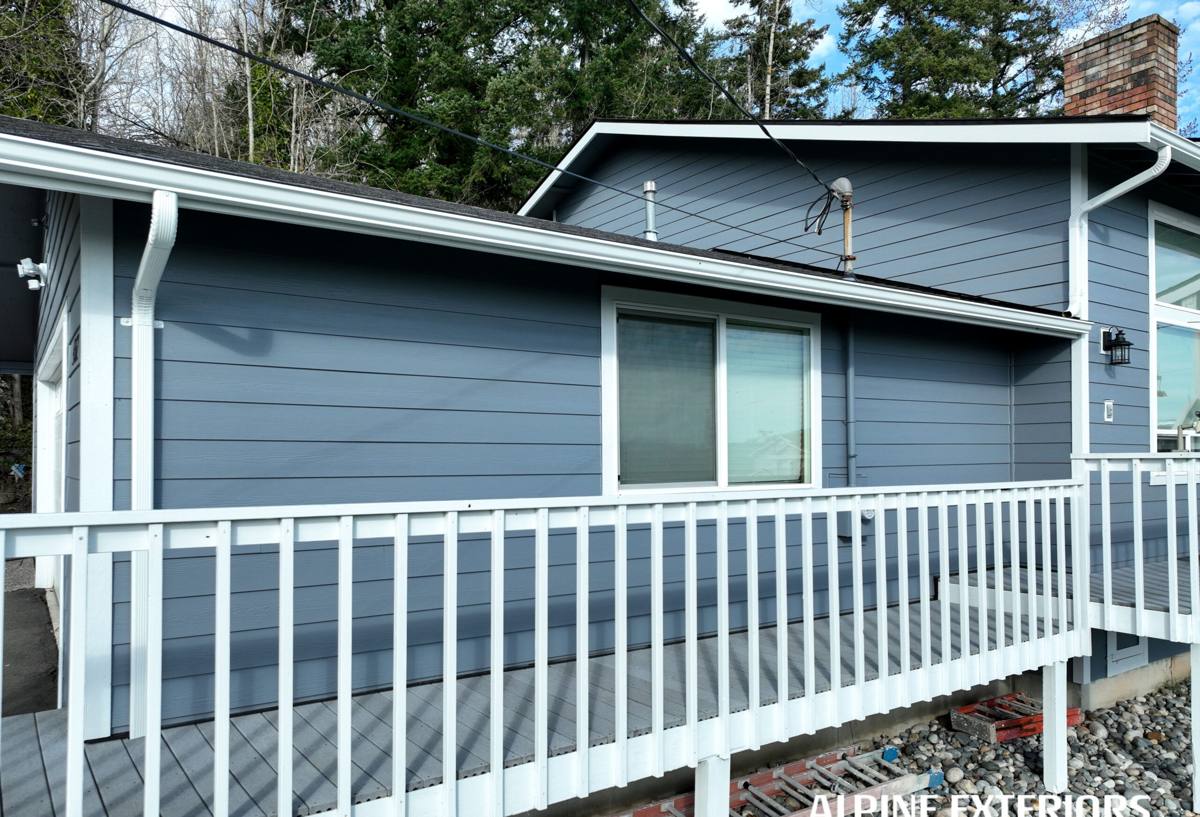
What Bellingham Bay's Air and Rain Do to a Roof Over Time
Salt Air and Corrosion
Salt in the air doesn't just affect boats and railings — it settles on roofing metal, fasteners, and flashing, and over years it can accelerate corrosion on materials that aren't rated for a marine or near-marine environment. This shows up first at cut edges, fastener heads, and any spot where a coating has been scratched or worn thin. It's slow, but it's constant, and it's one of the biggest reasons metal roofing choices near the water need to be more deliberate than the same choice would be twenty miles inland.
Driving Rain and Wind
Storms coming off the water tend to push rain at an angle rather than straight down, which puts more stress on flashing, panel laps, and any penetration in the roof — vents, chimneys, skylights. A roof that would shed water fine in a calmer climate can leak in Fairhaven if those details weren't built for wind-driven rain specifically. Wind uplift at panel edges and ridges also matters more here than it would somewhere more sheltered.
Moss Season and Why It's a Longer Fight Here
Whatcom County's damp, mild winters and shoulder seasons create ideal conditions for moss and algae growth on roofing, and Fairhaven's tree cover and marine humidity stretch that window even longer than in drier parts of the county. On asphalt shingles, moss works its way under the tabs and lifts them over time. Metal roofing is naturally far more moss-resistant because there's no granulated surface for spores to grab onto and no organic material for moss to feed on — but a metal roof still needs correct slope, clean drainage paths, and gap-free flashing so that whatever moss does land on it washes off instead of holding moisture against a seam or fastener.
Choosing the Right Metal Roofing System
Not every metal roofing product performs the same way in a coastal, wet climate. The two systems we install most often on Whatcom County homes are standing seam and exposed-fastener (screw-down) panels, and the right choice usually comes down to budget, roof pitch, and how close the home is to the water.
| Factor | Standing Seam | Exposed-Fastener Panels |
|---|---|---|
| Fastener exposure | Concealed clips — no exposed screws to corrode or back out | Screws penetrate the panel face; gaskets can degrade over time |
| Best for | Homes near the water, low-slope sections, long-term low-maintenance goals | Budget-conscious projects, outbuildings, steeper roofs with easy access for future gasket checks |
| Typical lifespan | 40-70 years with correct install | 25-40 years, often shorter near saltwater if fasteners aren't upgraded |
| Upfront cost | Higher material and labor cost | More affordable per square |
| Maintenance | Minimal — mainly keeping debris out of valleys | Periodic fastener and gasket inspection recommended |
For homes closest to the bay, we lean toward standing seam or, at minimum, exposed-fastener systems with corrosion-resistant fastener upgrades. It costs more up front, but it removes the single weakest point — the fastener — from direct salt exposure.
Coatings and Finishes
The paint or coating system on a metal roof matters as much as the metal underneath. In a marine climate we look for finishes with a strong track record against coastal exposure — chalking resistance, color retention, and a warranty structure that actually accounts for salt-air environments rather than a generic inland climate. We'll walk through the specific coating options and their trade-offs for your home during an estimate rather than pushing one brand as a blanket answer.
What a Correct Metal Roof Installation Involves
Underlayment
Given how much wind-driven rain Fairhaven sees, we don't treat underlayment as an afterthought. A high-quality synthetic underlayment, with self-adhered ice-and-water protection at eaves, valleys, and penetrations, gives the roof a real second line of defense if wind ever pushes water past the metal panels themselves.
Fastening and Panel Layout
Panel layout has to account for prevailing wind direction and roof geometry, not just run panels edge to edge in the fastest order. Fastener spacing and type are chosen for both wind uplift resistance and corrosion resistance — this is where cutting corners on hardware shows up years later as rust streaks and loosened panels.
Flashing and Penetrations
Every chimney, vent, skylight, and wall transition is a place water can find a way in. Flashing has to be formed and layered correctly — not just caulked — because sealant alone breaks down faster in this climate than a properly lapped flashing detail.
Ventilation
A well-ventilated attic keeps moisture from building up under the roof deck, which matters in a humid coastal climate where condensation can be as much of a threat as rain from outside. We check existing ventilation as part of every metal roofing project and recommend corrections when the current setup is inadequate.
Our Process for Fairhaven Metal Roofing Projects
- On-site assessment — we look at the existing roof, decking condition, ventilation, and how exposed the home is to wind and salt air off the bay.
- System recommendation — standing seam vs. exposed-fastener, panel gauge, and coating, based on your home's exposure and budget, explained in plain terms.
- Written estimate — clear scope, materials, and timeline before any work starts.
- Tear-off and deck check — old roofing removed and the decking inspected for rot or soft spots before new material goes down.
- Underlayment and flashing — installed to the standard described above, not the minimum code allows.
- Panel installation — laid out and fastened for this climate's wind and rain patterns.
- Final walkthrough — we go over the finished roof with you before calling the job done.
Keeping a Metal Roof Sound in a Marine Climate
A correctly installed metal roof needs far less upkeep than shingles, but "far less" isn't "none." A short seasonal routine keeps small issues from becoming big ones:
- Clear leaves, needles, and debris from valleys and gutters, especially heading into fall.
- Rinse off visible salt residue or grime near the coast during dry stretches if it's safe to access.
- Check exposed fasteners (on screw-down systems) every year or two for backing-out or corrosion.
- Look at flashing around chimneys, skylights, and vents after major storms for any lifted or shifted sections.
- Trim back overhanging branches to reduce debris buildup and moss spore contact.
- Call in a professional inspection every few years rather than waiting for a visible leak.
Why Hiring a Crew That Already Works Fairhaven Matters
Fairhaven has a mix of older homes and newer construction, and a lot of roofs here have been patched, re-covered, or partially repaired over the years by whoever was available at the time. A crew that regularly works this specific area already knows what that patchwork tends to hide — deck issues under old roofing, ventilation that was never brought up to standard, flashing that was caulked instead of properly formed. That's knowledge you don't get from a contractor who mostly works drier, inland parts of Whatcom County and treats every coastal job as a one-off.
We also handle the practical side that's easy to overlook: permitting through the appropriate local authority, coordinating around the weather windows that actually work for roofing in this climate, and giving you a straight answer about what your roof needs versus what would just be an easy upsell. A metal roof is a long-term investment — the crew installing it should be one that's still going to be around, and still working this area, years after the job is done.
Getting Started
If your roof is due for replacement, or you're weighing metal against another material for a Fairhaven home, we're happy to take a look and give you an honest assessment — no pressure, no hard sell. Fill out the form below for a free estimate, and we'll walk you through what your specific roof and site actually need.