 Whatcom County
 Why Happy Valley Homes Wear Out Siding Faster Than the Brochures Suggest
Happy Valley sits close enough to the Salish Sea that salt-laden air is a daily fact of life, not an occasional storm event. Add in Whatcom County's long wet season — months of driving rain off the water, followed by a moss season that can run from fall through spring under the tree cover common in this part of the county — and you have a climate that is genuinely hard on exterior building materials. Siding here doesn't fail because it's old. It fails because it was never built for this combination of salt exposure, sustained moisture, and shade.
We install exclusively James Hardie fiber cement siding, and Happy Valley is exactly the kind of neighborhood that shows why. Homes with south or west exposure catch the worst of the wind-driven rain off the bay. Homes tucked under fir and cedar canopy get less direct sun to dry out between storms, which is what feeds the moss and algae growth so many Whatcom County homeowners fight every spring. A siding product that can't shed water fast and resist organic growth is fighting a losing battle on either type of lot.
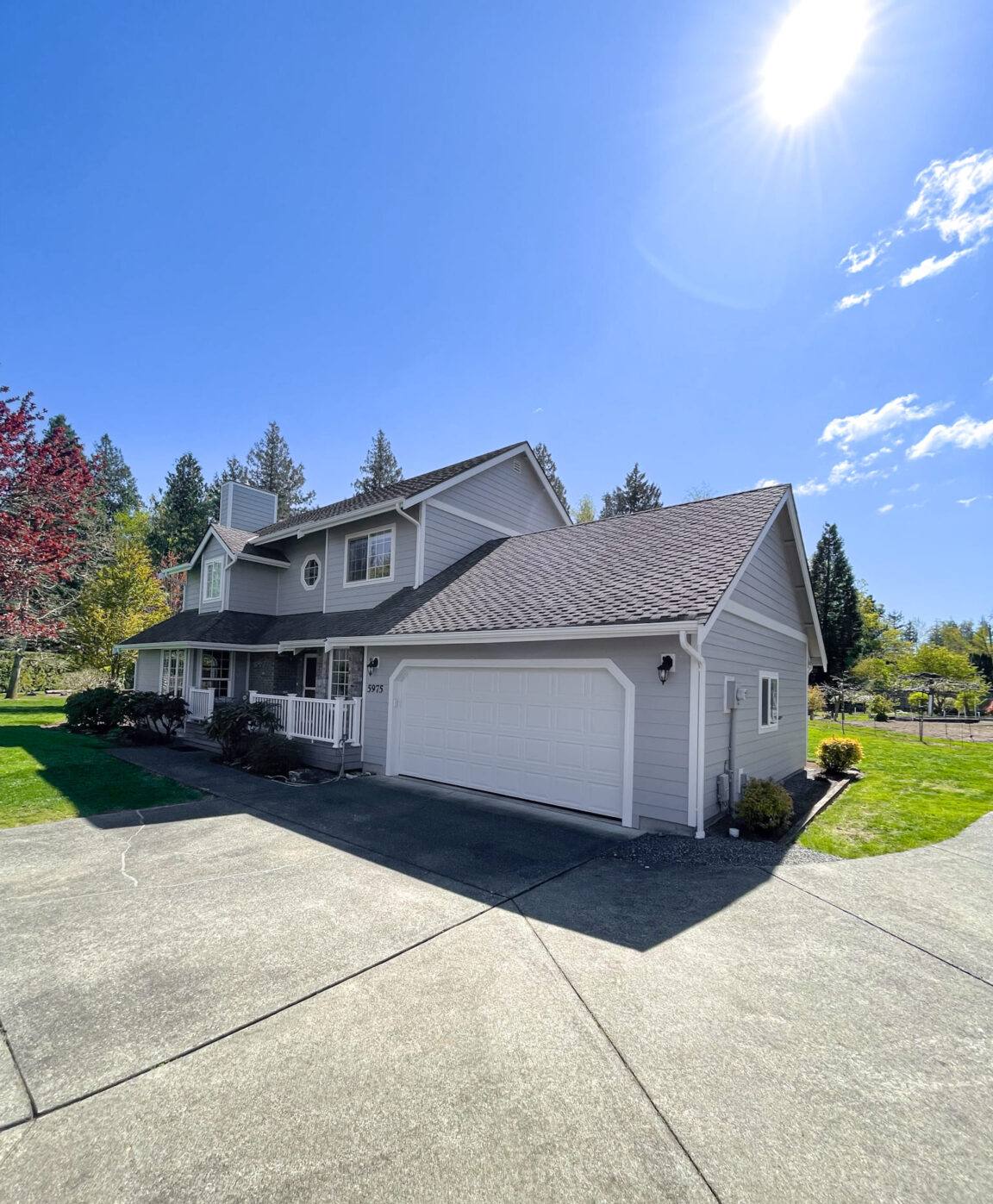
What This Climate Actually Does to Siding
Salt Air
Salt air accelerates corrosion on fasteners, trim, and any exposed metal flashing, and it can degrade cheaper paint and coating systems faster than manufacturers' warranties assume. It also tends to hold moisture against a wall surface longer than dry inland air would.
Driving Rain
Wind-driven rain doesn't just fall on siding — it gets pushed sideways and upward into laps, seams, and penetrations. A siding system with weak water management at the joints will let moisture behind the cladding, where it can sit against sheathing and framing for weeks at a time.
Moss and Algae
A long moss season means long stretches where a wall assembly stays damp. Materials that absorb and hold water — or that provide a food source for organic growth — end up needing pressure washing, chemical treatment, or repainting far more often than a homeowner budgeted for.
Why We Standardized on James Hardie for This Kind of Exposure
James Hardie fiber cement is engineered from cement, sand, and cellulose fiber — it doesn't rot, it isn't a food source for moss or mildew the way wood-based products are, and it holds paint and factory finish far longer than wood or wood-composite siding in a wet marine climate. Hardie also builds its HZ5 product line specifically for the Pacific Northwest's moisture exposure, which matters more in a neighborhood like Happy Valley than in a drier inland climate where that engineering is less necessary.
The factory-applied ColorPlus finish is a real advantage here too. It's baked on under controlled conditions, so it resists fading and chalking better than field-applied paint, and it means touch-ups are the exception rather than an annual chore. In a climate that already demands more maintenance than most, cutting one recurring task — repainting — is worth something real to a homeowner.
This is also the core of why we don't install vinyl, LP SmartSide, primed spruce, or cedar. Each of those products can be installed correctly and can perform reasonably well in the right climate. But in a salt-air, high-rainfall, long-moss environment, they each ask for a maintenance commitment or carry a moisture-related risk that we're not willing to put our name on. Vinyl can warp and doesn't stop water at the surface the way fiber cement does. Wood and wood-composite products are more vulnerable to the moss and rot cycle this climate produces. We'd rather install one product correctly, every time, than manage the trade-offs of several.
What Correct Installation Looks Like in This Climate
James Hardie siding performs the way it's rated to perform only when it's installed to spec. In a high-moisture area like Happy Valley, the installation details matter more than they would in a milder climate, because there's less margin for error before water finds its way in.
- Weather-resistive barrier installed and lapped correctly behind the siding, with all seams sealed
- Proper flashing at every window, door, and roofline intersection so water is directed out and away from the wall assembly
- Correct starter strip and clearance at the foundation — Hardie specifies a minimum gap above grade, decks, and roof lines to keep splash-back and standing moisture off the bottom edge of the siding
- Fasteners placed per Hardie's specifications, at the right depth and spacing, to avoid cracking the board or leaving gaps that let water track in
- Correct nail and trim materials rated for coastal/marine exposure to resist the corrosion salt air accelerates
- Caulking only where Hardie's install guide calls for it — over-caulking traps moisture rather than shedding it
- Proper joint treatment at butt seams so panels aren't left to wick water at the ends
Any one of these done wrong doesn't necessarily show up as a problem in year one. It shows up in year five or ten, as trapped moisture, rot in the sheathing behind the siding, or a warranty claim that gets denied because the installation didn't match manufacturer specifications. That's the real risk with fiber cement: the material is excellent, but it's installer-dependent in a way that punishes shortcuts.
Our Process for a Happy Valley Job
1. On-Site Assessment
We walk the exterior with you, note existing moisture damage, siding condition, trim and flashing state, and any areas where the current wall assembly is clearly losing the battle with the climate — moss buildup, staining, soft spots, or peeling paint are all diagnostic.
2. Tear-Off and Sheathing Check
Old siding comes off and we inspect the sheathing underneath before anything new goes up. In a climate this wet, hidden rot behind old siding is common enough that we don't skip this step, even on jobs that look fine from the outside.
3. Weather Barrier and Flashing
This is where most long-term failures actually originate, so it gets the most attention — proper barrier lap, sealed seams, and flashing at every penetration and transition.
4. Hardie Panel Installation
Installed to Hardie's written specifications for fastening, clearance, and joint treatment, sized and selected for this exposure (HZ5).
5. Trim, Caulk, and Final Detail
Corner boards, trim, and touch-up work finished to match the ColorPlus system so the finished wall reads as one consistent system, not patched-together pieces.
Why Local Experience in Happy Valley Matters
A crew that only occasionally works in Whatcom County's marine climate can still install Hardie siding by the book — but a crew that works this specific combination of salt air, driving rain, and heavy tree cover regularly starts to recognize the patterns before they become problems. Which elevations catch the worst wind-driven rain. Which lots hold moisture longest under canopy. Where moss tends to establish first on a given roofline or wall. That pattern recognition doesn't replace following the installation spec, but it does mean fewer surprises and a job that's built for the actual conditions on your lot, not a generic climate assumption.
Cost Factors to Understand Before You Budget
| Factor | What Drives the Cost | Why It Matters in Whatcom County |
|---|---|---|
| Tear-off and sheathing repair | Condition of the wall behind the existing siding | Long wet seasons make hidden rot more common than in drier climates |
| Product line (HZ5 vs standard) | Climate engineering built into the panel | Coastal/marine exposure calls for the higher-spec line, not the base product |
| Trim and flashing detail | Amount of window, door, and roofline transition work | More flashing points mean more labor, but they're where water problems start if skipped |
| Home exposure | How much of the home faces prevailing wind and rain | South/west-facing walls near the water usually need more attention to detailing |
| Access and tree cover | Site conditions, scaffolding, canopy clearance | Shaded lots often have more moss-related prep work before install |
We don't quote a job without seeing the actual wall condition first — a house with sound sheathing and simple lines costs meaningfully less than one with hidden moisture damage or a lot of trim detail, and the only honest way to know which situation you're in is to look.
What to Expect After Installation
Correctly installed James Hardie siding in a climate like this should need very little from you: occasional rinsing to keep salt residue and organic buildup from accumulating, a periodic visual check of caulk lines and trim, and prompt attention if a gutter or downspout starts overflowing onto a wall section. It should not need repainting on any regular schedule, and it should not be feeding moss the way wood-based products can. If you find yourself scheduling annual maintenance beyond a rinse-down, something in the installation — not the material — is usually the reason.
Questions to Ask Before You Hire
- Does the crew use Hardie's specified fasteners, clearances, and flashing details, or a generalized "siding" approach?
- Will they inspect and address sheathing condition before installing, not just over the old wall?
- Do they have experience with coastal/marine exposure specifically, not just siding installation in general?
- Is the HZ5 product line specified for this exposure, or a standard line that isn't climate-matched?
- What does the written warranty actually cover, and does it require the installer to be certified?
If you're weighing a siding replacement for a Happy Valley home, we're happy to take a look and walk you through what your specific house needs — no pressure, no generic estimate. Reach out below for a free, no-obligation assessment.