 Whatcom County
 Why Siding Replacement in Happy Valley Is Its Own Job
Happy Valley sits in the part of Whatcom County where marine weather does most of the talking. Homes here deal with a combination that a lot of siding never fully recovers from: salt-tinged air drifting in off the water, driving rain that hits walls sideways during winter storms, and a moss season that can stretch from October into May on shaded or north-facing walls. None of that is unusual for this corner of Washington. What's unusual is how often siding gets replaced with the same material and the same shortcuts that failed the first time, instead of a product and installation approach actually built for the conditions.
A siding replacement in Happy Valley isn't just a cosmetic swap. Done right, it's a chance to fix whatever let moisture in the first place, upgrade to a material that actually resists what this climate throws at it, and stop the cycle of repainting, patching, and re-caulking every few years. Done wrong, it's an expensive way to buy the same problems back.
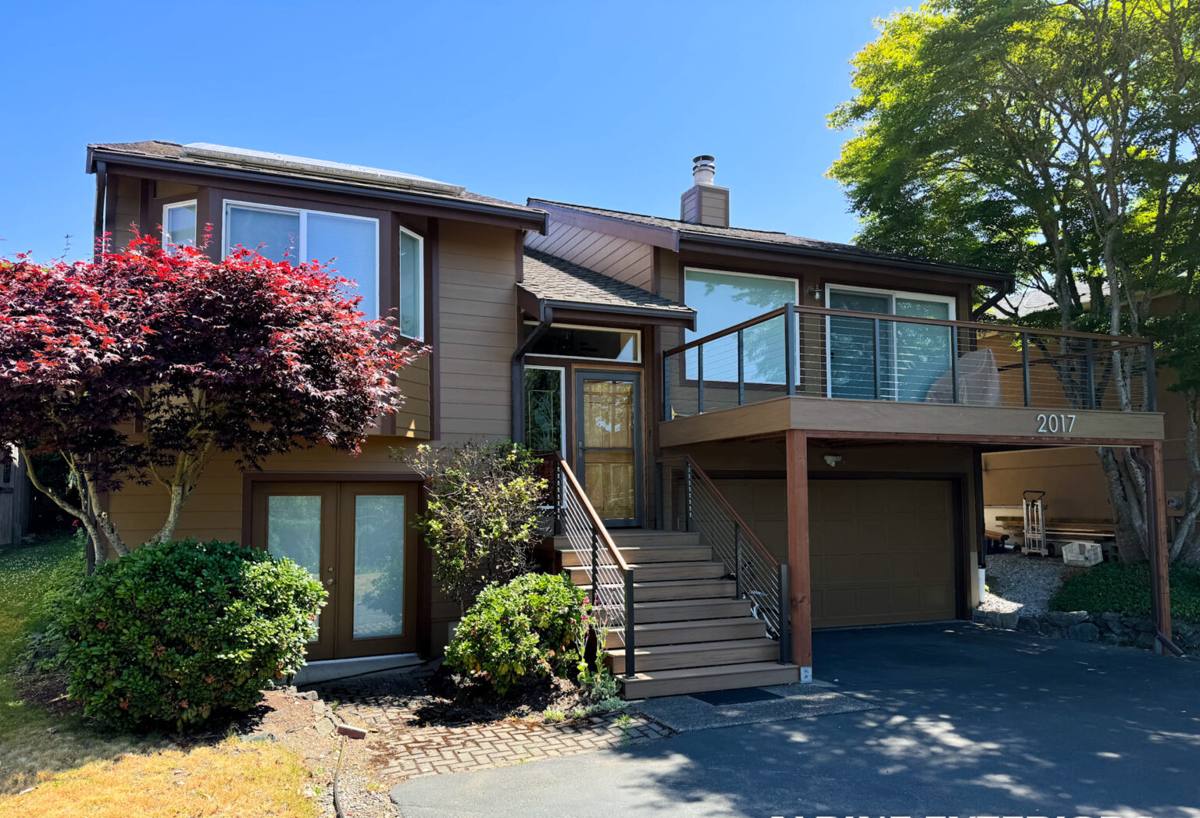
What This Climate Actually Does to Siding
Salt Air
Even homes several blocks from open water get salt-laden air moving through on onshore winds. Salt accelerates corrosion on exposed fasteners, trim flashings, and any metal components in the wall assembly. It also breaks down cheaper paint films and coatings faster than inland weathering would, which is why siding that looks fine three counties east can look chalky and faded here in half the time.
Driving Rain
Whatcom County's winter storms don't just drop water — they push it. Wind-driven rain forces moisture into laps, seams, and butt joints that would stay dry in a calmer climate. If the water-resistive barrier behind the siding, the flashing details, or the caulking at penetrations aren't done correctly, that rain finds its way into the wall assembly. Once it's in, it doesn't leave quickly.
The Long Moss Season
Mild, wet winters are perfect growing conditions for moss and algae on any siding surface that stays shaded and damp — north walls, areas under overhangs, and spots close to mature trees. Moss holds moisture against the siding surface for months at a time. On materials that aren't dimensionally stable or well-sealed, that constant dampness is what starts rot, delamination, or paint failure long before the siding is actually "old."
Signs a Happy Valley Home Needs Siding Replaced, Not Just Patched
Not every issue means a full tear-off. But in this climate, several of these signs together usually mean patching is just delaying a bigger repair:
- Soft or spongy spots when you press on the siding, especially near the bottom courses or under windows
- Paint that's peeling, bubbling, or won't hold a fresh coat even after prep work
- Visible gaps opening at butt joints, corners, or where siding meets trim
- Persistent moss or dark staining that comes back within a season of cleaning
- Warping, cupping, or boards that no longer sit flat against the wall
- Rising energy bills that point to air and moisture moving through the wall assembly
- Visible damage or rot at the bottom edges near grade, decks, or downspouts
If you're only seeing one of these in an isolated spot, a repair may be enough. If several show up across different walls, the underlying material is telling you it's done — and painting over that reality just delays a more expensive fix.
What Correct Siding Replacement Actually Involves
Siding replacement in a climate like this succeeds or fails behind the surface, not on it. The visible product matters, but the details underneath it matter just as much.
Tear-Off and Inspection
Removing the old siding is also the point where hidden damage gets found — soft sheathing, rot at window and door openings, or framing that's been absorbing moisture unnoticed. This is the stage where a rushed job papers over problems and a correct job fixes them before anything new goes up.
Sheathing Repair
Any compromised wood sheathing gets cut out and replaced. Installing new siding over damaged sheathing is one of the most common ways a "new" siding job ends up failing within a few years.
Water-Resistive Barrier and Flashing
A weather-resistant barrier goes over the sheathing, lapped correctly from bottom to top so water sheds outward instead of working its way in. Flashing at windows, doors, and every roof-to-wall intersection has to be integrated with that barrier in the right order — this is where wind-driven rain either gets stopped or gets a path inside.
Fastening and Clearances
Fastener type, spacing, and depth all affect how the siding performs over time, especially with salt air accelerating corrosion on the wrong hardware. Proper clearance from grade, roofing, and decks also keeps splash-back and standing moisture away from the bottom courses, which is where failure usually starts first.
Finish Details
Trim, caulking, and touch-up painting at cut edges are what keep water out of the small gaps that are otherwise easy to overlook. Skipping this step is a common shortcut that shows up as a problem within a year or two.
Why We Install Only James Hardie Fiber Cement
We don't offer a menu of siding materials for Happy Valley homes — we install James Hardie fiber cement, and only James Hardie. That's not a marketing position; it's a standard we've held to because of what this specific climate does to alternatives over time.
Vinyl siding can work fine in drier, milder climates, but it isn't rigid and doesn't handle wind-driven rain intrusion at seams as well as a fiber cement lap system engineered with proper overlaps. Cedar and other wood sidings can look excellent, but they demand ongoing maintenance — refinishing, caulking, moisture monitoring — to survive a moss-heavy, high-humidity climate, and that maintenance burden is exactly what most homeowners are trying to get away from with a replacement. Engineered wood products carry their own moisture-sensitivity requirements at cut edges and joints that are easy to get wrong in a wet climate and costly to get wrong at scale.
James Hardie fiber cement is non-combustible, dimensionally stable, and manufactured in HZ product lines specifically engineered for climate zones like ours — meaning the formulation accounts for moisture exposure rather than treating it as an afterthought. The factory-applied ColorPlus finish is baked on and warrantied against fading and peeling, which matters directly in a salt-air environment that's hard on painted finishes. It also carries a strong, transferable warranty, which adds real value if you ever sell the home. We standardized on it because it's the product that actually holds up to salt air, driving rain, and a moss season that doesn't quit — not because it's the only option on the market.
How the Main Siding Materials Compare in This Climate
| Material | Moisture Behavior Here | Maintenance Burden | Typical Lifespan Locally |
|---|---|---|---|
| James Hardie fiber cement | Engineered for wet climate zones; stable through wet/dry cycling | Low — occasional wash, no repainting for years | Decades with correct install |
| Vinyl | Seams and laps more prone to wind-driven rain intrusion | Low, but limited repair options if damaged | Moderate; UV and impact wear over time |
| Cedar / wood | Absorbs moisture readily; needs consistent sealing | High — regular refinishing and inspection | Shorter without disciplined upkeep |
| Engineered wood (e.g., LP-type) | Sensitive at cut edges and joints if not sealed correctly | Moderate to high — installation precision critical | Depends heavily on install quality |
Our Siding Replacement Process
- On-site inspection of current siding, trim, and any visible moisture or rot damage
- Written scope and estimate covering material, tear-off, sheathing repair allowances, and finish details
- Tear-off with a stop-and-check for hidden sheathing or framing damage before anything new goes up
- Water-resistive barrier and flashing installed in the correct lapped order at every penetration
- James Hardie panel or lap installation to manufacturer fastening specifications
- Trim, caulking, and touch-up painting at all cut edges and joints
- Final walkthrough and cleanup
Every step in that sequence matters more in a climate that gets this much wind-driven rain. Skipping the "stop and check" step at tear-off, or rushing the flashing at windows and rooflines, is how a siding job looks fine for a season and then starts failing quietly behind the new surface.
Why It Matters That We Already Work in Happy Valley
A crew that already works this part of Whatcom County isn't guessing at how the weather behaves here — they've seen where moss builds up first, which wall orientations take the worst of the driving rain, and how salt air ages different materials and fasteners over a few winters. That translates into practical decisions on your project: where extra flashing attention actually pays off, which fastener hardware holds up, and what drainage details around grade and landscaping actually matter for this specific microclimate.
It also means fewer surprises around permitting and code requirements specific to the county, and a crew that's used to sequencing work around the wet-season weather windows rather than treating every job like it's happening somewhere dry and mild year-round.
Living With New Siding in a Moss-Prone Climate
Even the right material benefits from a little seasonal attention. A few habits go a long way in Happy Valley's climate:
- Rinse shaded, north-facing walls once or twice a year to keep moss and algae from establishing
- Trim back vegetation and tree limbs that keep siding shaded and damp longer than necessary
- Check and clear gutters before the fall rains so overflow isn't running down the siding face
- Keep an eye on caulking at trim joints and touch it up if it starts to crack or pull away
- Walk the exterior after major storms and note anything that looks different from the last check
None of this is heavy maintenance — it's the kind of light upkeep that keeps a correctly installed James Hardie exterior looking and performing the way it should for decades, rather than the annual repainting and recaulking cycle that comes with less climate-appropriate materials.
Get a Straight Answer on Your Siding
If you're seeing early signs of trouble, or you're just tired of maintaining siding that was never right for this climate, we're happy to take a look. A free, no-pressure estimate gets you an honest read on what your Happy Valley home actually needs — no obligation, no upsell, just a clear plan.