 Whatcom County
 Whatcom County's Climate Is Hard on a Roof — Here's Why
A roof in Lynden works harder than a roof in a drier climate, even though nothing about the weather here looks extreme on paper. It's the combination that does the damage: long stretches of rain, short recovery windows between storms, shaded lots along the Nooksack Valley, and a marine air pattern that moves through the whole county, not just the shoreline. None of that shows up as a dramatic failure right away. It shows up slowly, as granule loss, soft decking, and moss creeping across a north-facing slope until a roof that should have another decade in it is leaking into the attic instead.
Moss and a Long Wet Season
Whatcom County's moss season isn't a few weeks in spring — it's most of the year. Shaded roof sections, especially under mature trees or on the north and west slopes common on Lynden lots, stay damp long enough for moss spores to take hold and spread. Moss doesn't just look bad. It lifts shingle edges, holds water against the roof deck, and works its way under flashing over time. A roof that's been fighting moss for years is often in worse shape underneath than it looks from the ground.
Driving Rain and Wind-Driven Moisture
Winter storms here don't just drop rain straight down — wind pushes it sideways, up under shingle tabs and into any gap in flashing or underlayment that wouldn't matter in a calmer climate. This is why the details most homeowners never see — how the underlayment is lapped, how the valleys are built, how the flashing ties into walls and chimneys — matter more here than they would somewhere with a milder, drier weather pattern.
Marine Air Reaches the Valley
Lynden sits inland in the Nooksack Valley, so it doesn't take the same direct salt exposure as homes right on Bellingham Bay or the Sound. But the same marine weather system that brings salt-laden air to the coast also drives the humidity and rainfall pattern across the whole county, including out here in farm country. The practical effect is the same underlying issue everywhere in Whatcom County: materials and fasteners need to be chosen for a climate that stays damp longer than it stays dry.
Signs a Lynden Home Needs a New Roof, Not Another Repair
Roof repairs make sense when the damage is isolated — a single cracked flashing, a handful of wind-lifted shingles. A full replacement makes sense once the roofing system as a whole is past the point where patches hold. Here's what we look for during an inspection:
- Shingles that are curling, cupping, or losing granules in patches (check the gutters for grit buildup)
- Moss or algae staining that keeps returning within a season or two of cleaning
- Soft spots or noticeable sag when walking the roof, which usually means deck damage underneath
- Daylight visible through the attic roof boards, or water stains on attic framing or insulation
- A roof that's already 20-25+ years old (typical lifespan for asphalt shingles) or has more than one layer of shingles already installed
- Leaks that show up around chimneys, skylights, or valleys — usually a flashing failure, not a shingle failure
- Granule loss heavy enough that the underlying shingle mat is visible in spots
What a Correct New Roof Installation Actually Includes
"New roof" covers a lot of ground between a rushed re-cover and a properly built system. The difference isn't visible from the street — it's in the layers homeowners never see.
Tear-Off and Deck Inspection
We remove the old roofing down to the deck rather than layering over it. That's the only way to actually see the plywood or plank sheathing underneath, catch soft or rotted sections early, and give the new roof a flat, solid surface to attach to. Any damaged decking gets replaced before anything else goes down.
Underlayment and Water Barriers
Given how much rain Whatcom County sees, we don't treat underlayment as an afterthought. Synthetic underlayment across the full roof, with self-adhered waterproof membrane at the eaves, valleys, and other vulnerable transition points, gives the roof a real second line of defense if wind-driven rain gets past the shingles themselves.
Flashing Details
Step flashing at walls, counter-flashing at chimneys, and proper flashing around skylights and vents are where most roof leaks in this region actually start — not out in the open field of shingles. This is also where rushed installs cut corners, because it's slower, detail-heavy work that doesn't show up in a quick visual estimate.
Ventilation
A roof needs balanced intake and exhaust ventilation to let moisture escape the attic instead of condensing against the underside of the deck. Poor ventilation is one of the quiet reasons moss and rot come back faster on some homes than others — the roof deck simply stays damp longer.
Choosing a Roofing Material for a Lynden Home
There's no single "right" material for this climate — it comes down to how much moss and moisture resistance you want versus upfront cost and appearance. Here's how the common options compare for a home in this part of the county:
| Material | Typical Lifespan | Moss/Moisture Behavior | Maintenance |
|---|---|---|---|
| Architectural asphalt shingles | 20-30 years | Good with algae-resistant granules; needs periodic moss removal on shaded slopes | Low to moderate |
| Standing seam metal | 40-60+ years | Sheds moisture fast, very little surface for moss to grip | Low |
| Synthetic/composite shake | 30-50 years | Doesn't absorb water like wood; holds up well in damp shade | Low |
| Cedar shake | 20-30 years with upkeep | Attractive but absorbs moisture and needs consistent treatment to resist moss and rot in this climate | High |
Cedar shake can still be the right call for the right home and homeowner, but we're upfront that it demands more ongoing maintenance in a climate this damp — treatment, cleaning, and closer attention over the life of the roof. Asphalt and metal simply ask less of the homeowner year to year.
Building Moss Resistance Into the Install
Moss prevention works best when it's part of the original installation, not something added after the fact. A few things we build in from the start: copper or zinc control strips near the ridge, which release trace metal ions that discourage moss regrowth as rain washes over them; shingles with algae-resistant granules where the roof plan calls for asphalt; proper attic ventilation so the deck dries out between rain events instead of staying damp; and gutter and downspout sizing that actually matches the rainfall this area gets, so water moves off the roof instead of backing up at the edges. None of this eliminates moss forever — nothing does in this climate — but it slows it down significantly compared to a roof installed without those details in mind.
Our Process for a Lynden Roof Replacement
- On-site inspection — we walk the roof, check the attic, and assess the deck, flashing, and ventilation, not just the shingles
- Written scope and material options — a clear breakdown of what's being replaced, what materials fit the home and budget, and why
- Scheduling around the weather — we plan tear-off days around dry windows, since an open roof deck and Whatcom County rain don't mix
- Tear-off and deck repair — full removal down to the sheathing, with any damaged boards replaced before underlayment goes down
- Installation — underlayment, flashing, ventilation, and roofing material installed to manufacturer specification, not shortcuts
- Cleanup and final walk-through — full site cleanup, magnetic sweep for stray nails, and a walkthrough covering warranty paperwork and care
Roofing and Siding Are One System, Not Two Separate Jobs
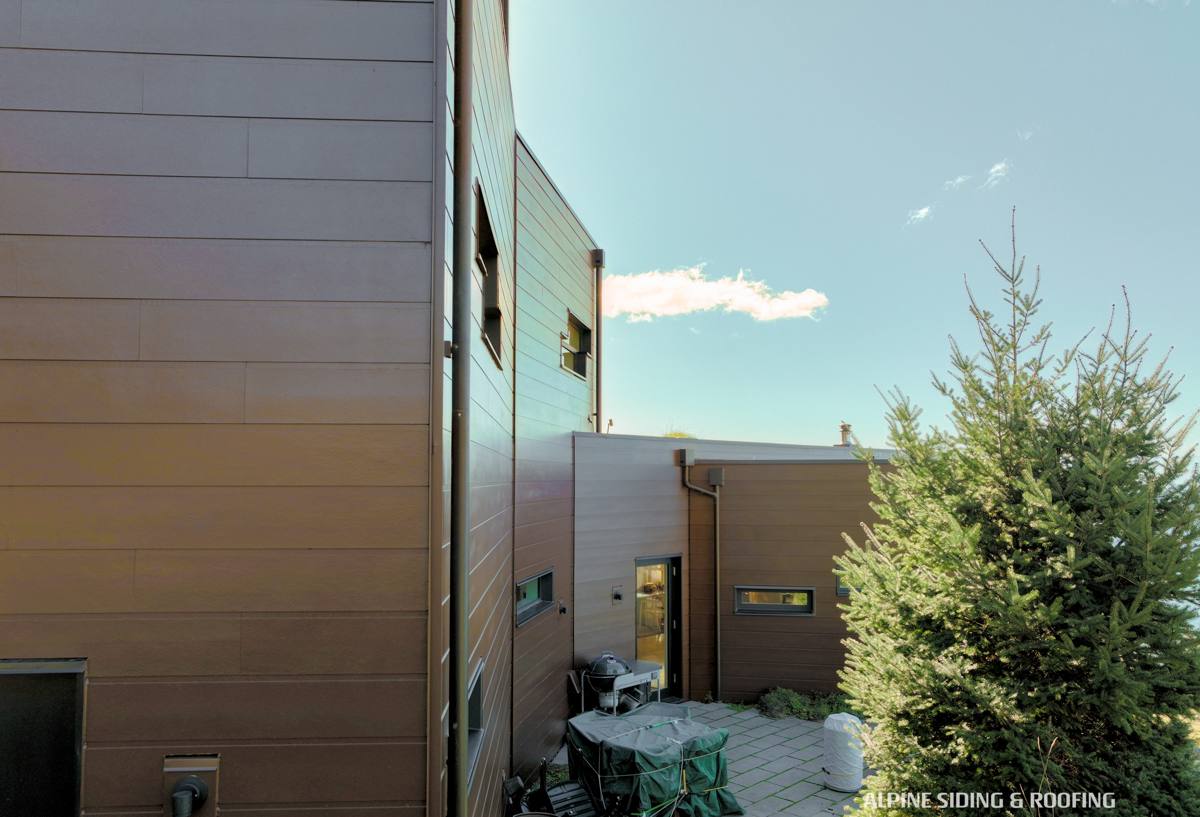
As a crew that works on both siding and roofing, we see a lot of the damage that happens at the boundary between the two — kick-out flashing missing where a roof edge meets a wall, drip edges that dump water behind siding instead of away from it, or wall rot that started because roof and wall flashing were never properly tied together in the first place. When one contractor handles both the roof and the siding around it, those transition points get built as one continuous water-management system instead of two trades doing their own thing and hoping it lines up. That matters more here than in a drier climate, because Whatcom County's rain volume doesn't forgive gaps at those junctions the way a milder climate might.
What Affects the Cost of a New Roof
We don't quote roofing jobs sight unseen, because the price swings on real factors specific to each house. As a general range, asphalt shingle replacement in this region typically runs in the mid-hundreds per roofing square installed, with metal roofing running higher; the only way to get an accurate number is a walk of the actual roof. Here's what moves the price up or down:
| Cost Factor | Why It Matters |
|---|---|
| Roof size and pitch | Steeper roofs take longer to work safely and use more material per square foot of coverage |
| Number of existing layers | Removing multiple layers of old shingles takes more labor and disposal cost than a single tear-off |
| Deck condition | Rotted or soft sheathing found during tear-off needs replacement before install can continue |
| Material choice | Asphalt, metal, and synthetic shake carry different material and labor costs |
| Roof complexity | Valleys, dormers, chimneys, and skylights all add flashing work and time |
| Access | Difficult site access can add setup and material-handling time |
Why a Local Lynden Crew Makes a Difference
A crew that already works in and around Lynden knows the practical realities that don't show up in a spec sheet — which weather windows are reliable for tear-off, how local permit requirements apply to a straightforward re-roof versus a structural change, and what kind of moss and moisture issues are common on the shaded, tree-lined lots typical of this area. Just as importantly, a local crew is the one that's still around and reachable if a warranty issue comes up two or five years down the road, rather than a company that worked the area for one season and moved on.
If you're weighing repair against replacement, or just want an honest look at where your current roof stands, we're happy to come take a look. The estimate is free, there's no pressure attached to it, and you'll get a straight answer about what your roof actually needs.