 Whatcom County
 Why Bellingham Roofs Need More Than a Standard Shingle Job
Bellingham sits close enough to the water that salt-laden air is part of daily life for a roof, even on homes set back from the shoreline. Add in Whatcom County's long wet season, wind-driven rain that comes in sideways off the Strait, and months of shade and moisture that feed moss and algae, and you've got a roofing environment that's harder on materials than most of the country ever sees. A roof that would last decades in a dry inland climate can show real wear here in half that time if it wasn't built with this climate in mind.
Metal roofing has become a popular answer for homeowners who are tired of replacing shingles every 15-20 years, dealing with moss scraping and treatments every summer, or patching wind damage after a winter storm. Done correctly, a metal roof handles all three of those problems better than almost any other roofing material available. Done poorly, it can trap moisture, fail at the seams, or corrode faster than it should. The difference is almost entirely in the details of the install.
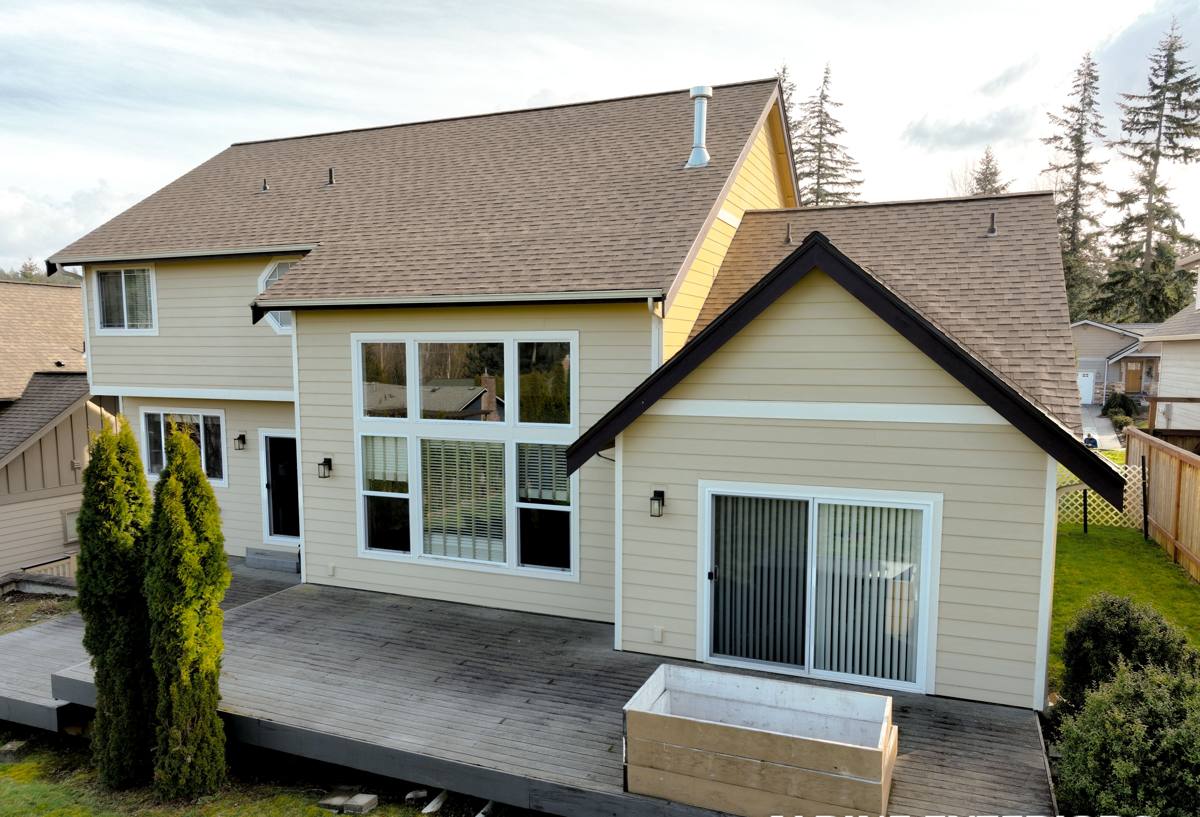
What Salt Air, Driving Rain, and Moss Actually Do to a Roof
Salt Air and Corrosion
Airborne salt accelerates corrosion on any exposed metal — fasteners, flashing, gutters, and lower-grade panel coatings all take the hit over time. This doesn't mean metal roofing is a bad choice near the water; it means the specific metal, coating, and fastener hardware you choose matter a lot more here than they would 50 miles inland.
Driving Rain and Wind Uplift
Wind-driven rain doesn't just fall on a roof, it pushes sideways and works its way under laps, around penetrations, and into any gap in the flashing. Whatcom County also sees enough wind events that panel attachment and edge detailing need to be sized for uplift, not just water shedding.
Moss and Sustained Moisture
Shaded, north-facing slopes and roofs under tree cover stay damp for long stretches of the year. On asphalt shingles that means moss roots working into the material itself. On metal it's less destructive, but debris buildup in valleys and at panel laps can still hold moisture against the surface longer than it should sit there.
Metal Roofing Systems That Actually Hold Up Here
Not all metal roofing is the same product wearing different colors. The system you choose changes how it performs against this specific set of coastal, wet-climate stresses.
| System | How It's Attached | Best Fit | Trade-Offs |
|---|---|---|---|
| Standing Seam | Concealed clips, no exposed fasteners on the field of the roof | Homes exposed to salt air and driving rain; long-term, low-maintenance ownership | Higher upfront cost; requires a crew experienced with seaming and thermal movement |
| Exposed Fastener (Corrugated/Ribbed) | Screws through the panel into the deck or purlins | Outbuildings, shops, budget-conscious re-roofs | Fasteners and washers are the weak point in salty, wet climates and need periodic inspection |
| Metal Shingles/Shakes | Interlocking panels styled to mimic shingle or shake look | Homeowners who want a metal roof's durability without a "barn roof" look | More seams and laps than standing seam, so detailing at valleys and penetrations matters even more |
For most Bellingham homes exposed to open weather, we lean toward standing seam because it has the fewest penetration points for wind-driven rain to exploit and no exposed fasteners for salt air to work on over the years. Exposed-fastener panels still have a place — they're a legitimate, cost-effective option for shops, garages, and less exposed structures — but we're upfront that they carry more long-term maintenance in this climate.
Getting the Install Right for This Climate
A metal roof is only as good as the details underneath it and around its edges. This is where a coastal, high-moisture climate punishes a rushed or generic install.
Underlayment
We use a synthetic, high-temp underlayment rated for the extended exposure a metal roof deck sees, with self-adhered ice-and-water membrane at eaves, valleys, and any low-slope transitions where wind-driven rain is most likely to push water uphill under the panels.
Fasteners and Hardware
Every fastener, clip, and piece of trim hardware needs to be corrosion-resistant and compatible with the panel metal itself — mixing incompatible metals accelerates corrosion through galvanic reaction, which is exactly the kind of failure that shows up first in salt-air environments.
Flashing and Penetrations
Chimneys, vents, skylights, and wall-to-roof transitions are where most roof leaks actually start, metal or not. Flashing here needs to be formed to shed water under wind pressure, not just laid over the joint.
Ventilation
Trapped moisture under a metal roof deck causes condensation problems that have nothing to do with the roof surface itself. Proper intake and exhaust ventilation keeps the deck dry from underneath, which matters even more in a climate where the air outside is often just as damp as the air inside the attic.
Moss, Algae, and Metal Roofing — What Changes and What Doesn't
Metal roofing doesn't feed moss the way organic shingle granules do, so you won't see the same rooting and lifting problem. But moisture-holding debris in valleys, at panel laps, and around chimneys can still stain a finish or hold dampness against trim and fasteners longer than it should. A metal roof cuts your moss maintenance dramatically — it doesn't eliminate the need to keep debris out of low points.
- Keep valleys and gutters clear of needles and leaf litter, especially going into fall
- Trim back branches that overhang the roof to reduce shade and debris buildup
- Have laps and penetration flashing visually checked every year or two, not just after a storm
- Rinse off heavy moss or algae buildup rather than pressure-washing, which can damage coatings and drive water under laps
- Watch for any fastener heads showing rust bleed on exposed-fastener systems — that's your early warning sign
Our Process, Start to Finish
- On-site assessment — we look at slope, exposure, existing deck condition, and how much of the roof is shaded or under tree cover
- System recommendation — standing seam, panel, or shingle-style metal, based on exposure and budget, with the trade-offs explained plainly
- Written estimate — materials, labor, and any deck repair called out separately, no vague allowances
- Tear-off and deck inspection — we don't cover up rot or soft decking; anything compromised gets repaired before underlayment goes down
- Underlayment and flashing detail — ice-and-water membrane at vulnerable areas, formed flashing at every penetration
- Panel installation — proper fastener spacing and, on standing seam, correctly seamed panels with room for thermal movement
- Final walkthrough — we go over the finished roof and the maintenance items that matter for your specific setup
What Drives the Cost of a Metal Roof in Bellingham
| Factor | Why It Matters Here |
|---|---|
| Panel system chosen | Standing seam runs higher than exposed-fastener panel due to labor and material |
| Roof complexity | Valleys, dormers, and multiple penetrations all add flashing labor |
| Existing deck condition | Moisture-related deck repair is common on older roofs that have dealt with years of wet weather |
| Coating/finish grade | Higher-grade coatings resist salt-air corrosion and fading longer, which matters more this close to the water |
| Access and pitch | Steep or hard-to-access roofs add labor time regardless of material |
We give real, itemized numbers during the estimate rather than a single lump figure, so you can see exactly what you're paying for and where there's room to adjust the scope if needed.
Why a Crew That Already Works Bellingham Matters
Roofing in Whatcom County isn't the same job as roofing somewhere dry and inland. A crew that works here regularly already knows how local wind exposure and moisture patterns affect flashing and fastener choices, what permitting looks like for the jurisdiction your home falls under, and which failure points show up first on roofs that have been through a few real Pacific Northwest winters. That local, repeated experience shows up in the details you can't see once the roof is finished — the flashing behind a chimney, the fastener spacing on an exposed corner, the underlayment choice at a shaded valley.
It also means we're not disappearing after the job is done. We're a Whatcom County crew working in this county's climate day in and day out, which matters if a question comes up two winters from now about how the roof is holding up.
Ready for a Straight Answer on Your Roof?
If your current roof is aging, moss-covered, or you're just tired of the maintenance cycle, we're happy to take a look and give you an honest read on whether metal roofing makes sense for your home. Fill out the form below for a free, no-pressure estimate — we'll walk the roof, explain what we see, and lay out real options and real numbers.