 Whatcom County
 Why Ferndale Roofs Wear Differently
Ferndale sits close enough to the water and the open flats north of Bellingham that roofs here take a different kind of beating than roofs twenty miles inland. You've got salt-laden air moving in off the Strait, long stretches of driving rain that comes in sideways more often than straight down, and a moss season that can run eight or nine months out of the year on a shaded north slope. None of that is dramatic on its own. Add it up over a decade and it's why we see fastener corrosion, soft decking, and moss-choked valleys on Ferndale roofs that are otherwise still within their expected lifespan.
A roof repair here isn't just patching a leak — it's addressing whichever of those three forces did the damage, and making sure the fix doesn't just get eaten by the same conditions in another two winters.
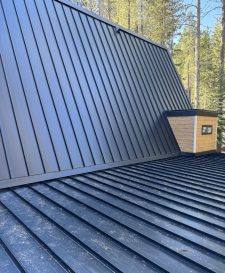
What Actually Fails First on a Whatcom County Roof
Fastener and Flashing Corrosion
Salt air accelerates oxidation on exposed metal — nail heads, drip edge, step flashing, and pipe boots with metal collars. Once a fastener starts to corrode, it loses its grip on the shingle or panel above it, and you get lift during wind events. This shows up as a leak long before the shingle itself is actually worn out.
Moss and Trapped Moisture
Moss doesn't just look bad. It holds water against the roofing material around the clock, which keeps shingles perpetually damp instead of letting them dry between rain events. Over time that moisture works under the shingle tabs and into the underlayment, especially in valleys and along north-facing slopes that never get direct sun.
Wind-Driven Rain Intrusion
Rain that comes in at an angle finds every gap a straight-down rain would never reach — under-lapped shingle courses, poorly sealed vents, and flashing that was fine for vertical rain but not for a 30-mph gust off the water. A lot of the "mystery leaks" we get called out for in Ferndale trace back to this, not to a hole in the roof.
Getting the Diagnosis Right
The biggest mistake in roof repair isn't a bad patch — it's patching the wrong spot because the water traveled before it showed up on the ceiling. Water follows the path of least resistance along rafters and decking, so a stain in a bedroom might trace back to a flashing failure ten feet away near the chimney or a dormer.
Our process starts on the roof, not in the attic. We check the obvious suspects first — pipe boots, valleys, step flashing, and any moss buildup — then trace backward from there if the source isn't obvious. If we can get into the attic or crawlspace, we look for water staining, dark trails on the sheathing, or compressed insulation, which all help confirm the entry point before we touch a single shingle.
What a Correct Repair Involves
- Removing moss and debris from the affected area and surrounding valleys — not just the spot that's leaking
- Checking decking underneath for soft spots or rot before replacing any roofing material over it
- Replacing corroded fasteners and flashing with corrosion-resistant hardware, not just re-nailing with the same material that failed
- Re-lacing shingle courses properly so the repair blends into the existing pattern and sheds water the way the surrounding roof does
- Sealing penetrations (vents, pipe boots, chimney flashing) with materials rated for our climate, not a generic caulk that will crack in a season
- Confirming the repair from inside if attic access exists, so we're not guessing that the leak stopped
Skipping any of those steps is how you end up paying for the same repair twice. A patch over rotten decking, or new shingles over corroded flashing, buys you a year or two at most.
When Repair Isn't the Right Answer
Sometimes the honest answer is that a section of roof has gone past the point where a repair makes sense — decking that's soft over a wide area, or shingles that are brittle and cracking across most of a slope rather than just at the leak point. We'll tell you straight if that's what we're looking at instead of stretching a repair further than it should go. Most of the time on a Ferndale roof, though, the damage is localized enough that a proper repair is the right call.
Cost Factors for a Ferndale Roof Repair
Every repair is different, but the price generally comes down to a handful of variables. We won't quote a number without seeing the roof, but here's what tends to move the estimate:
| Factor | Why It Matters |
|---|---|
| Roof pitch and access | Steeper slopes and roofs with limited ladder access take longer and need more safety setup |
| Extent of decking damage | Soft or rotted sheathing has to be cut out and replaced before any new roofing goes down |
| How long moss has been established | Heavier moss growth means more time removing it without damaging the material underneath |
| Number of penetrations involved | Each vent, pipe boot, or chimney flashing point adds material and labor |
| Material match | Matching an older shingle profile or color can take longer to source than a straightforward panel repair |
Most straightforward leak repairs — a bad pipe boot, a section of failed flashing, localized moss and shingle damage — land in a modest range you can budget for without much surprise. Repairs involving decking replacement or multiple failure points cost more simply because there's more labor and material involved, not because of anything unusual about the job.
Moss Prevention: The Maintenance Piece
Because moss is one of the biggest recurring problems on Whatcom County roofs, a repair alone isn't the full answer if the conditions that grew the moss are still there. A few things matter here:
- Zinc or copper strips near the ridge let rain carry trace metal down the roof, which suppresses new moss growth over time
- Keeping overhanging branches trimmed back reduces both shade and the organic debris that gives moss something to root in
- Periodic gentle cleaning (not pressure washing, which strips granules and shortens shingle life) keeps moss from re-establishing in the first place
We'll mention these options when they make sense for a specific roof, but we're not going to upsell a full moss-control system onto a simple repair that doesn't need it.
Our Process, Start to Finish
- Inspection: We walk the roof and, where possible, check the attic to confirm the actual source of the problem.
- Written estimate: You get a clear explanation of what's failing, what we recommend, and what it costs — no pressure to add on unrelated work.
- Repair: We do the work with corrosion-resistant materials suited to a coastal-influenced climate, not generic hardware.
- Cleanup: Old materials, nails, and moss debris come off the property — we don't leave that for you to deal with.
- Follow-up: If it rains hard within the first few weeks and something isn't right, we come back and make it right.
Why Local Experience on This Specific Problem Matters
A roofer who mostly works drier inland areas can still do fine work, but they may not immediately clock that a "simple" leak in Ferndale is actually corrosion-driven, or that the moss on the north slope has been trapping moisture against the decking for two winters before it ever showed up as a stain. A crew that already works this part of Whatcom County has usually seen the same failure patterns often enough to diagnose them fast instead of guessing.
That familiarity also shows up in material choices — knowing which fasteners and flashing metals hold up against salt air, and which sealants actually stay flexible through a wet Whatcom County winter instead of cracking by spring.
Signs You Should Get a Roof Checked Now
- Dark streaking or green growth on north-facing slopes or in shaded valleys
- Granules collecting in gutters or at downspout outlets
- A ceiling stain that appears only during heavy wind-driven rain, not regular rainfall
- Visible lifted or curling shingle edges near roof edges or ridges
- Rust staining running down from metal flashing or pipe boots
Catching any of these early is almost always cheaper than waiting for a leak to show up indoors, since by that point water has usually been getting in for a while.
If you're seeing any of these signs on a Ferndale home, or just want an honest look at where your roof stands, we're happy to come out for a free, no-pressure estimate — use the form below to get started.