 Whatcom County
 Composite Decking in Samish: Built for the Climate You Actually Live In
Samish sits in one of the wetter, damper corners of Whatcom County, and that shapes what a deck needs to survive here. Low-lying, water-adjacent, and shaded by evergreens for much of the year, homes in and around Samish deal with a longer wet season than most of the country ever sees. A deck built without that in mind will show it within a few years — soft spots, black streaking, moss creeping across the boards, fasteners that bleed rust. A deck built for it can go the distance with a fraction of the upkeep.
This page is about one thing: composite decking, done right, for homes in the Samish area. Not a generic overview of composite decking in general — the specific decisions that matter when the site is here, in this climate, with this much rain and this much moss pressure.
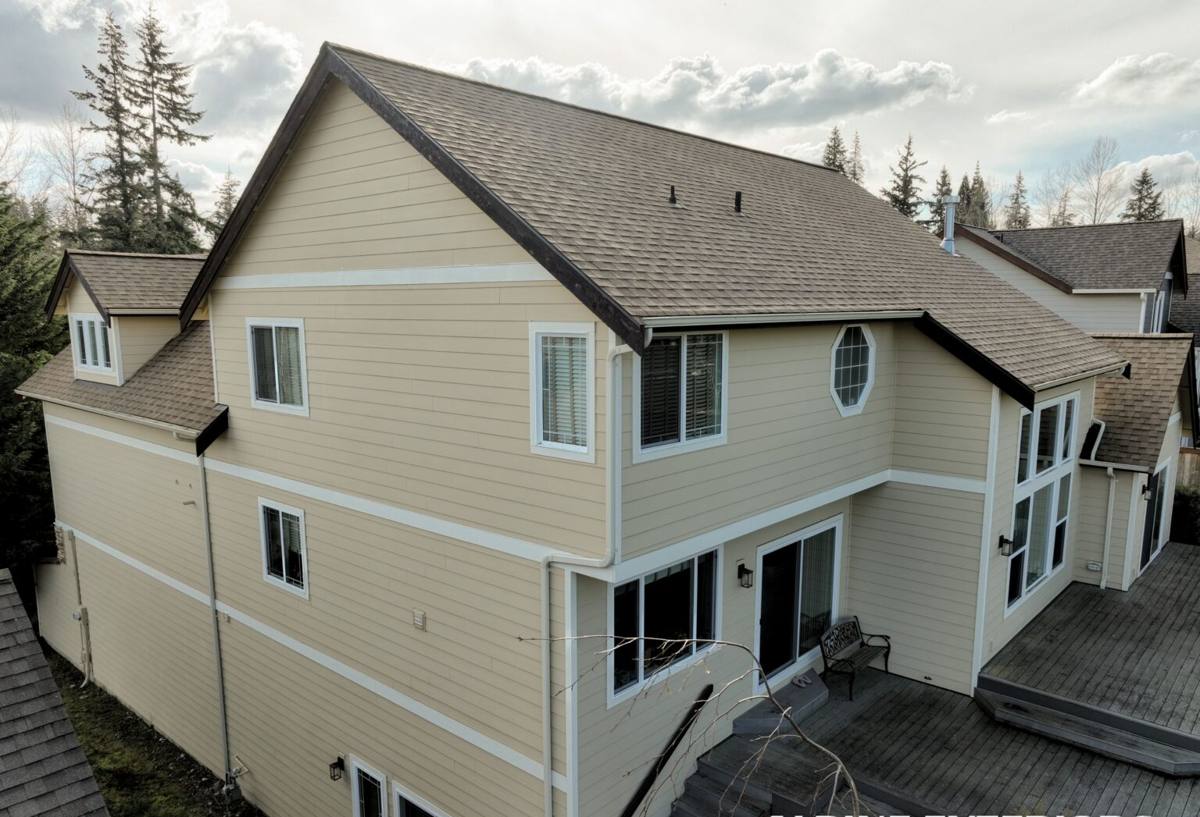
What Whatcom County's Climate Actually Does to a Deck
Three things define decking performance in Samish, and they compound each other:
- Driving rain. Wind-driven rain doesn't just fall on a deck — it gets pushed sideways, under railings, into fastener holes, and along ledger boards where the deck meets the house. Any gap in flashing or sealant becomes a slow leak point.
- Salt-tinged marine air. Whatcom County's proximity to Puget Sound and its inlets means fasteners, brackets, and any exposed metal hardware take on corrosion faster than they would inland. Cheap or mismatched hardware fails first, often years before the decking itself would need attention.
- A long moss season. Between fall and spring, shaded, north-facing, or tree-covered decks stay damp for weeks at a stretch. Moss and algae don't just look bad — they hold moisture against the board surface, which matters more for wood decking than composite, but still affects the surface texture and slip resistance of any decking if it's never cleaned.
None of this means a deck can't last in Samish. It means the substructure, hardware, and board choice have to be picked for these conditions specifically, not for a generic climate.
Why Composite Holds Up Better Here Than Wood
Wood decking isn't a bad product — it's a maintenance-intensive one, and Whatcom County's wet season is unforgiving of skipped maintenance. Composite decking, particularly capped composite, doesn't absorb water into its surface the way wood does, so it doesn't swell, cup, splinter, or host the kind of surface mold that wood picks up when it stays damp for weeks. That's the core reason it's become the default recommendation for decks in this climate rather than a premium upsell.
Where Composite Still Needs Respect
Composite isn't maintenance-free, and we don't sell it that way. It still needs periodic cleaning to keep moss and algae from taking hold on the surface, especially on shaded sections of a deck. The substructure underneath — joists, ledger, fasteners — is still wood or metal and still needs to be built to shed water, not trap it. A composite deck built on a poorly flashed, poorly ventilated frame will fail at the frame long before the boards themselves show any wear.
Composite vs. Other Decking Materials for This Climate
| Material | Moisture & Moss Behavior | Maintenance | Typical Lifespan Here |
|---|---|---|---|
| Pressure-treated wood | Absorbs water, prone to cupping and surface mold in shaded areas | Annual cleaning, periodic sealing/staining | 10–15 years before major repairs |
| Cedar | Naturally moisture-resistant but still absorbs water over time; greys and can host moss if untreated | Regular oiling/sealing to hold color and resist moisture | 15–20 years with upkeep |
| Uncapped composite | Better than wood but can still absorb some surface moisture at cut edges | Periodic cleaning, edge sealing at cuts | 20–25 years |
| Capped composite | Fully sealed shell resists moisture absorption and surface mold | Occasional washing to clear moss/algae film | 25–30+ years, manufacturer-dependent |
For a shaded, damp lot typical of the Samish area, we generally steer homeowners toward capped composite unless there's a specific budget or aesthetic reason to consider something else. It's the option best matched to the actual failure modes we see locally.
What "Correct Installation" Means Here Specifically
The decking material is maybe forty percent of how long a deck lasts in this climate. The rest is in the build. A correct composite deck installation in a wet, salt-air environment involves:
- Ledger flashing done properly — the point where the deck attaches to the house is the single most common source of hidden water damage. It needs proper flashing and a water-resistant barrier, not just fasteners and caulk.
- Corrosion-resistant hardware throughout — coated or stainless fasteners, brackets, and joist hangers rated for exterior, coastal-influenced use, not standard interior-grade hardware.
- Adequate under-deck ventilation — airflow beneath the deck keeps the substructure drying out between rain events instead of staying perpetually damp.
- Correct board gapping — composite boards need the manufacturer-specified gap to allow for expansion and drainage; too tight and water pools, too wide and the deck feels unfinished.
- Hidden fastener systems where appropriate — fewer surface penetrations means fewer points where water can work its way into the board core over time.
- Proper joist spacing for the specific composite product — composite boards vary in stiffness and heat expansion by brand and profile, and joist spacing has to match the manufacturer's span rating, not just standard wood-deck spacing.
Skip any one of these and the deck may look fine for a couple of seasons before the shortcuts show up — usually as a soft spot near the house, a rusted bracket, or standing water that never quite drains.
Our Process for Composite Decking Projects in Samish
We keep the process straightforward because most homeowners just want to know what's happening and why:
- Site assessment. We look at drainage, sun/shade exposure, existing structure (if it's a replacement), and how the deck ties into the house.
- Material and design conversation. We walk through composite options, colors, and railing choices based on your budget and how the deck will actually be used.
- Permitting. Whatcom County and local jurisdictions have permit requirements for most deck construction and replacement work; we handle that process rather than leaving it to the homeowner.
- Demolition or substructure prep. On a replacement, we evaluate the existing frame — in this climate, we often find substructure issues that weren't visible from the surface.
- Build. Framing, flashing, and fastening done to the standards above, then decking and railing installation.
- Final walkthrough. We go over the finished deck with you, including what routine maintenance actually looks like for the specific product installed.
Maintaining a Composite Deck Through a Whatcom County Moss Season
Composite decking cuts maintenance dramatically compared to wood, but "low-maintenance" isn't "no-maintenance" — especially with a moss season as long as this region's. A basic seasonal checklist:
- Sweep debris (needles, leaves, seed pods) off the deck regularly — trapped organic matter holds moisture against the board surface and feeds moss growth.
- Wash the deck at least once or twice a year with a composite-safe cleaner and a soft-bristle brush, focusing on shaded areas where moss and algae film builds up fastest.
- Check railing posts and stair connections annually for any looseness, which can indicate hardware corrosion underneath.
- Keep gutters and downspouts near the deck clear so runoff isn't dumping extra water onto or under the deck structure.
- Trim back overhanging branches where possible to reduce shade and debris load on the most moss-prone sections.
What Composite Decking Costs to Install in Samish
Pricing depends on more than square footage. The main variables we walk through with homeowners:
| Cost Factor | Why It Matters |
|---|---|
| Deck size and shape | More complex shapes (multiple levels, angles, wraparounds) increase labor and material cutting |
| Substructure condition | Replacing rotted or undersized framing on an existing deck adds cost but is not optional if the frame is compromised |
| Composite board tier | Entry-level uncapped composite costs less than premium capped composite with advanced surface finishes |
| Railing system | Composite or aluminum railing, glass panels, and cable rail all price differently than basic wood or vinyl railing |
| Site access and elevation | Second-story decks, sloped lots, or limited equipment access add labor time |
| Permitting and engineering | Some designs (higher elevations, larger spans) require engineered plans, which adds a fixed cost |
We give a firm, itemized quote after the site visit rather than a rough number over the phone — too much of the real cost depends on what's underneath an existing deck or what a specific lot requires.
Why Hire a Crew That Already Works in Samish and Whatcom County
A contractor who mostly works inland or in a drier region will size hardware, plan ventilation, and set expectations around a climate that isn't this one. Working regularly in Whatcom County means already knowing which fastener grades hold up against the marine air here, which framing details actually stop the driving-rain leaks we see at ledger boards, and how much airflow a substructure needs to survive a wet season this long without rushing back for warranty repairs. It also means familiarity with local permitting requirements, so that part of the project doesn't stall the build.
If you're weighing a new composite deck or a replacement for an aging wood deck in Samish, we're glad to come take a look and walk you through what your specific site needs — no pressure, no obligation. Reach out using the form below to schedule a free estimate.