 Whatcom County
 Windows in Samish Take a Different Kind of Beating
Samish sits in the part of Whatcom County where weather isn't an occasional inconvenience — it's a constant, low-grade pressure on every exterior surface of a house, and windows are usually the first thing to show it. Homes here deal with salt-carrying wind off the water, long stretches of driving rain that comes in sideways more often than straight down, and a moss season that seems to stretch a little longer every year. None of that is dramatic on its own. What it does is compound: a window that would last twenty years in a dry inland climate can start failing at the seals, frame corners, or hardware in half that time out here if it wasn't built or installed with this exposure in mind.
That's the case for treating window work in Samish as its own project rather than a generic install. The right glass package, the right frame material, and the right flashing detail all change depending on how much wind-driven moisture and salt a given wall actually sees.
Why "Custom" Isn't a Marketing Word Here
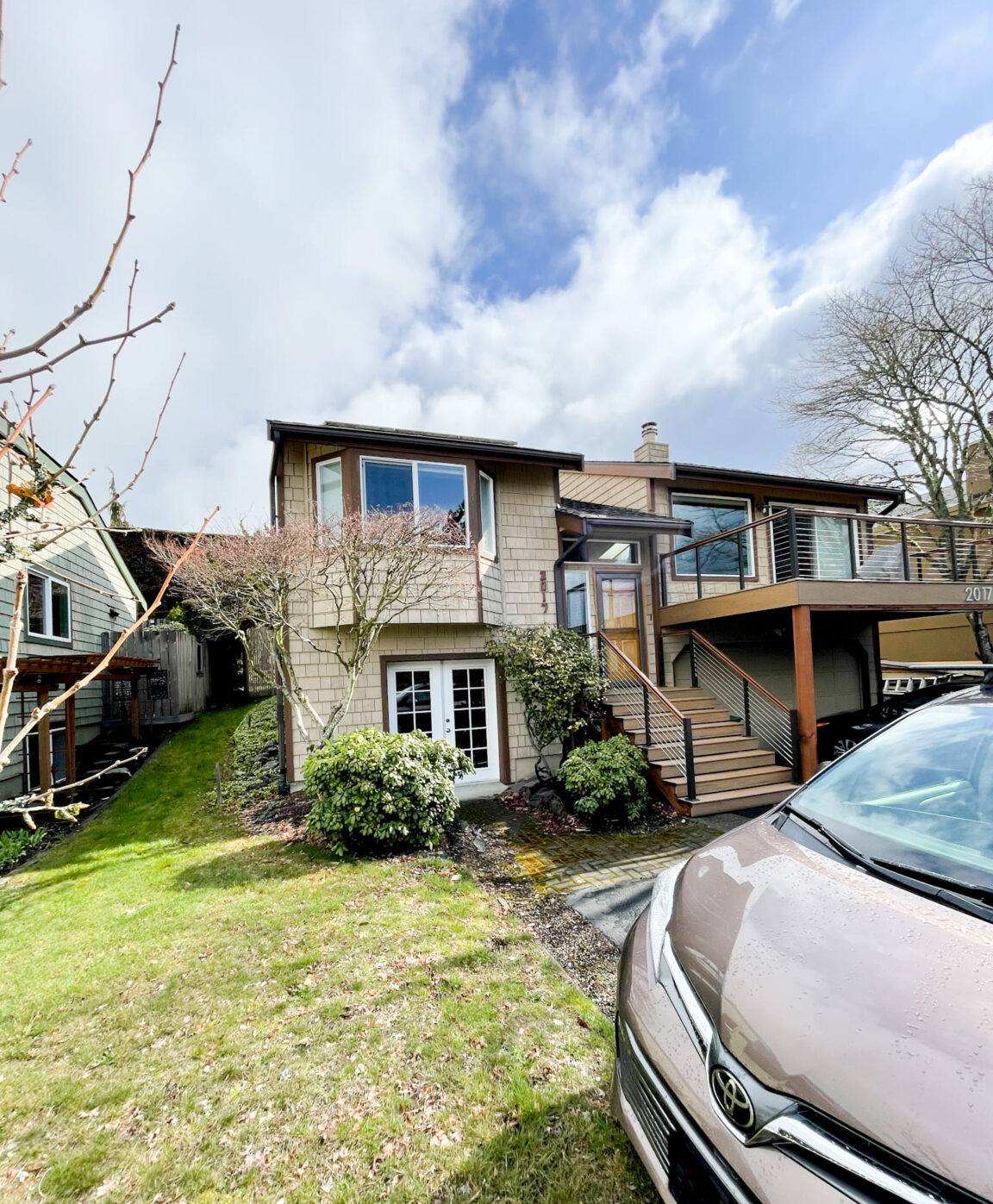
A lot of homes in this part of Whatcom County are older builds, additions, or houses that have been remodeled more than once — which means window openings that don't match anything sold off a shelf. Custom windows means the unit is built to the actual opening, not the other way around. That matters for two reasons specific to this climate:
Odd Openings Are Common
Older framing settles, additions get tied into original walls at slightly different elevations, and previous owners sometimes made changes that weren't perfectly square. Forcing a stock-size window into an opening that's even a little out of true means shimming and gaps — and gaps are exactly where wind-driven rain finds its way in.
Coastal Exposure Changes the Spec
A window on a wall that catches salt air and prevailing wind needs different weatherstripping, cladding, and hardware finish than the same window on a sheltered wall of the same house. Custom work lets us spec each opening for its actual exposure instead of installing one standard product across the whole house.
What a Correct Installation Actually Involves
Most window failures we get called out to fix in this area aren't glass failures — they're installation failures. The unit itself was fine; the flashing, sealant, or drainage plane around it wasn't done correctly, and years of driving rain eventually found the weak point. A correct job includes:
- Removing the old unit down to the framing and inspecting for hidden rot or moisture damage before anything new goes in
- Repairing or replacing any compromised sheathing or framing — never installing a new window over a soft spot
- Installing flashing in the correct shingle-lap order so water is directed out and down, never trapped behind the siding
- Using a sealant rated for the temperature swings and UV exposure this region actually sees, not just whatever's on hand
- Setting the unit level, plumb, and square, then shimming and fastening per the manufacturer's specification so the warranty stays valid
- Sealing the interior air barrier as carefully as the exterior weather barrier — most condensation and drafts trace back to a skipped interior seal
Skip any one of those steps and the window can look perfect for a year or two before a leak shows up inside a wall cavity where nobody notices it until there's a real problem.
Choosing Frame Material for a Salt-Air, High-Rain Climate
There's no single "best" window material — there's a best fit for a given wall's exposure and a given homeowner's maintenance appetite. Here's how the common options actually compare for a house in this part of Whatcom County:
| Material | Moisture & Salt Resistance | Maintenance | Typical Lifespan Here |
|---|---|---|---|
| Vinyl | Good — won't rot or corrode, but can become brittle over many years of UV exposure | Low — occasional cleaning | 20–30 years |
| Fiberglass | Excellent — very stable in wet, salt-exposed conditions and matches wood's expansion rate closely | Low | 30–40 years |
| Wood, clad exterior | Good exterior protection, but any breach in the cladding exposes the wood core to rot risk | Moderate — cladding is low-maintenance, but interior wood may need periodic attention | 25–35 years if the cladding stays intact |
| Aluminum | Fair — durable but prone to corrosion pitting near salt air unless properly finished | Moderate — finish needs monitoring | 20–25 years in coastal exposure |
For walls that catch direct wind off the water, we lean toward fiberglass or a well-finished vinyl. For sheltered walls, wood-clad often makes sense if the homeowner wants a specific interior look. We'll walk through which makes sense for each elevation of your house rather than recommending one material for the whole job.
Glass Packages: More Than Just Double vs. Triple Pane
Glass choice matters as much as frame material in a climate with this much sustained damp and temperature swing between day and night.
Low-E Coatings
A low-emissivity coating helps manage heat loss through the glass, which matters more here in the cooler, wetter months than it does for summer heat — most of the energy loss in this climate happens through the glass in winter, not through the wall.
Gas Fill and Spacer Type
Argon-filled units with a warm-edge (non-metal) spacer resist condensation and seal failure better over time than older aluminum-spacer designs, which is worth paying attention to in a climate where interior-exterior temperature differential is a near-constant condition.
Impact and Wind Rating
Homes on more exposed lots benefit from a higher wind-load rating on the glass and frame assembly — not because Whatcom County sees frequent severe wind events, but because a lower-rated unit will show stress and seal fatigue faster under repeated gusts off open water.
How We Approach a Samish Window Project
- On-site assessment. We look at each window opening individually — exposure, condition of the surrounding wall, and whatever's actually causing the current windows to underperform.
- Honest scope. If a window just needs better sealant and flashing rather than full replacement, we'll say so. Not every problem needs a new window.
- Custom measurement and ordering. Each unit is built to the actual opening, not a nearest-standard-size approximation.
- Removal and structural check. We open the wall enough to confirm the framing and sheathing underneath are sound before anything new goes in.
- Installation to spec. Flashing, sealant, shimming, and fastening done in the order and manner that keeps the manufacturer's warranty intact.
- Final walkthrough. We check operation, seal, and finish on every unit before we consider the job done, and we clean up the site properly.
Signs Your Current Windows Are Losing the Fight
Most homeowners don't think about their windows until something's obviously wrong, but there are earlier tells worth watching for:
- Condensation forming between the panes (a sign the seal has failed, not something a cleaning will fix)
- Visible moss or dark staining building up on the sill or the siding just below a window
- A draft you can feel by hand along the frame edge on a windy day
- Difficulty opening, closing, or locking a window that used to move freely
- Soft or discolored trim or drywall near the window, especially after a stretch of heavy rain
- Visibly warped, swollen, or peeling frame material, particularly on the side of the house that faces prevailing wind and rain
Any one of these is worth a look before it turns into a repair on the wall framing behind it.
Why Local Experience on This Specific Job Matters
Window installation isn't complicated in theory, but getting it right in a climate like this comes down to details that only show up with repeated exposure to how houses in this area actually weather. A crew that's done this work throughout Whatcom County knows which wall orientations in a place like Samish tend to take the worst of the wind-driven rain, which older framing details need extra attention during removal, and which sealant and flashing choices actually hold up here rather than just meeting a minimum code spec. That's the difference between a window that looks fine on install day and one that's still performing correctly in year fifteen.
What Realistic Costs Depend On
We won't quote a number without seeing the actual openings, but the main factors that move the price on a custom window job are consistent from house to house:
| Factor | Why It Matters |
|---|---|
| Number of openings and their sizes | Larger or non-standard sizes cost more to custom-build |
| Frame material chosen | Fiberglass and clad-wood run higher than standard vinyl |
| Condition of existing framing | Hidden rot repair adds labor and material beyond the window itself |
| Wall exposure and access | Second-story or hard-to-access openings take more time to do safely and correctly |
| Glass package | Upgraded low-E coatings, gas fill, or wind rating add cost but extend performance life |
A straightforward single-window swap in existing good framing is a modest project; a full-house custom replacement with structural repairs is a much bigger one. We'll break the estimate down by opening so you can see exactly where the cost is coming from.
If your windows in Samish are showing any of the signs above, or you're planning a remodel and want them done right the first time, we're happy to come take a look. The estimate is free, there's no pressure to move forward, and you'll get a straight answer about what your home actually needs.