 Whatcom County
 Building New in Samish? The Windows Have to Match the Site
Samish sits close enough to the water that salt air is a daily fact of life, not an occasional nuisance. Add Whatcom County's long stretch of driving rain each fall and winter, plus the shaded, damp conditions that keep moss going strong on north-facing walls and rooflines nearly year-round, and you've got a climate that's hard on window assemblies that weren't detailed correctly the first time. On a new build, you only get one shot to do the window openings right before siding, trim, and interior finishes close everything up. We install new-construction windows in Samish specifically with that climate in mind — not a generic install lifted from a drier region.
This page covers what we look at, what a correct install actually involves, and how our process runs from framing to final trim on a new-construction job in this part of the county.
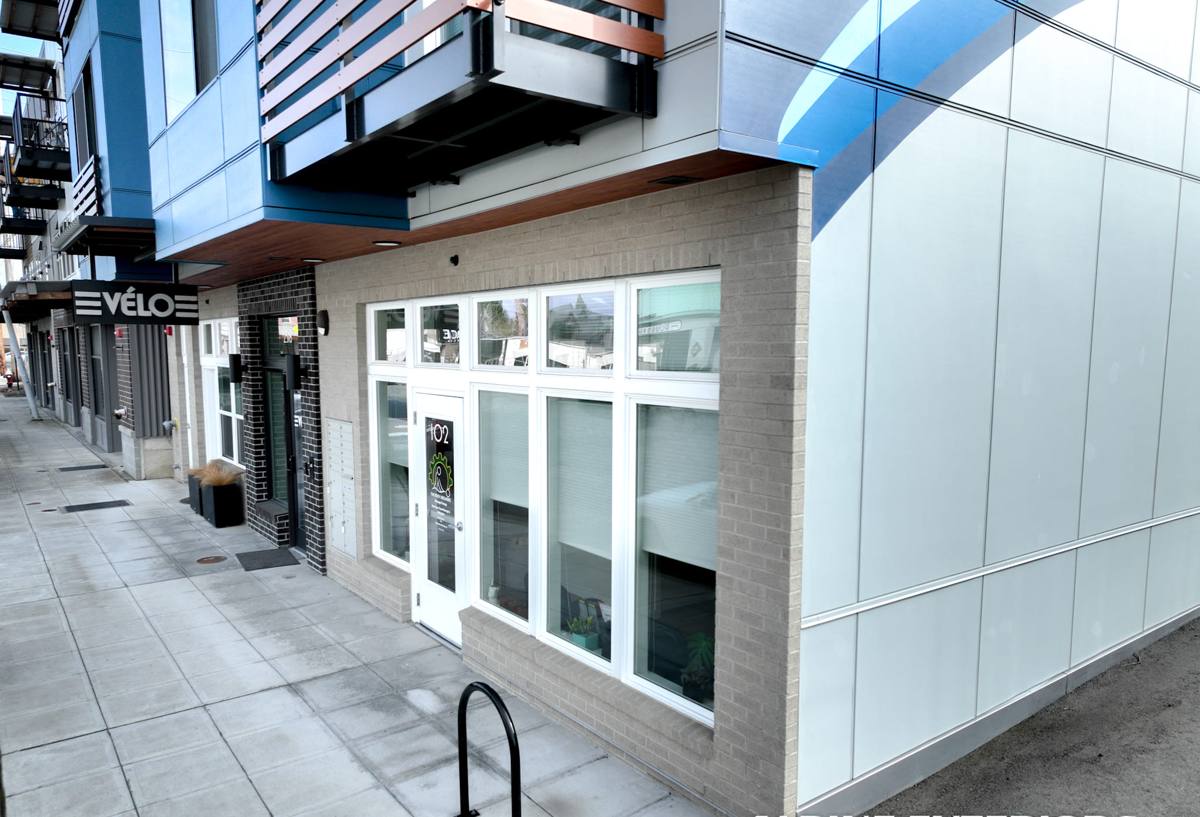
What Samish's Climate Actually Demands From a Window Install
Salt Air and Hardware Corrosion
Homes closer to Samish Bay and the surrounding shoreline see airborne salt that settles on hardware, cladding, and fasteners over time. Cheap fasteners and unprotected steel components corrode faster here than they would ten or twenty miles inland. We spec corrosion-resistant fasteners and hardware for coastal-influenced lots and flag it up front during the estimate so it's priced in, not discovered later.
Driving Rain and Water Management
Whatcom County storms don't just fall straight down — wind-driven rain pushes water sideways into wall assemblies, which is exactly where a lot of window failures start. The window itself is rarely the weak point; the flashing and drainage plane around it usually are. A new-construction opening gives us full access to build that drainage path correctly, which is the single biggest advantage over a retrofit.
Moss, Shade, and Moisture Retention
Samish has plenty of tree cover and shaded lots, and shade plus moisture equals a long moss season. Moss itself doesn't attack a window, but it holds moisture against adjacent siding and trim, and that moisture wants somewhere to go. If sill pans and end-dam details aren't done right at rough-in, that trapped moisture finds the path of least resistance — often into the wall.
What a Correct New-Construction Window Install Involves
New-construction windows get installed with a nailing fin into a prepared rough opening, before or during the water-resistive barrier (WRB) and siding phases. That sequencing matters — it's the difference between an assembly that sheds water and one that traps it. On every job we're doing several things in order:
- Rough opening check. Confirm the opening is square, correctly sized, and structurally sound before anything goes in.
- Sill pan flashing. A sloped, sealed pan under the sill directs any water that gets past the window back out, not into the framing.
- Window set and shim. Set plumb, level, and square, shimmed at the manufacturer's specified points so the frame isn't racked or bowed.
- Fastening per manufacturer spec. Correct fastener type, spacing, and corrosion resistance — this is where we upgrade hardware for salt-exposed lots.
- Flashing integration. Jamb and head flashing tied into the WRB in the correct shingle-lap order so water is always directed outward and down, never trapped behind the cladding.
- Sealant, not over-sealant. Sealed where it should be sealed, left open where drainage needs a path out — fully caulking a window shut is a common mistake that traps water instead of releasing it.
- Interior air seal. A separate air-sealing step on the interior side, which is often skipped but matters for both energy performance and condensation control.
Skipping or rushing any one of these steps is usually invisible at final walkthrough. It shows up two, five, or ten years later as staining, soft trim, or a musty smell near the window — right when it's expensive to fix instead of nearly free to do correctly the first time.
Frame Material: What Actually Holds Up Near Samish
New-construction gives you a real choice of frame material since you're not constrained by a retrofit opening. For a coastal-influenced, high-moisture, high-shade site like Samish, the trade-offs look like this:
| Frame Material | Coastal/Salt Air Behavior | Moisture & Maintenance | General Cost Position |
|---|---|---|---|
| Vinyl | Doesn't corrode; performs well near salt air | Low maintenance; some flex in temperature swings | Lower to mid |
| Fiberglass | Very stable, excellent salt/moisture resistance | Low maintenance; holds paint well if colored | Mid to higher |
| Wood-clad (exterior clad) | Depends heavily on clad integrity and correct install | Higher maintenance risk if cladding is compromised; attractive interior wood option | Higher |
| Aluminum | Conducts cold, prone to condensation in our climate unless thermally broken | Durable frame but condensation management is a real concern | Mid to higher |
We'll talk through this with you against your actual lot — how much shade it gets, how exposed it is to weather off the water, and your budget — rather than pushing one material as a default. There isn't a single right answer for every build; there's a right answer for your site.
Coordinating Windows With the Rest of New Construction
Windows on a new build don't happen in isolation — they're one step in a sequence with framing, the WRB, siding, and trim. Getting the order and hand-offs right is as important as the install itself:
- Confirm rough opening sizes against the actual window schedule before framing is closed up, not after
- Time window installation with WRB application so flashing laps correctly instead of getting patched in afterward
- Coordinate with the siding crew (or us, if we're doing both) so trim and cladding tie into the flashing system cleanly
- Walk the openings with the builder or GC before drywall to catch anything that needs correcting while it's still cheap to fix
- Document flashing and sill pan details with photos at each opening, so there's a record behind the finished wall
Our Process on a Samish New-Construction Job
We work directly with homeowners and with builders/GCs who bring us in for the window package. Typically that looks like:
- Plan review. We look at the window schedule and rough opening details before framing locks anything in, and flag anything that needs adjusting.
- Product selection. We go over frame material, glass package, and hardware options against your site's exposure — sun, shade, wind, proximity to the water.
- Scheduled install. We install at the correct point in the framing/WRB sequence, not squeezed in whenever it's convenient for another trade.
- Inspection points. We check flashing and sill pan work as we go, not just at the end, since these details get covered up fast.
- Final walkthrough. Operation, seals, and trim-out get checked together before we call it done.
Why a Crew That Already Works Samish Matters
Whatcom County covers a lot of different microclimates — inland valleys behave differently than shoreline lots near Samish Bay. A crew that already works this specific area knows which lots need upgraded hardware for salt exposure, which ones need extra attention to moss and shade-driven moisture, and how local wind-driven rain patterns actually behave against a wall assembly. That's the kind of judgment call that doesn't show up in a spec sheet — it comes from having done the work here before, on lots with the same conditions yours has.
We also know the local building department's expectations and the pace new-construction projects in this area typically run at, which helps us slot into a builder's schedule without becoming the bottleneck.
A Practical Checklist for Homeowners and Builders
Whether you're a homeowner watching your build or a GC bringing in a window sub, these are worth confirming before the openings get covered up:
- Sill pan flashing installed and sloped to drain outward, not toward the interior
- Head and jamb flashing lapped correctly with the WRB (shingle-style, water always directed down and out)
- Fasteners and hardware rated for the level of salt exposure your lot actually has
- Window shimmed at manufacturer-specified points — not just wherever it happened to sit
- Sealant used only where it should be, with drainage paths left open, not fully caulked shut
- Interior air-sealing done as a separate step from the exterior weatherproofing
- Photos or notes kept of flashing details before siding covers them
If you're framing a new build in Samish and want the window package done right the first time, we're happy to walk the plans with you or your builder and put together a straightforward, no-pressure estimate. There's a form below — reach out and we'll get back to you.