 Whatcom County
 Why Sehome Homes Wear Out Their Siding Faster Than the Manual Says
Sehome sits close enough to Bellingham Bay that salt-laden air is a constant, low-grade factor on anything painted or fastened to the outside of a house. Add Whatcom County's long stretch of driving rain, months where the sun barely dries a wall between storms, and a moss season that can run from fall well into spring, and you have conditions that push ordinary siding past its design limits years before the warranty says it should fail. None of this is dramatic on its own. It's cumulative — moisture that never fully leaves the wall assembly, fastener corrosion that starts small, and moss and algae that hold water against the surface long after a dry-climate product would have shed it.
A siding job that would hold up fine in eastern Washington can underperform here simply because it wasn't specified or installed with this climate in mind. That's the gap we're solving for on every Sehome project: not just putting new siding on a wall, but putting on siding — and installing it — that's actually built for salt air, sustained rain, and moss pressure.
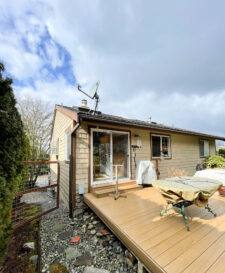
What Salt Air, Rain, and Moss Actually Do to Siding
Salt air
Airborne salt accelerates corrosion on fasteners, flashing, and any exposed metal trim. On homes closer to the water, we see this show up first at nail heads and cut edges — the points where a coating or factory finish has been broken and bare material is exposed to the air. Over years, that corrosion can telegraph through paint as rust staining, or weaken the fastener's grip.
Driving rain
Wind-driven rain doesn't just wet the surface of a wall — it tests every seam, joint, and penetration. Where siding is installed with tight or inconsistent gaps, where caulk is used instead of proper flashing, or where the water-resistive barrier behind the siding wasn't lapped correctly, water finds its way behind the cladding. Once it's behind the siding, it's touching sheathing and framing, and that's where real damage — rot, mold, sagging — begins.
Moss and algae
Shaded elevations, north-facing walls, and anything under tree cover in Sehome's more wooded lots stay damp for extended stretches. Moss and algae need that sustained moisture to establish, and once they're growing on a siding surface they hold water against it around the clock, not just during storms. That's a maintenance burden on any material, but it's a durability problem on materials that absorb moisture into the substrate itself.
What a Correct Siding Installation Involves Here
"Correct" isn't just nailing panels to a wall in the right order. In this climate, a siding installation that's actually built to last includes:
- A continuous, properly lapped water-resistive barrier behind the siding — the drainage plane that manages any water that does get past the cladding
- Rainscreen or furring where the wall assembly calls for it, so water and vapor have somewhere to go instead of sitting against the back of the siding
- Correct fastener type, length, and placement for the specific product and substrate — not just "close enough"
- Flashing at every horizontal transition — window and door heads, deck ledgers, roof-to-wall intersections — installed to shed water outward, not caulked as a substitute for flashing
- Manufacturer-specified gaps and clearances at butt joints, inside corners, and where siding meets trim, foundation, or roofing
- Field-cut edges primed or sealed per spec, since factory-finished edges are the ones protected from moisture — cut edges are not, unless treated
Skip any one of these and the siding can still look right for a season or two. In Sehome's climate, the gaps show up as staining, soft spots, or moss colonization well before the product's rated lifespan is anywhere close to up.
Why We Install Only James Hardie Fiber Cement
We standardized on James Hardie fiber cement siding and don't install vinyl, LP SmartSide, or other wood-based or engineered-wood products — not because those products can't work anywhere, but because of how they perform in exactly the conditions Sehome sees every year. Fiber cement is non-combustible and doesn't absorb moisture the way wood-based sidings do, which matters directly in a climate defined by sustained rain and long damp stretches. James Hardie's ColorPlus factory finish is baked on under controlled conditions and backed by its own finish warranty, which holds up better against salt air and UV exposure than field-applied paint typically does over time. Hardie also engineers specific product lines (their HZ5 line, for this climate zone) for wetter, more humid regions, which is a level of climate-specific engineering most competing products don't offer.
That doesn't mean fiber cement is maintenance-free — it still needs to be installed to spec and it will still grow moss on a shaded, damp wall if nobody ever cleans it. But it holds its structure and finish under those conditions far better than the alternatives, and its transferable warranty gives homeowners real protection if something does go wrong. On a house in Sehome, that combination is the difference between siding you replace once and siding you're patching or repainting every few years.
Our Installation Process
- On-site assessment. We look at your home's exposure — which walls take the most weather, where existing moisture or moss damage already shows, and what's happening behind the current siding, not just on the surface.
- Tear-off and inspection. Once old siding comes off, we check the sheathing and framing underneath for rot or moisture damage before anything new goes on. This step is where problems that caused the old siding to fail get caught and fixed, instead of covered up.
- Water-resistive barrier and drainage. We install a continuous barrier with correct lapping, and a rainscreen gap where the assembly calls for it, so the wall can dry if moisture ever gets behind the cladding.
- Flashing. Windows, doors, and any horizontal penetration get flashed before siding goes over them — this is the step that determines whether driving rain stays out over the next 30-plus years.
- Hardie installation to manufacturer spec. Correct fasteners, correct gaps, correct clearances from grade, roofing, and trim — installed the way James Hardie's own installation guidelines require, which is also what keeps the manufacturer's warranty valid.
- Final walkthrough. We go over the finished job with you, including what routine maintenance (if any) the specific product and colors need going forward.
Problems We Commonly Find on Older Sehome Homes
When we're re-siding a home in this area, a few issues come up often enough to be worth naming directly:
- Missing or improperly lapped house wrap, found only after old siding comes off
- Caulk used at flashing points instead of actual flashing — a shortcut that fails once the caulk ages and cracks
- Moss and algae staining concentrated on north- and west-facing walls, where sun exposure is lowest
- Rust streaking below fastener heads on older metal or improperly coated siding, consistent with salt-air corrosion
- Soft or delaminating trim and sheathing near ground level or under deck ledgers, where water has been pooling unnoticed for years
Cost Factors for a Sehome Siding Project
| Factor | Why It Moves the Price |
|---|---|
| Home size and wall complexity | More square footage, corners, and cutouts (windows, dormers) mean more material and labor time |
| Condition of the wall behind old siding | Rot or moisture damage found during tear-off adds sheathing or framing repair before new siding can go on |
| Siding profile and finish selection | Lap width, shingle-style panels, and specific ColorPlus finishes vary in material cost |
| Trim and accessory scope | Full trim replacement, new flashing, and corner details add labor beyond the field siding itself |
| Access and site conditions | Steep lots, mature landscaping, or tight setbacks common on older Sehome properties can add setup and staging time |
We give firm, itemized quotes after an on-site look at your home — not a phone estimate — because the condition behind the old siding is often the single biggest cost variable, and that can't be judged from the street.
Choosing a Contractor Who Actually Works This Area
Whatcom County's climate isn't uniform — a crew that mostly works drier, inland regions can miss details that matter specifically here. Before hiring anyone for a siding project in Sehome, it's worth checking:
- Do they install to the manufacturer's written specifications, or their own shortcut version?
- Will they show you the wall condition during tear-off before covering it back up?
- Do they carry proper licensing and insurance, and will they put warranty terms in writing?
- Can they explain how their flashing and drainage plane details differ for shaded, damp walls versus sun-exposed ones?
- Are they familiar with the fastener and coating considerations that matter this close to salt air?
A crew that regularly works Whatcom County homes has already seen how local conditions expose bad installation habits — and has adjusted its process accordingly, rather than learning that lesson on your house.
Living With Hardie Siding After Installation
Correctly installed James Hardie siding is low-maintenance, not no-maintenance. In this climate, that mainly means an occasional gentle wash to keep moss and algae from establishing on shaded walls, and a visual check after major storms for anything that's come loose at trim or flashing points. Because the ColorPlus finish is factory-applied and warrantied, you're not on a repainting cycle the way you would be with field-painted wood or fiber cement — but keeping an eye on the wall's condition once a year is still worth the ten minutes it takes.
If your current siding is showing moss staining, soft spots, or paint failure, or you're planning ahead for a home in Sehome, we're happy to take a look and walk you through what correct installation looks like for your specific walls. Reach out for a free, no-pressure estimate using the form below.